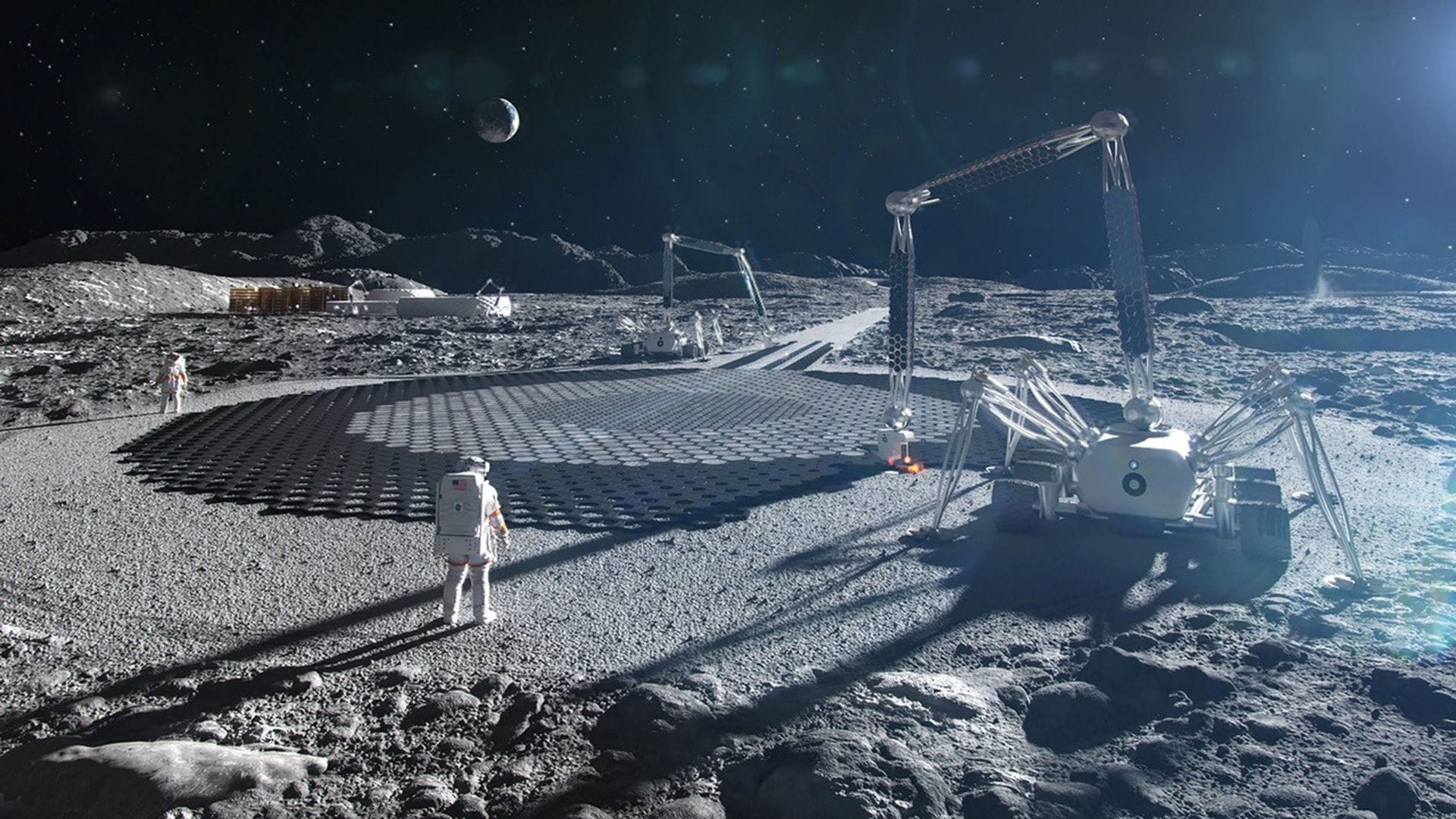
New Delhi: Researchers have demonstrated the feasibility of using Laser Directed Energy Deposition (LDED) to 3D-print structures from simulated lunar regolith, or material that mimics the coarse, fine soil that covers the Moon. Specifically, the researchers used a simulant that mimics the regolith in the lunar highlands, with high amounts of basalt. The research advances In-Situ Resource Utilisation (ISRU),a strategy that is considered essential for establishing a sustained human presence on the Moon. The approach uses the locally available material to construct habitats, tools and spare parts, reducing the dependence on expensive resupply missions from the Earth.
Most additive manufacturing or 3D printing methods require the use of heavy resins or large powder beds. The LDED technique uses a laser to melt the regolith powder as it is being deposited. The researchers were able to successfully fabricate continuous, millimetre-scale structures, and identified alumina-silicate ceramic as the most effective substrate for material adhesion. The researchers identified a specific processing window, with 64W laser power and a six mm/s scanning speed to maximise the formation of mullite, a crystalline ceramic resistant to high temperatures, that is valued for its thermal stability, mechanical strength and electrical insulation.
Tech may be used in future missions
The process was tested in both ambient and inert conditions, establishing a clear relationship between laser energy input and the resulting microstructure. Porosity remained a challenge though. Compared to solar sintering or lithography, LDED offers higher adaptability and requires less specialised equipment, making it a strong candidate for autonomous robotic construction on the lunar surface. The current laboratory-scale results show significant porosity, but the study provides a foundational roadmap for refining LDED parameters. Future development will focus on engineering these systems to handle the vacuum, dust and extreme thermal fluctuations expected in the lunar environment. The tech may be used in NASA’s Artemis programme to build habitats and tools directly from the lunar soil. A paper describing the research has been published in Acta Astronautica.