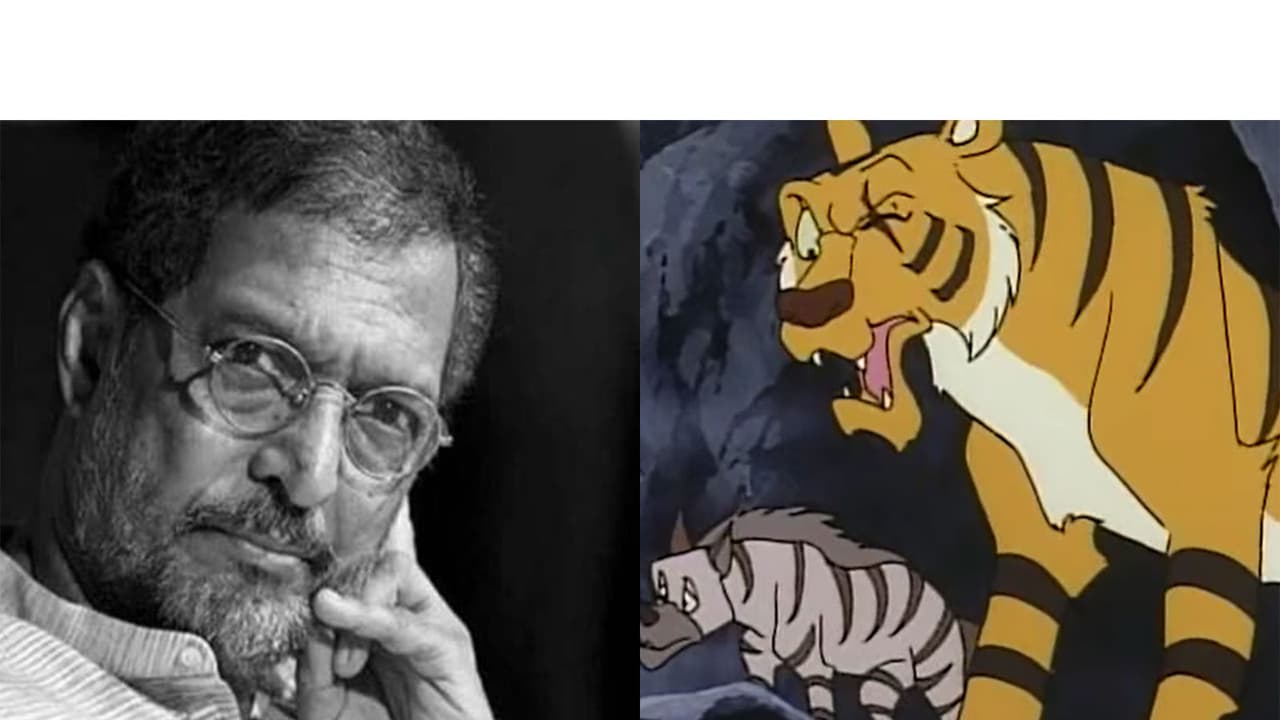
Nana Patekar, who died at 75, is remembered for his iconic voice work as Shere Khan in the 90s Hindi dub of ‘The Jungle Book.’ His intimidating performance scared a generation and became a unique, unforgettable part of his acting legacy.
Remember the moment The Jungle Book would begin on Doordarshan and the room would suddenly go quiet? For several 90s kids, Mowgli’s jungle was full of characters they loved: Baloo, Bagheera and the wolves who protected him. But there was one character who could instantly make things a little more frightening: Shere Khan.
In the Hindi version, it was Nana Patekar’s voice that gave the tiger that edge. Patekar, who died at the age of 75 on Thursday, was known for his intense performances in films such as Parinda, Krantiveer and Ab Tak Chhappan. But long before social media clips and memes turned his voice and expressions into a part of popular internet culture, his voice had already become familiar to an entire generation of television viewers.
For kids watching ‘The Jungle Book’ in the 1990s, Patekar’s Shere Khan was genuinely intimidating. The actor never appeared on screen. He did not need to. His job was simply to give a voice to one of the most feared characters in Mowgli’s world. Yet the performance was so distinctive that Shere Khan became inseparable from that deep, unmistakable voice.
A Generation’s Villain
In the early 1990s, ‘Jungle Book: The Adventures of Mowgli,’ a Japanese animated television series dubbed into Hindi, became a regular fixture in Indian homes through Doordarshan. The story followed Mowgli, a young boy raised by wolves in the jungle. Along the way, Jungle Book fans met Baloo, the affectionate bear, Bagheera, the wise black panther, and the wolf family that stood by Mowgli. But Shere Khan was different. The tiger saw Mowgli as a threat and was determined to drive him out of the jungle. Every time he appeared, the mood changed. For young viewers, Shere Khan was not just another animated character. He was the villain they knew they had to be wary of.
The Artistry of the Voice
Patekar’s voice played a huge part in making him feel that way. His deep baritone gave Shere Khan a sense of authority, while his measured dialogue delivery made the character sound threatening without constantly having to shout. There was an almost controlled anger in the voice. Even when Shere Khan was speaking calmly, there was always the feeling that something could go wrong. That was the strength of the performance.
Patekar had a voice that could command attention even without a dramatic scene around it. His pauses, emphasis and distinctive way of saying a line were already familiar to film audiences, and they worked surprisingly well for an animated character. For the 90s generation, that voice became part of childhood.
A Legacy Beyond the Screen
What makes the role particularly interesting is that Patekar’s connection with the character lasted well beyond those original telecasts. More than two decades later, he returned to the character in the Hindi version of The Jungle Book film released in 2016, again lending his voice to Shere Khan. By then, Patekar had already established himself as one of Hindi cinema’s most respected actors. His filmography included intense dramas, action films, serious social stories and even memorable comic performances.
Yet the Shere Khan voice remained a very different part of his legacy. It was a performance that did not depend on his face, body language or physical presence. Everything came down to his voice.
Patekar gave Indian audiences plenty of memorable characters during his long career. Some made them think, some made them laugh, and others left them stunned. But for a generation of children, his voice did something much simpler. It scared them. And decades later, that Shere Khan voice remains one of the most recognisable memories from The Jungle Book. (ANI)
(Except for the headline, this story has not been edited by Asianetnews Editorial staff and is published from a syndicated feed.)