Monopoly. It’s a strong word, a word that denotes dominance over a sustained length of time, a concept that separates the greats from even the very goods.
It speaks to the ability to rule consistently, which, in a sporting context, stems from a vibrant structure, a formidable core steeped in fundamentals that help tide over succession challenges, and a vision for the future that doesn’t cloud the demands of the immediate present.
Sporting history is replete with examples of individuals or teams monopolising a specific discipline. Like Brazil in the Pele era of football, when they won the FIFA World Cup three times in four editions between 1958 and 1970. Like Steffi Graf, particularly in 1988, when she completed a golden slam by winning all four of tennis’ majors and added the Olympic Games gold medal in Seoul, for good measure. Closer home, from an Indian standpoint, a stunning six successive Olympic Games gold medals in hockey, between 1928 and 1956.
Cricket, too, has inevitably seen its share of teams hold sway for sustained periods. The West Indies from the mid-1970s to the early 1990s were an unstoppable force, relying on their battery of pace bowlers and a destructive batting line-up, headlined by the irrepressible Viv Richards, to send shivers down the spines of opponents worldwide. They translated their dominance to consecutive 60-over World Cup triumphs in 1975 and 1979, and when they went on a downward spiral, Australia stepped up to don the mantle.
Twice, the Aussies embarked on strings of 16 consecutive Test victories; more tellingly, they lifted the 50-over World Cup three times on the bounce, in 1999, 2003 and 2007, their unbeaten run halted by an inspired India in the 2011 quarterfinals in Ahmedabad.
But one tournament has remained impervious to monopoly and dominance, and that’s the T20 World Cup. Nine editions have thrown up six different titlists; West Indies, England and India are all two-time champions, while Pakistan, Sri Lanka and Australia have gone all the way once apiece. However, no team has successfully defended its crown, and no nation has triumphed in its own backyard.
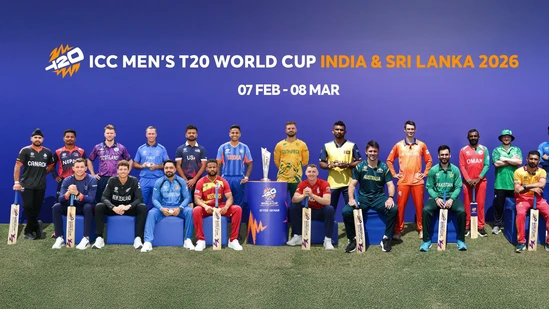
India have the opportunity to set that record straight when Edition 10 kicks off on Saturday. Under Rohit Sharma, India blazed a terrific trail in the Americas in 2024, overcoming a spirited South African challenge by seven runs in an epochal final in Bridgetown. Since then, they have been a veritable powerhouse in a format that doesn’t necessarily encourage consistency, winning 31 and losing just six games in 41 outings.
Overwhelming success in bilateral showdowns and in a continental showpiece event – India swept all seven matches on their way to the Asia Cup trophy in the UAE last September — doesn’t guarantee ultimate glory, but if much of the favouritism is directed towards Suryakumar Yadav’s men, it is with perfect justification. India haven’t just bossed the T20 landscape, they have redefined the approach to the format while the rest are struggling to play catch-up. There is plenty of class and quality elsewhere too, as is to be expected in an era where franchise-based T20 leagues are the in-thing, but the collection of riches at Suryakumar’s disposal is beyond envy.
However, and however is a massive word, however dampening it might seem, no format bridges the gulf between outfits more effectively and organically than the 20-over shootout, and that’s what India will be wary of. Once the knockouts arrive, it’s about what happens in the three and a half hours after the first ball is bowled, when the past becomes irrelevant, and the future is hazy. Should India reach the semifinal, it’s crucial to remain in the present and take it one ball at a time, time-worn cliches that continue to hold an important place in all things life, not just sport.
India will be tested at various stages, of which there is little doubt. All the attention and the hype have understandably centred around one of the two hosts; it’s almost a footnote that India will be sharing staging responsibilities with Sri Lanka, themselves a formidable limited-overs force on their own patch, even though they are coming off a humbling loss to England in the last week.
The run-up to this World Cup has been tetchier and more tenuous than anything in the recent past. Bangladesh refused to toe the official line and remained steadfast in their decision not to play in India owing to unverified security concerns, forcing the International Cricket Council to replace them at the 11th hour with Scotland. Pakistan, driven by self-serving interests, declared through its government that while it would play its other group games in Sri Lanka as per schedule, it’d boycott the marquee February 15 showdown against India. Whether they will change their petulant stance remains to be seen, especially if they reflect long and hard as they should on the potential ramifications of their rebellious call. In the long run, Pakistan will suffer more than the cricket world if the boycott threat materialises, according to the universal opinion.
England and South Africa, the former somewhat unsettled and the latter now beginning to find the comfort levels at the top level that had eluded them for so long, will fancy their chances, as will perennial global tournament (over-)achievers New Zealand and Australia. West Indies, whose skills were honed in leagues in India, the Caribbean, Australia, South Africa, England, and Pakistan, are eminently capable of recreating the magic of 2012 and 2016 when, under Daren Sammy, they emerged winners. Interestingly, Sammy is now their head coach across formats. Destiny, anyone?
Sri Lanka and Pakistan will remain in the mix, with Afghanistan floating as the dangerous dark horses. Not so long back, the Afghans were everyone’s darlings for their flair and chutzpah; now, they have married that with consistency, game awareness and a batting group that is finally starting to emerge from the shadows of a gun bowling attack led by Rashid Khan. Having missed out on the semifinals of the 50-over World Cup in 2023 because of a freak double-century from a one-legged Glenn Maxwell, they proved their coming of age by making the final four at the T20 World Cup the following year. Now that they know that they have what it takes to keep delivering internationally, they are no longer the flamboyant yet fragile force of the past.
The ‘lesser’ nations will draw inspiration from David slaying Goliath and hope for their time, however brief, under the sun, but anyone who discounts India’s chances will clearly do so at the risk of being asked to have their heads checked. Suryakumar’s is a band of warriors, intrepid and intense, super-skilled and seasoned. There is plenty of exciting new talent as well, not least Abhishek Sharma, the explosive opener, but including Suryakumar, there are at least a half-dozen players who were part of the title clash in 2024. They have won all eight of their bilateral series since the last World Cup, and are the closest anyone has come to dominating cricket’s most fickle version. Maybe it is monopoly time, after all.