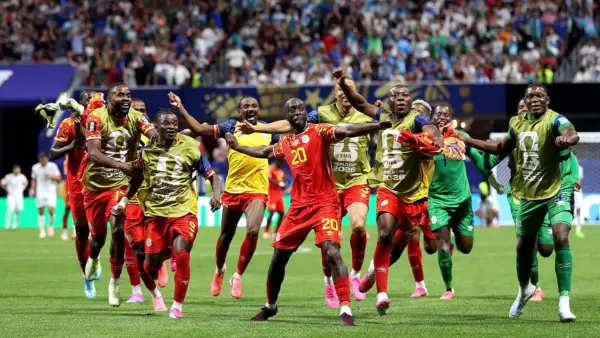
New York: A record nine African countries have qualified for the FIFA World Cup knockout stage. Of the 10 participating African nations, only Tunisia failed to advance past the group stage-a remarkable achievement for a continent that fielded just five teams at the 2022 World Cup.
Morocco, Egypt, South Africa, Ivory Coast, Cape Verde, Senegal, Ghana, DR Congo, and Algeria have all marched into the Round of 32. This historic feat underscores the rapid growth of African football and proves that the continent’s players can consistently go toe-to-toe with the world’s elite.
The group stage was packed with giant-killing performances and statement results:
Morocco held five-time champions Brazil to a stalemate. Ghana secured a thrilling draw against former champions England. DR Congo completely silenced a star-studded Portugal. Cape Verde, the ultimate tournament underdogs, pulled off a shock draw against Spain to become the story of the competition.
Even in defeat, Africa’s resilience shone through. Senegal pushed France and Norway to their limits before bouncing back to dismantle Iraq 5-0, securing a dramatic, late entry into the knockouts.
“For years, one of the loudest arguments against expanding Africa’s representation was that the continent had too many qualification spots,” Nigerian sports analyst Ibukunoluwa Oluwadamilola posted on social media. “This tournament has delivered a compelling response. Africa isn’t taking World Cup places. It’s earning them.”
Imagining that Nigeria and Cameroon missed out on a World Cup berth tells us about the competitiveness of the qualifiers on the continent.
This success is no accident; it is the product of long-term investment. South Africa famously hosted the event in 2010, and Morocco is set to co-host the 2030 tournament alongside Spain and Portugal.
Following Morocco’s historic semifinal run in 2022, the ultimate prize suddenly feels within reach. “It’s just a matter of time before an African team wins a World Cup,” former England international Peter Crouch noted on Fox Sports.
The influence of African football also extends far beyond continental borders. Dozens of players of African descent power Europe’s top national teams, including France, England, Germany, Belgium, and the Netherlands.
During the group stage, France defeated Senegal 3-1, yet a Kenyan fan wearing Senegal’s colours smiled and pointed at French stars like Kylian Mbappe and Ousmane Dembele.
“Africa won today anyway,” she said.
The passion among the African fans has been unrelenting. Morocco, Egypt, Algeria, and Ghana travelling fans have packed the stadiums and surroundings wherever their team is playing. Senegal, Congo, and Ivory Coast diasporas have turned up in numbers to their games to make up for the visa restrictions on fans back home.