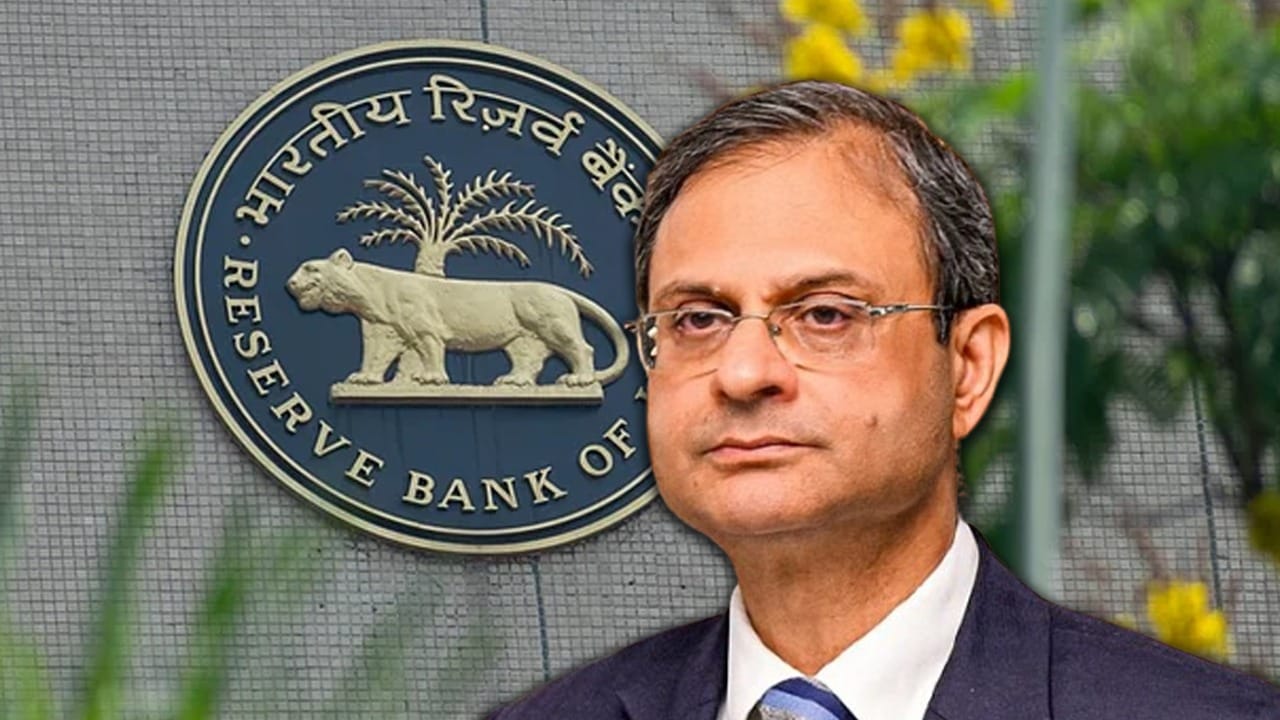
Reserve Bank of India Governor Sanjay Malhotra has not cut the repo rate in February 2026. The rate has been maintained at 5.25 percent. After the monetary policy meeting, the Governor said that the country’s economy remains in a strong position. Let us tell you in detail about the important decisions taken by RBI from growth to inflation and banking related news.
The first MPC meeting of this year started on 4 February, the results of which have come out today. The central bank has maintained the repo rate at 5.25%. Earlier in December 2025, the general public had received great news, when the repo rate was reduced by 0.25 percent. After that cut, the repo rate came down to 5.25% and currently it remains at the same level.
- Estimate of retail inflation in FY26- RBI Governor Sanjay Malhotra said that if fluctuations in the prices of precious metals like gold and silver are left aside, core inflation may remain within a limited range. RBI has estimated retail inflation to be 2.1 percent for FY26. Inflation may be 3.2 percent in the quarter from January to March 2026. Moreover, inflation is expected to gradually return to normal levels in the first half of FY27. It is expected to be 4.0 percent in April-June 2026 and 4.2 percent in July-September 2026.
- Decision on FY27 GDP growth postponed- RBI has currently postponed the full year GDP growth estimate for the financial year 2027. The Governor said that after the release of the new GDP series, its estimate will be given in the monetary policy of April. However, RBI has increased the growth estimates for the nearest quarters. Real GDP growth is estimated at 6.9 percent for the first quarter and 7.0 percent for the second quarter.
- Indian economy still strong- RBI Governor said that the Indian economy remains resilient despite global challenges. The picture regarding domestic inflation and economic growth looks positive. In the coming time, the direction of monetary policy will be decided on the basis of new inflation data and revised GDP series.
- No change in MSF and SDF rates- RBI has also not made any changes in other policy rates. Marginal Standing Facility i.e. MSF rate has been kept constant at 5.50 percent and Standing Deposit Facility i.e. SDF rate has been kept constant at 5.00 percent. Besides, the inflation estimate for the financial year 2027 has also been changed. Inflation is estimated to be 4.0 percent in the first quarter of FY27 and 4.2 percent in the second quarter.
- Relief will be given in NBFC rules- RBI has decided to ease the rules for low-risk NBFCs. It has been proposed to exempt NBFCs which do not have access to public funds and do not have direct dealings with customers from the requirement of registration. Along with this, some NBFCs will have to take RBI approval before opening more than 1,000 branches. To promote foreign investment, RBI has also proposed to remove the limit of Rs 2.5 lakh crore under the voluntary retention route.
- MSMEs will get the benefit of more loans- RBI Governor said that the central bank will issue new guidelines for Kisan Credit Card. Giving relief to small businessmen, it has been proposed to increase the limit of unsecured loan for MSMEs from Rs 10 lakh to Rs 20 lakh. This will make it easier for small and medium enterprises to take loans from banks.
- Compensation framework on fraudulent transactions- RBI Governor said that the financial condition of the banking and NBFC sector remains strong at present. However, to further improve the security of customers, RBI is preparing to bring a framework to provide compensation up to Rs 25,000 on losses incurred in fraudulent transactions. Apart from this, RBI will issue a discussion paper to enhance payment safety, in which transaction limits and additional security measures for special users like senior citizens will be considered.
- Liquidity in the system increased to Rs 2 lakh crore- The Governor said that the effect of the last repo rate cut is clearly visible on bank loan rates. As against the total reduction of 125 basis points, the average lending rate of banks has declined by 105 basis points. After the steps taken by RBI in February, liquidity in the banking system has now reached around Rs 2 lakh crore.
- Opening NBFC branch will be easy- RBI has proposed to simplify the rules for opening branches for NBFCs. Along with this, there is also a plan to create a unified digital platform to manage important data of banks in a better way.
- Strong foreign exchange reserves- RBI Governor said that till the end of January, India’s foreign exchange reserves remained at the level of 723.8 billion dollars. Apart from this, the daily average cash in banks is around Rs 75,000 crore. During December and January, RBI had taken several steps to increase cash in the system.
- Demand stable in villages, expenditure expected to increase in cities- RBI said that economic strength remains due to better results of companies and stable manufacturing activities in the unorganized sector. Demand in rural areas is stable, while consumption in urban areas is likely to increase further. The Governor also said that the free trade agreement between India and the European Union and the possible trade deal with America can give a new impetus to the country’s exports.