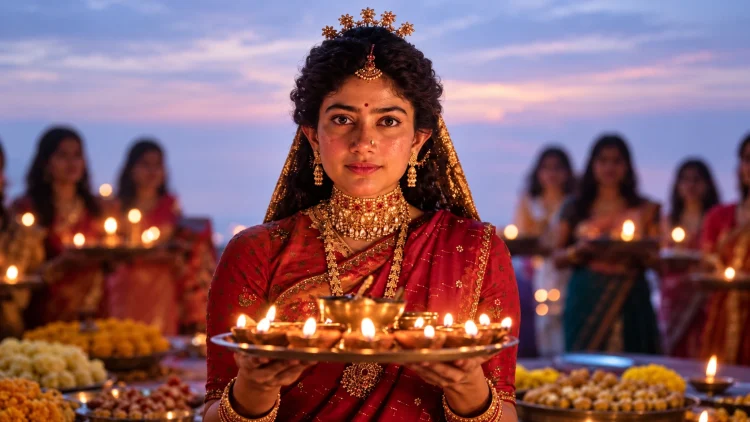
Ramayana has received fresh attention from veteran actor Nitish Bharadwaj, who has reiterated his hope that audiences will welcome Sai Pallavi in the role of Sita in Nitesh Tiwari’s ambitious cinematic adaptation. Best known for playing Lord Krishna in the iconic 1988 television series Mahabharat, Bharadwaj has shared his thoughts on the project before, particularly his expectations for its music and cultural authenticity. In a recent Instagram post, he revisited an earlier message, highlighting the importance of traditional devotional sounds in a film based on one of India’s most cherished epics.
Nitish Bharadwaj Shares His Expectations for Ramayana
Bharadwaj used Instagram to share a screenshot of his earlier post, bringing attention once again to his hopes for the upcoming film. His comments focused on two aspects: Sai Pallavi’s portrayal of Sita and the musical elements that, in his view, could help the film connect with Indian audiences.
The actor expressed a desire to hear the chaupais associated with poet-saint Tulsidas woven into the film’s soundtrack. He also mentioned traditional instruments such as the mridangam and manjira, suggesting that these familiar sounds could contribute to the film’s cultural identity.
Bharadwaj described this musical connection as a sound identity deeply rooted in the Indian collective consciousness. His remarks reflect the expectations that often accompany screen adaptations of religious and mythological stories, particularly when audiences already have strong emotional associations with the characters, verses and devotional traditions involved.
Sai Pallavi’s Casting as Sita Draws Attention
Sai Pallavi has been cast as Sita in the film, placing her at the centre of one of its most significant roles. Bharadwaj’s comments underline his hope that viewers will accept her interpretation of the revered character when the film reaches theatres.
Sita has been portrayed across television, cinema, theatre and other forms of storytelling over several decades. Each new adaptation brings its own creative choices, while audiences often approach the character with deeply established expectations. That makes casting and performance important talking points well before a mythological film arrives on screen.
Bharadwaj’s appeal is not simply about the casting itself; it also reflects the wider conversation surrounding how familiar stories can be presented to contemporary audiences. Sai Pallavi’s performance will ultimately be judged by viewers after they see the film, but her involvement has already become a point of interest in discussions about the project.
A Two-Part Release Planned Around Diwali
Directed by Nitesh Tiwari, Ramayana is planned as a large-scale cinematic adaptation of the Indian epic. According to the announced schedule in the supplied information, Ramayana: Part 1 is set for a worldwide release on November 5, 2026, ahead of Diwali. Ramayana: Part 2 is scheduled to arrive during Diwali 2027.
The two-part format gives the production room to explore the epic across separate instalments rather than compressing its extensive narrative into a single film. The project is expected to combine large-scale filmmaking with visual effects designed to bring its settings and characters to the screen.
Produced by Namit Malhotra’s Prime Focus Studios in collaboration with DNEG and Yash’s Monster Mind Creations, the film has been positioned as a major undertaking in Indian cinema. Its scale and subject matter have helped build anticipation among audiences interested in mythological storytelling.
A.R. Rahman and Hans Zimmer Lead the Music
The film’s music is another major element of interest, with A.R. Rahman and Hans Zimmer attached as composers. Their involvement brings together two internationally recognised musical talents for a project rooted in Indian mythology.
Bharadwaj’s comments about Tulsidas’ chaupais and traditional instruments highlight the balance that the soundtrack may need to strike between a cinematic soundscape and musical traditions familiar to Indian audiences. The final score will play an important role in shaping the emotional atmosphere of the film, particularly in scenes connected with devotion, duty and the epic’s central relationships.
Ramayana is planned for release in Hindi, Tamil, Telugu, Kannada and Malayalam, giving the production a broad linguistic reach. As the release dates approach, attention is likely to remain on its performances, visual presentation and music. Bharadwaj’s latest remarks add another perspective to that conversation, emphasising the value of cultural familiarity in a modern retelling of an enduring story.