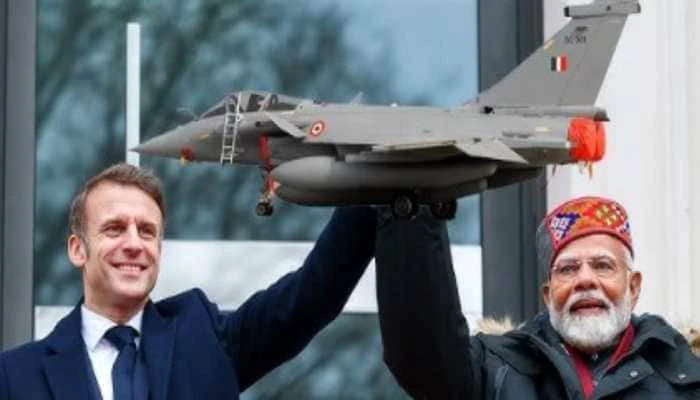
New Delhi: Indias proposed deal to acquire 114 Rafale fighter jets has raised concerns after reports suggested that France may not provide access to software source codes, including those for the Thales RBE2 AESA radar, the Modular Data Processing Unit and the SPECTRA electronic warfare suite.
India is negotiating the potential deal estimated at around $35-40 billion.
Debate has turned emotional, with some questioning whether India should entirely walk away from the deal. However, the issue extends beyond public sentiment. The Indian Air Force (IAF) is presently facing a shortage of fighter squadrons, which makes any procurement decision strategically important.
Why software matters in modern fighter jets
Modern fighter aircraft like the Rafale depend heavily on software integration. A large portion of the aircrafts capabilities comes from the software controlling radar systems, weapons integration, electronic warfare and sensor fusion.
It is understood that nearly 30 to 40 percent of the total cost of modern fighter jets is attributed to software development and integration. This means that even after paying the full price, a buyer without access to software controls effectively receives limited operational flexibility.
As military aviation technology evolves, softwares share in overall cost and capability is expected to increase further, potentially crossing 50 percent. This makes software access not just a technical issue but a long-term operational concern.
When countries purchase fighter jets from foreign manufacturers, they often continue to depend on the original manufacturer for upgrades and modifications. As new weapons emerge and adversaries deploy new systems, software updates become essential. This require returning to the original manufacturer, which can lead to additional costs and operational delays.
What India is negotiating in the 114 Rafale deal
Negotiations for 114 Rafale jets include a mix of direct imports and domestic manufacturing. Reports suggest that around 12 to 18 aircraft may arrive fully built from France, similar to the earlier 36 Rafale jets delivered to India.
The remaining aircraft are expected to be produced in the country under technology transfer arrangements. India is also pushing for a requirement that at least 30 to 50 percent of components and technologies in domestically manufactured Rafales should be indigenous.
Another demand from New Delhi involves integrating domestically developed weapons and sensors, including systems like the Astra missile. For this integration to happen smoothly, India has requested either access to parts of the source code or application programming interface level access that allows software modifications.
This requirement reflects the IAFs desire to retain operational flexibility and reduce long-term dependence on foreign manufacturers.
Why access matters more than ownership
Industry understanding suggests that manufacturers rarely share complete source codes for their platforms. This practice is followed by defence industries across the world. Even countries exporting advanced systems retain control over their software architecture.
However, operational flexibility can still be achieved through controlled access. A programming interface can provide secure and limited access to specific parts of the software architecture, and it allows integration of new weapons or sensors without exposing sensitive internal systems.
Such interfaces may allow integration of presently operational weapons, but there are concerns whether they would be sufficient for future requirements. Weapon systems and combat concepts are evolving, and future operational needs may demand more advanced integration capabilities.
Future warfare driving the debate
Future air combat concepts are expected to involve drone swarms, collaborative combat aircraft and manned-unmanned teaming. The IAF may want Rafale jets to launch drones or operate along with unmanned combat aircraft in the coming years.
Such capabilities would require advanced software integration and broader access to internal systems. Without this flexibility, future upgrades could become expensive, time-consuming or even operationally restrictive.
This concern has revived memories of earlier procurement challenges, where dependence on foreign manufacturers created long-term limitations. The Rafale negotiations are now being viewed through that lens, with a growing emphasis on securing access that allows India to adapt aircraft to future combat needs.
What Indias strategy could look like
The emerging view suggests that India may push for guaranteed access to relevant portions of software architecture customised to operational requirements. This access would ideally be provided at a pre-agreed cost to ensure predictability in long-term upgrades.
If additional access is denied, the expectation is that negotiations could move toward more extensive technology sharing arrangements. The goal would be to ensure that India retains flexibility to integrate future weapons, sensors and combat systems without facing operational bottlenecks.
As negotiations continue, the Rafale deal now extends beyond merely acquiring aircraft. The focus has moved toward ensuring long-term independence, operational flexibility and readiness for future warfare.
With India balancing immediate squadron shortages and long-term strategic autonomy, the outcome of this negotiation could define the IAFs capabilities for decades.