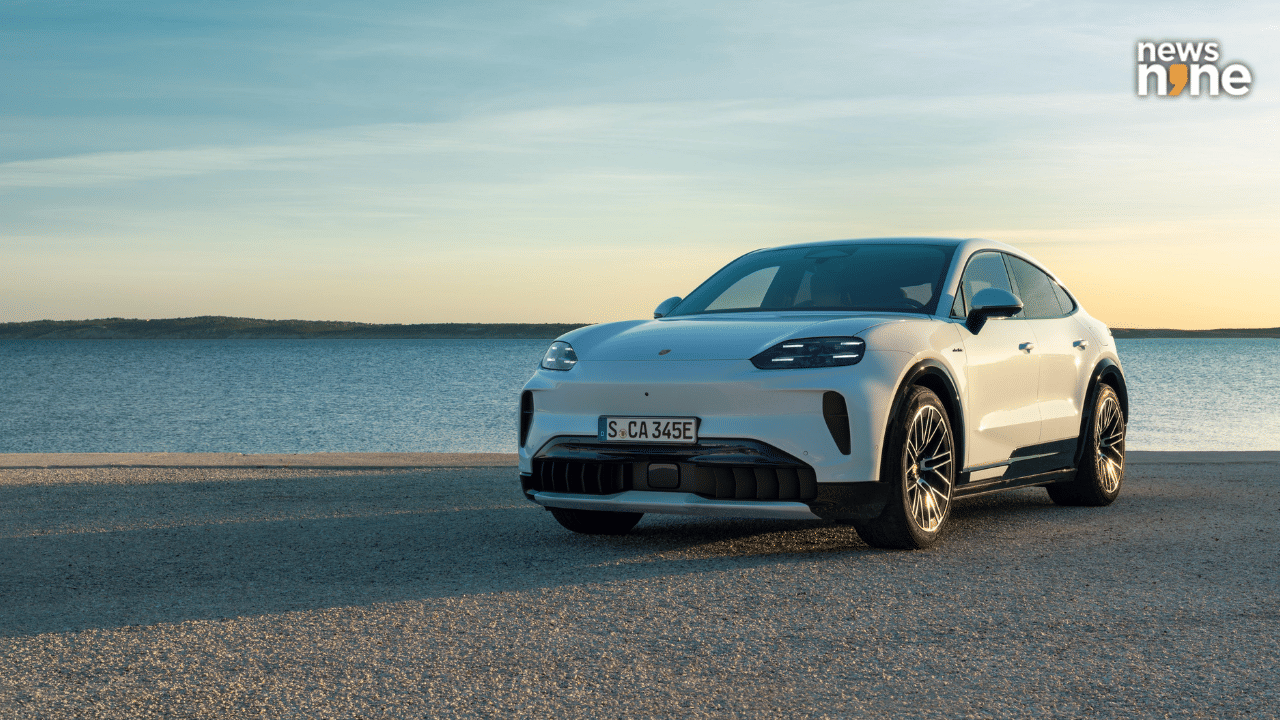
New Delhi: Porsche is coming into the next phase of its EV strategy, and the Cayenne Electric is sitting at the crow’s nest of this sailing. Following the arrival of the standard SUV earlier this year, the automaker is now debuting a more design-focused trim, the Cayenne Coupe Electric.
Beneath the surface, it comes with essentially the same vehicle as the standard Cayenne Electric. The difference is almost just in the styling, if we are being honest. The Coupe comes with a sleeker, more distinctive exterior, with a greater focus on aerodynamics, without sacrificing space, comfort, or the model’s standout performance. Porsche Cayenne Coupe Electric will make its debut at this year’s Beijing Auto Show.
Porsche Cayenne powertrain
The Cayenne Coupe’s performance is really glaring, coming with about 1156 bhp and can do 0-100 kph in 2.5 seconds. That makes the Cayenne Coupe Electric the brand’s most powerful production Porsche ever made, going past Taycan Turbo GT. Mechanically, it is like the standard model, coming with an 800-volt architecture that supports charging speeds of up to 400 kilowatts, and that allows it to do 10-80 per cent in 16 minutes.
It comes with a 113 kWh battery that powers dual electric motors, one on each axle, for all-wheel drive. To improve the efficiency, the front motor can decouple when full isn’t required.
At launch, Porsche will give it three power levels, which means the base trim will make 408 hp (442 hp with overboost), the S will make 544 hp (666 hp with overboost), and the top-of-the-range Turbo makes 857 hp—or up to 1,156 hp with overboost. The chassis technology is quite advanced, coming with adaptive air suspension, Porsche Active Ride for precise damping control and rear-axle steering.
Porsche Cayenne exterior and interior
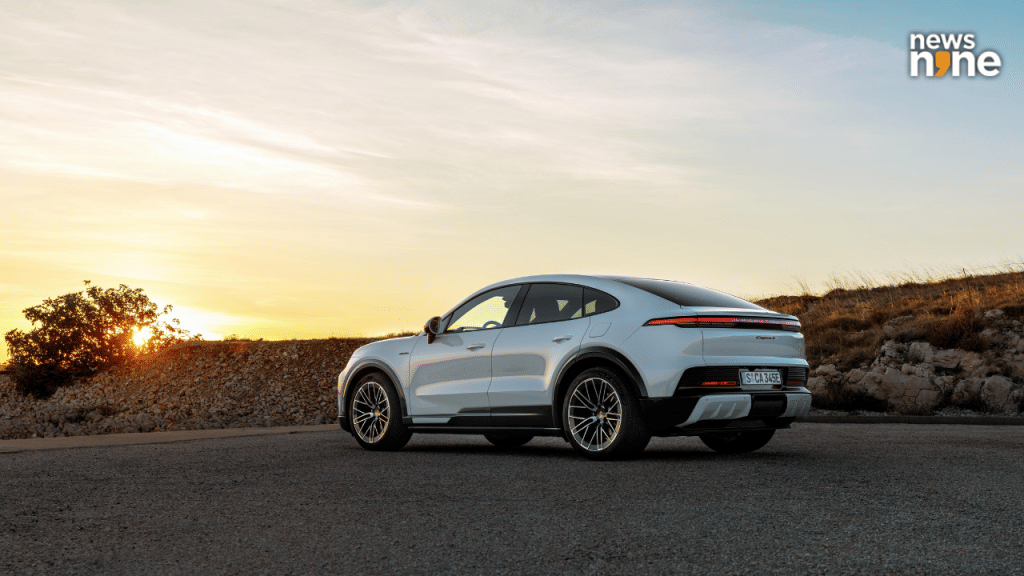
Porsche Cayenne Coupe Electric comes with a sloping roof at the back
At the front, the Cayenne Coupe Electric is similar to the standard version, coming with clean surfaces and horizontal lighting elements that highlight the width. From the A-pillar back, though, the differences start appearing more. The windshield is more steeply raked, the roofline drops more aggressively, and the back is shorter, much more sculpted and tapered.
The aerodynamics are important, and features like the integrated adaptive spoiler and the Turbo model’s side flaps are as much about being functional as they are about visual highlights. The Coupe comes with a drag coefficient of 0.23 and, in fact, sits about 0.8 inches lower than the standard model, making it appear more planted in terms of stance across the almost 16.4-foot length.
On the inside, the technology is the key element, coming with a completely digital instrument cluster, mated with a large curved central display and an optional passenger screen. It further gets an augmented-reality head-up display that projects important information onto the road in front.
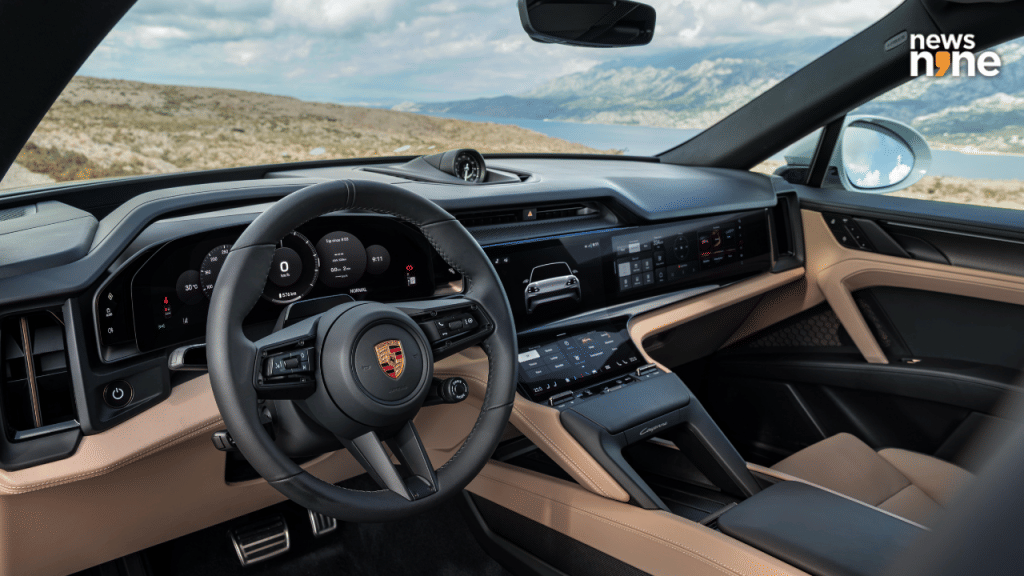
Porsche Cayenne Coupe Electric interior is well balanced between touch and physical buttons
Porsche has struck a great balance for mixing the cabin with physical controls and digital interfaces, in place of relying just on touch inputs. The result is that the driving feels more intuitive. Personalisation is a major focus as well, with configurable displays, customizable graphics, and seamless app integration. There are more dramatic touches, which include an electrochromic panoramic roof that gets an adjustable tint and power-operated doors.
Though coming with the sloping roofline, practicality has been quite good, with four adults having enough space to travel, and the cargo space comes as a 90-litre front trunk. The ICE version of the Cayenne Coupe was quite successful, and that is something even the EV can be expected of.