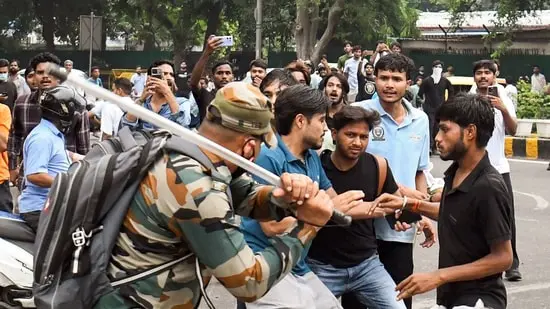
Tens of thousands of protesters swarmed central Delhi on Monday morning as part of a planned but unauthorised march to Parliament that quickly descended into pandemonium as the police struck agitators with batons and fired tear gas shells to disperse huge crowds that climbed over barricades and brought large chunks of the Capital to a halt.
Despite police barricades on 10 arterial roads, five key metro stations shut since 9am and mobile internet suspended between 10.30am and 6pm, activists, students, young professionals and housewives poured into Jantar Mantar since daybreak. By afternoon, protesters and the police were fighting pitched battles on bylanes and roundabouts, as Connaught Place, Patel Chowk, Raisina Road, outside Parliament, India Gate, Ashoka Road and APJ Abdul Kalam Road resembled a war zone, according to reporters and eyewitnesses.
By evening, the police had managed to push back protesters with batons and tear gas, thrashed agitators out of Jantar Mantar and dismantled their stage, only for activist Sonam Wangchuk to announce that his hunger strike will continue and the Cockroach Janata Party to say that they were mobilising again.
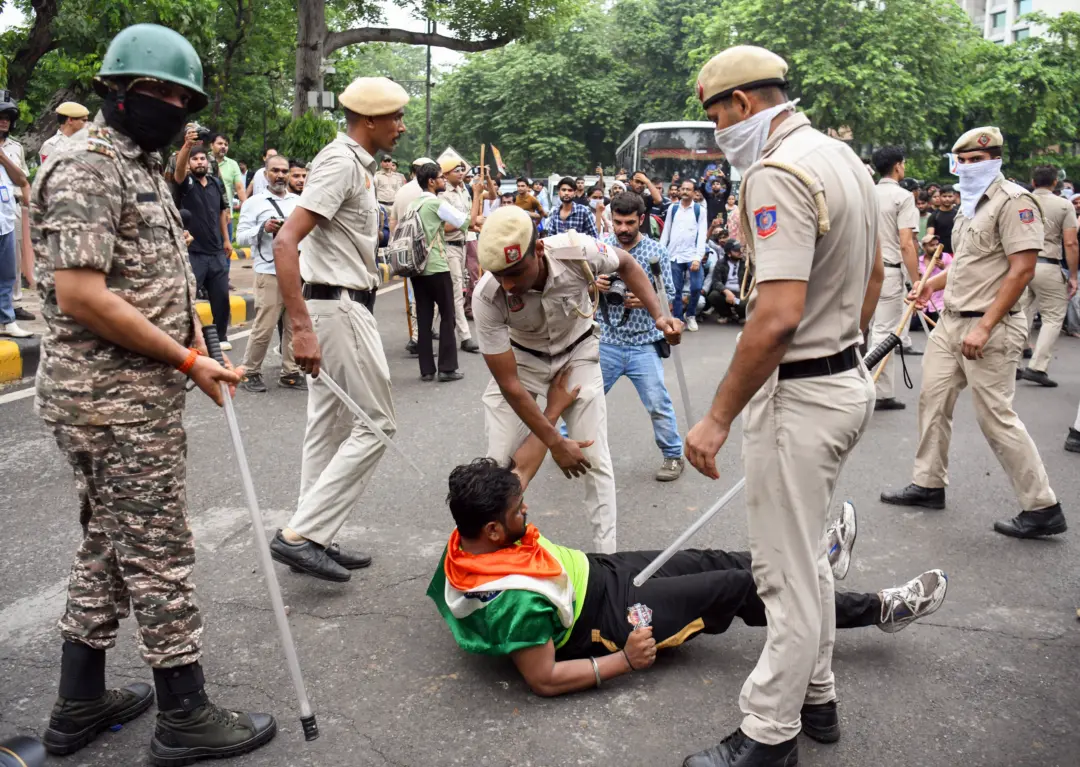
Late evening, some CJP leaders returned to the protest site at Jantar Mantar; police had earlier cleared the site of protestors and dismantled the stage there. A spokesperson for the CJP said supply of electricity had been cut off to the site and vowed to continue with the agitation.
Police version
Delhi Police in a statement said the protestors had displayed violent behaviour, attacking personnel with stones and other objects while violating prohibitory orders that were in place despite warnings.
Police said an first information reports (FIR) is being lodged for rioting, assault on public servants, damage to public property and other offences committed during the protest. The statement said around 70 people were detained, and that at least 118 police personnel were injured. Around 15-20 vehicles and government property was vandalised, the statement added.
A senior police officer said separately that an FIR will also be lodged for the illegal use of drones in the high security area. “We are reviewing the developments on the day on a case-by-case basis and appropriate legal action will be taken,” the officer said.
Protesters allege excessive force
But protesters alleged that their injuries were manifold. The exact number of injured protesters was not immediately known. However, reports said the wounded could be in the hundreds – with officials at one government hospital confirming “at least 100” protesters being treated for injuries.
Abhishek Gupta, 25, a resident of Janakpuri, alleged that security personnel resorted to violence. “I was there because there are four-five children in the family who are preparing for NEET and are under massive pressure.”
Among the protesters were teenagers bunking school, parents marching with their children, college students next to government job aspirants, and people walking to the site after overnight bus and train journeys. Members of Left student organisations, Aam Aadmi Party, and MP Chandrasekhar Azad were also present, with supporters. Many carried the Tricolour in their hands along with handwritten placards, chanting slogans such as “Bharat Mata Ki Jai”, “Vande Mataram”, “Inquilab Zindabad”, “Jai Bhim” and demanding the resignation of Union education minister Dharmendra Pradhan.
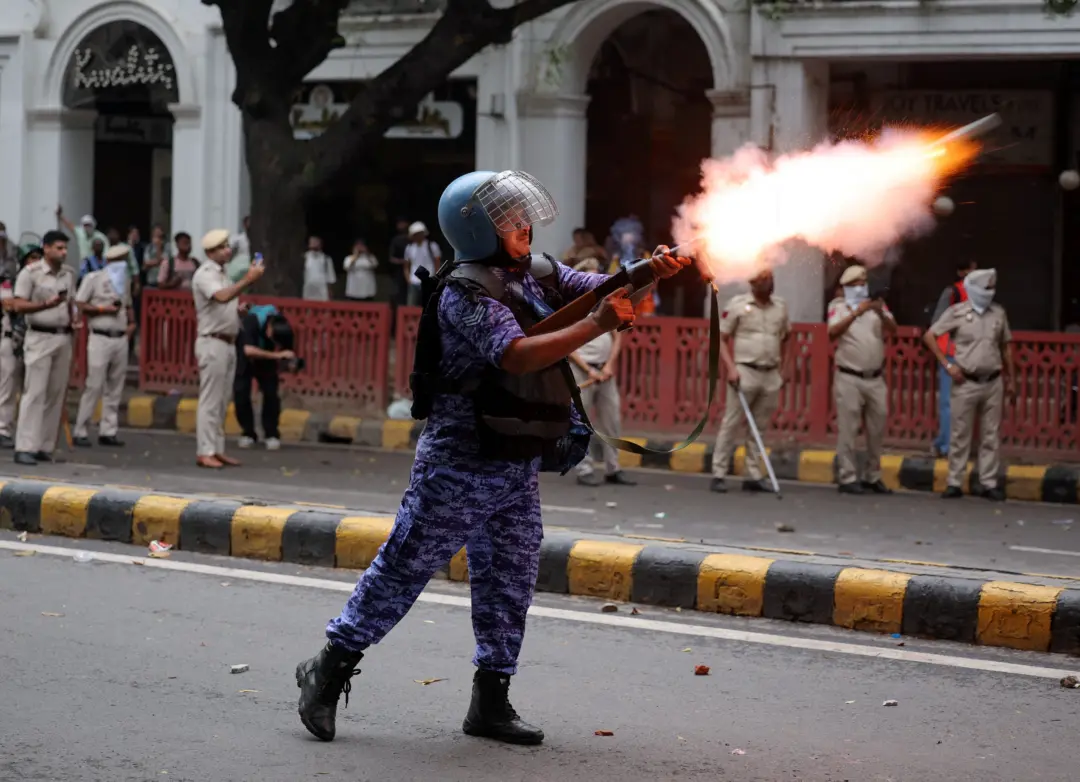
Rohan Singh (30), who travelled from Haryana to take part in the protest, questioned the police action, saying the use of force by the police was completely unjustified. “We are on the streets demanding accountability from the government. If it is holding talks with the CJP leadership, then why are students being beaten? They are firing tear gas at us and chasing us through the market lanes with lathis,” he said. “If some of the restaurants hadn’t allowed us to take shelter inside, many more of us would have been injured.”
How the clashes unfolded
With hundreds of barricades on ten arterial roads, every path to Parliament was blocked, prompting protesters to slip into narrow lanes and suddenly converge at a roundabout. Police in riot gear stood behind several layers of metal barricades.
The march started with Cockroach Janata Party convener Abhijeet Dipke, Wangchuk’s wife Gitanjali Angmo, along with volunteers, boarding a tractor and stopping at the barricades near Kerala House, The commotion began around 10.30am when protesters smashed past the barricades near Kerala House, which led Delhi Police to lathi-charge people. At 11.30am, protesters pushed past a barricade outside Parliament Street Police Station and marched on as police resorted to lathi-charging. Around 30 minutes later, another clash broke out near Patel Chowk and Rail Bhawan.
The protesters were finally pushed back near the Raisina road with tear gas shelling — roughly 50-100 metres from the Parliament gate — from where they branched off into various areas of central Delhi.
The area reverberated with the booming sound of tear gas shells as protesters ran for cover and police charged at the crowd. The most violent battles were witnessed at Raisina Road, the roundabout near Janpath Metro station, and near Regal Cinema in Connaught Place.
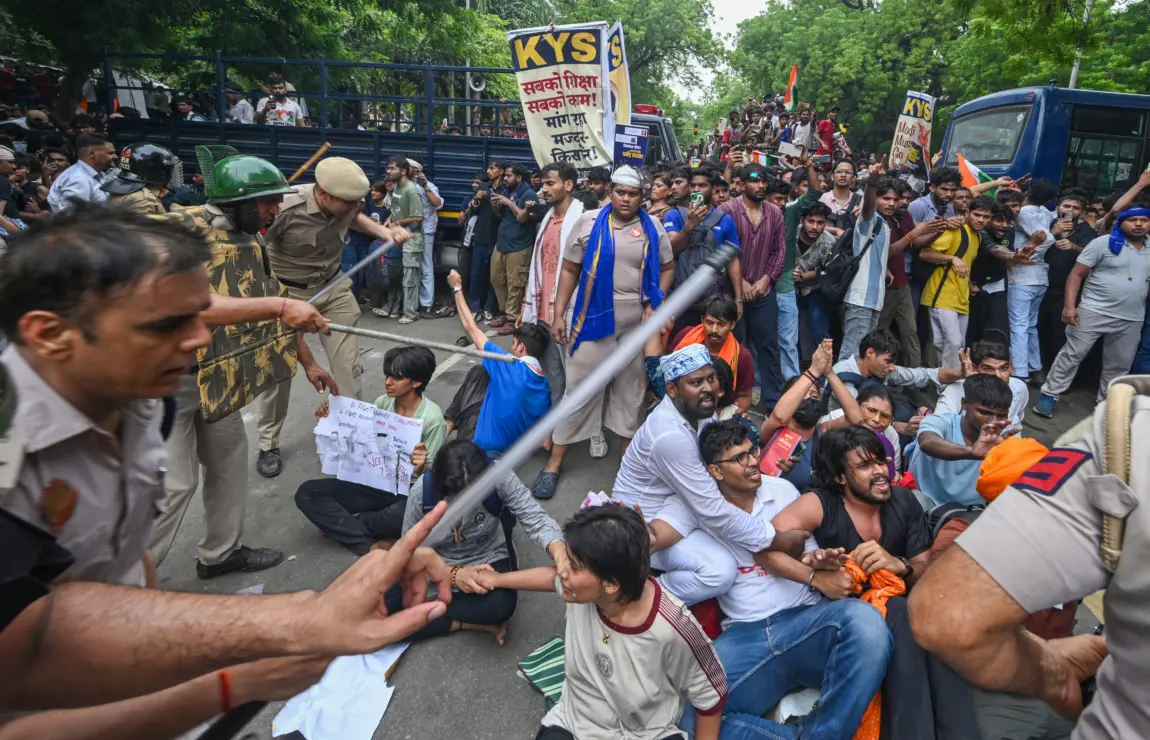
“All participants are requested to conduct themselves in a peaceful manner, refrain from indulging in any unlawful or violent activities and comply with the lawful directions issued by police officers/personnel deployed on duty,” Delhi Police said on X.
The violence left behind marks of desperate struggle across central Delhi.
Barricades lay on the roads, so did shoes and slippers, never in pairs. Torn placards, water bottles and broken umbrellas were strewn all along Parliament Street.
Sandeep, a student from Delhi, sat on a pavement with blood running down his forehead. “They hit me on the head, and after that they dragged me here by force,” he said. A short distance away, Prakash said, “There were old people; they were collapsing… But the police did not stop.”
Yogesh Prajapathi, a 26-year-old UPSC aspirant said the government had created several hurdles for demonstrators, from denying permission to using force against them.
“Many of us came guided by the ideals of Ambedkar and Gandhi. Despite the obstacles, we remained firm in our commitment to peacefully register our dissent over the state of education, but what the Delhi Police did was unfair and unjustified. There was no need for this kind of violence by them. It was just a peaceful protest by students,” Prajapathi said.
AAP leaders Manish Sisodia, Atishi and Sanjay Singh, activist Yogendra Yadav, and actors Shabana Azmi and Prakash Raj participated in the protest.
By evening, Dipke, spokesperson Ashutosh Ranka, Saurav Das and Angmo had returned to the sit-in near Kerala House, saying the agitation would continue despite the crackdown.
“Police have been absolutely brutal,” Dipke alleged.
Angmo said the movement has drawn the support of millions of young people. “This shows that our education system, education policies and overall governance in the sector are deeply flawed and affecting every young person. The government must listen to their concerns at the earliest,” she added.