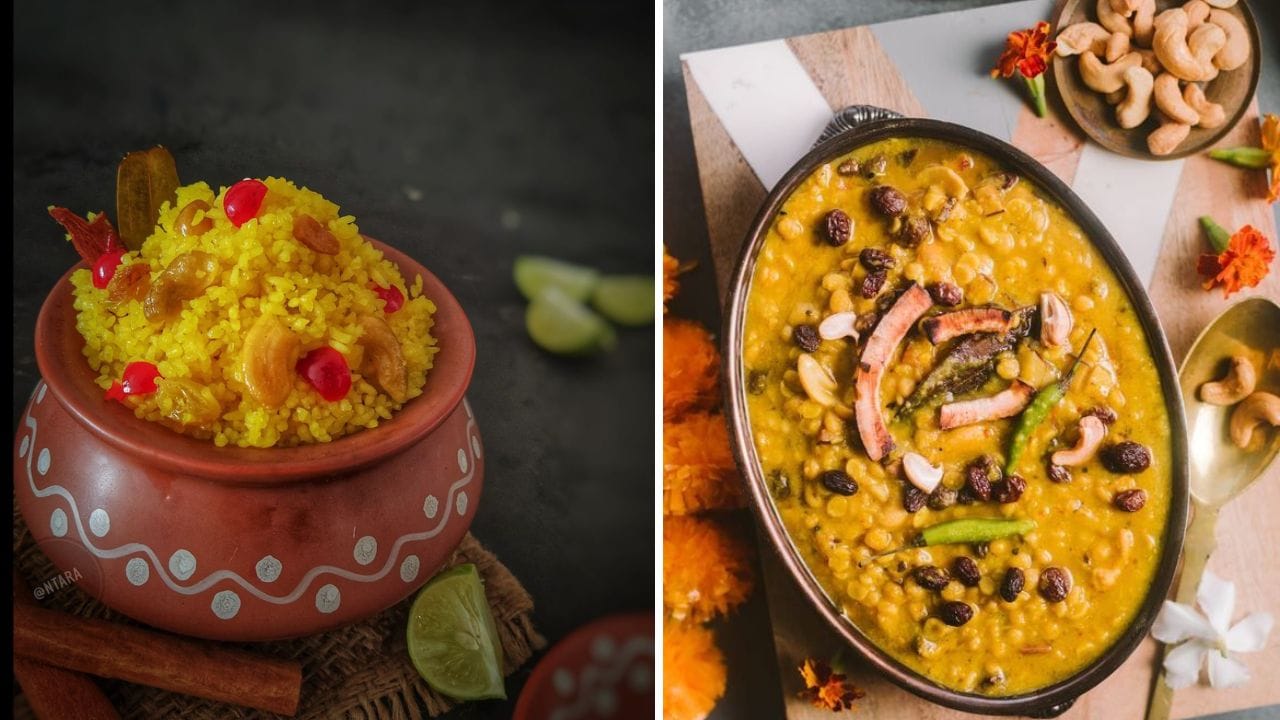
New Delhi: Poila Boishakh, the Bengali New Year, marks the first day of the month of Boishakh and serves as a vibrant symbol of renewal, cultural pride, and fresh starts. This year it will be celebrated on April 15. For Bengalis, the day is deeply tied to the “Haal Khata” tradition of opening new accounting ledgers, making it a celebration of future prosperity. Central to this festive spirit is the iconic pairing of basanti pulao and cholar dal. The pulao’s bright yellow colour, derived from turmeric or saffron, mirrors the golden glow of spring (Basanta), signalling optimism and auspicious beginnings.
The delicate sweetness of basanti pulao reflects the traditional desire to start the year on a “sweet note”. Paired with nutty cholar dal enriched with coconut, this fragrant meal, once a luxury of the aristocracy, now unites families in a shared culinary heritage, inviting abundance and joy into every household for the year ahead. Here are the ingredients and recipe for basanti pulao and cholar dal.
Recipe for basanti pulao and cholar dal
1. Basanti pulao (mishti pulao)
It is a fragrant, sweet yellow pulao made with short-grain gobindobhog rice, ghee, cashews, and raisins.
Prep time: 30 mins | Cook time: 20 mins | Serves: 3-4
Basanti pulao ingredients
- 2 cups gobindobhog rice (or kalijeera rice)
- 3-4 tbsp ghee (divided)
- 1 tsp turmeric powder
- 2 Bay leaves
- 4 Cardamom
- 4-5 Cloves
- 1-inch cinnamon stick
- 1 tbsp ginger paste
- 2 tbsp cashew nuts
- 2 tbsp raisins
- 4 tbsp sugar (adjust to taste)
- ¾ tsp salt (to taste)
- 4 cups water (1:2 ratio)
How to prepare basanti pulao
- Wash the rice at least 3 times. Drain completely and spread on a flat dish to dry for 30 minutes.
- Marinate the dried rice with turmeric powder, half the ginger paste, 1 tbsp ghee, and 1 tbsp sugar.
- Let it rest for 30 to 60 minutes.
- Heat two tbsp of ghee. Fry cashews and raisins until golden brown, then set aside.
- In the same pan, add bay leaves, cardamom, cinnamon, and cloves. Stir for 10 seconds.
- Add the marinated rice to the pan and sauté on medium heat for two to three minutes until it turns glossy and aromatic.
- Add 4 cups of hot water, remaining sugar, salt, and fried nuts or raisins. Cover and cook on low flame for 10 to 12 minutes until the water is absorbed and the rice is fluffy.
- Remove from heat and let it rest for 10 minutes before serving.
2. Narkel diye cholar dal (Chana dal with coconut)
A traditional, vegetarian Bengali lentil dish made with chana dal, fried coconut slices, and ginger, finished with ghee and whole garam masala.
Prep time: 20 mins | Cook time: 25 mins | Serves: 3-4
Ingredients for narkel diye cholar dal
- 1 cup chana dal (split Bengal gram)
- ¼ cup sliced coconut (fried)
- 2 tbsp ghee
- 1 tbsp mustard oil
- 1 tsp cumin seeds
- 2 Bay leaves
- 2 Dried red chillies
- 1-inch cinnamon
- 3 Cardamom
- 3 Cloves
- 1 tsp ginger paste (or grated)
- 2-3 Green chillies
- 1 tsp sugar
- ½ tsp turmeric powder
- ½ tsp garam masala powder
How to prepare narkel diye cholar dal
- Soak the chana dal for 1 hour.
- Pressure cook with 2.5 cups of water, turmeric powder, and salt for 3-4 whistles.
- The dal should be cooked but retain its shape, not mushy.
- Heat 1 tbsp ghee in a pan. Fry the chopped coconut until light brown. Set aside.
- In the remaining ghee, add bay leaf, dry red chillies, cumin seeds, and hing.
- Add ginger paste and fry for a minute. Add the cooked dal, fried coconut (keep some for garnish), sugar, and green chillies.
- Mix well and let it simmer for 5-7 minutes until the consistency is thick.
- Add garam masala powder and a final spoon of ghee. Cover and let it rest for 5 minutes.
During the Poila Boisakh celebration, Bengali kitchens come alive with aromas of basanti pulao and cholar dal that signal new beginnings and cherished traditions. With the recipes of these traditional dishes, make your festivity special too.