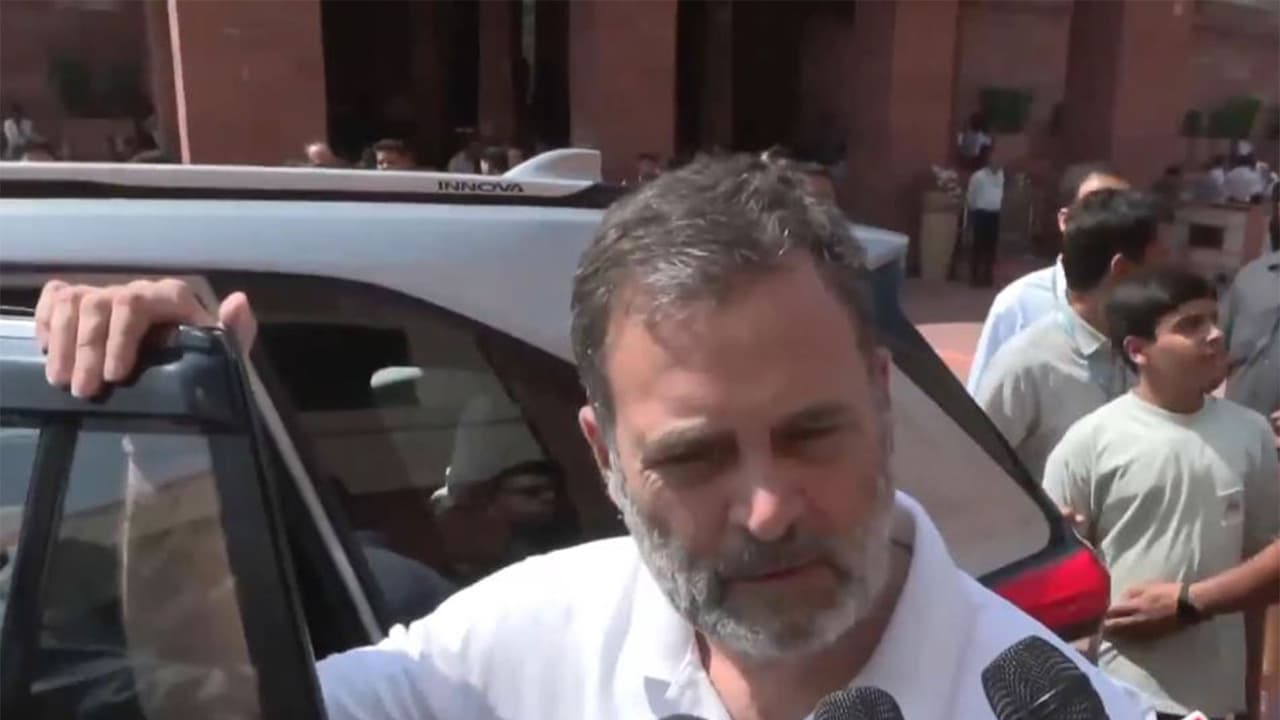
Rahul Gandhi criticized PM Modi’s handling of the West Asia conflict, claiming he will follow US and Israeli orders. The Congress leader, who will miss an all-party meeting on the crisis, alleged the PM is not acting in the country’s interest.
Leader of the Opposition in the Lok Sabha, Rahul Gandhi, on Tuesday launched a sharp attack on Prime Minister Narendra Modi over his handling of the West Asia conflict. Amid reports of Pakistan allegedly facilitating talks between Iran and the U.S., the Congress leader alleged that PM Modi will follow the orders of America and Israel. Further criticising the Indian government’s foreign policy, Gandhi declared that the Prime Minister is not working in the interest of the country at large. Commenting on the upcoming all-party meeting on the West Asia crisis, he mentioned that he wouldn’t be able to attend the meeting due to a scheduled programme in Kerala.
‘PM Will Do Whatever America and Israel Say’
“I would not be able to attend because I have a program in Kerala. All-party meeting should take place, but a structural blunder has been made… And this cannot be fixed, especially since the Prime Minister cannot. He will do whatever America says and will not work in the interest of the farmers and the country. He will do whatever America and Israel say,” said Gandhi.
The Government of India has called for an all-party meeting on March 25 (Wednesday) at 5 PM on the West Asia crisis.
US Downplays Speculation on Iran Talks
Earlier, the White House had downplayed speculation regarding U.S.-Iran talks being facilitated in Pakistan. White House Press Secretary Karoline Leavitt stated that “no meeting should be considered final until officially announced,” emphasising that the U.S. will not negotiate through the press in such a fluid diplomatic situation.
“These are sensitive diplomatic discussions, and the US will not negotiate through the press. This is a fluid situation, and speculation about meetings should not be deemed as final until they are formally announced by the White House,” she said.
Conflict Escalation and Economic Impact
Meanwhile, the ongoing conflict in West Asia has entered its fourth week, severely disrupting trade routes through the Strait of Hormuz. These tensions escalated following the death of Iran’s 86-year-old Supreme Leader, Ayatollah Ali Khamenei, who was killed in joint military strikes by the U.S. and Israel on February 28.
Following the joint military strikes, Iran targeted Israeli and US assets across several Gulf countries in retaliation, which caused further disruptions to the waterway and impacted international energy markets as well as global economic stability. (ANI)
(Except for the headline, this story has not been edited by Asianet Newsable English staff and is published from a syndicated feed.)