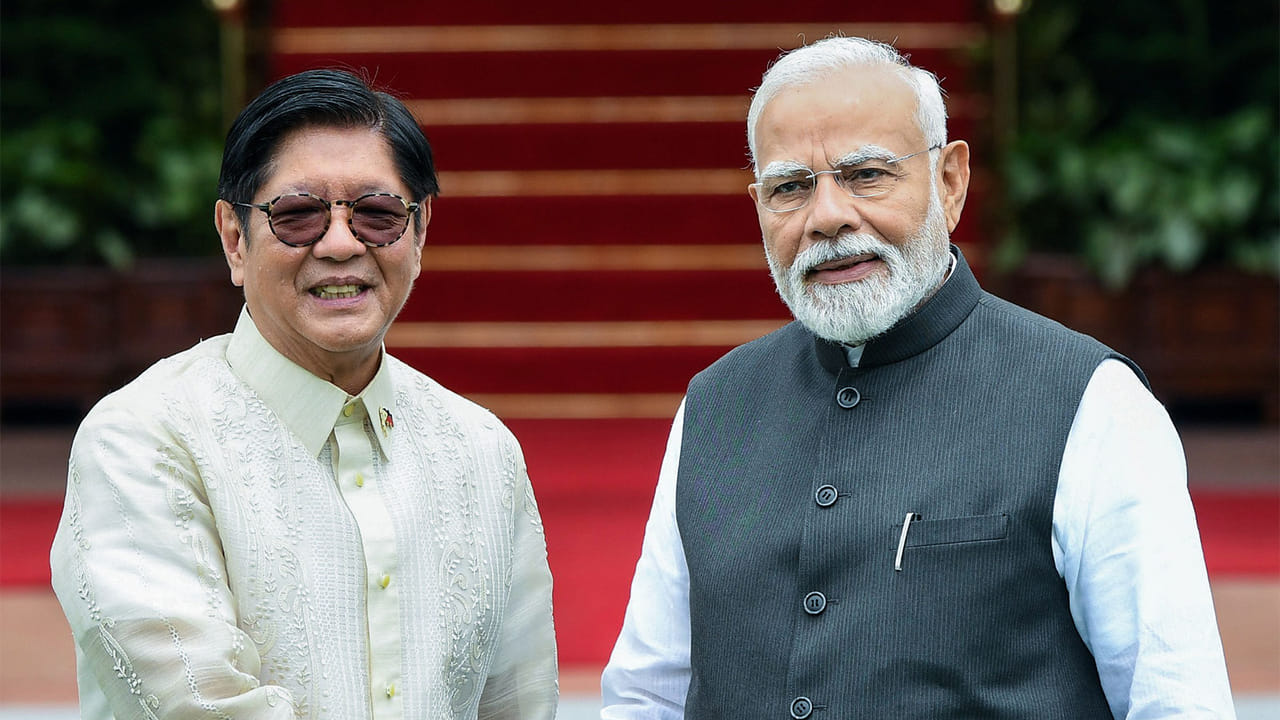
PM Modi travels to Manila for the 23rd ASEAN-India and 21st East Asia Summits. He will focus on enhancing maritime security, deepening economic ties, and engaging in regional diplomacy alongside leaders from major global powers.
New Delhi [India], November 16 (ANI): As Manila prepares to host a gathering of world leaders amid mounting geopolitical and security challenges in the Indo-Pacific, Prime Minister Narendra Modi is set to arrive in the Philippine capital on Monday for a three-day visit to attend the 23rd ASEAN-India Summit and the 21st East Asia Summit, with India expected to push for stronger maritime security cooperation and deeper economic partnerships across the region. The visit from November 16 to 18 comes at a significant moment for the 11-member Association of Southeast Asian Nations (ASEAN), with the Philippines hosting the 49th ASEAN Summit and Related Summits under the theme “Navigating the Future”. With leaders from major global and regional powers assembling in Manila, discussions are expected to centre on regional security, maritime disputes, economic cooperation and the evolving geopolitical landscape.
For New Delhi, the engagements provide an important platform to advance its Indo-Pacific priorities, particularly stronger naval coordination and maritime security cooperation among like-minded countries, alongside expanding India’s commercial and strategic engagement with Southeast Asia. Announcing the Prime Minister’s visit, Secretary (East) in the Ministry of External Affairs Rudrendra Tandon said PM Modi would participate in the two major regional diplomatic engagements during his stay. “Prime Minister Modi will be travelling to Manila to attend the 23rd ASEAN-India Summit and the 21st meeting of the ASEAN-led East Asia Summit process. The visit will take place from November 16 to 18,” Tandon said during a special media briefing.
PM Modi’s programme includes participation in the ASEAN-India Summit and the East Asia Summit process on November 17, a dinner hosted by Philippine President Ferdinand Marcos Jr. for visiting dignitaries and scheduled bilateral meetings. The Prime Minister is also expected to interact with members of the Indian community in the Philippines, with Tandon acknowledging considerable interest among the diaspora in meeting him. “There is also a very strong demand from the Indian community to meet the Prime Minister. So we are trying to adjust that also in his schedule,” the MEA official said.
One of India’s principal priorities at the regional gatherings will be strengthening maritime and naval cooperation in the Indo-Pacific, a region where security challenges and maritime disputes continue to feature prominently in diplomatic discussions. The East Asia Summit, established in 2005, provides a key platform for regional leaders to deliberate on political, security and strategic developments. Alongside ASEAN’s member states, it brings together India, China, Japan, South Korea, Australia, New Zealand, the United States and Russia. The Philippines’ chairmanship has also brought renewed attention to maritime security, particularly the long-pending negotiations between ASEAN and China over a Code of Conduct (COC) for the South China Sea.
Philippine Foreign Affairs Secretary Theresa Lazaro has acknowledged that the bloc will not be able to conclude the agreement during Manila’s chairmanship, despite progress in negotiations. According to Philstar, Lazaro said ASEAN and China had provisionally agreed on approximately 80 per cent of the proposed code. However, differences over key provisions, including whether the agreement would be legally binding, remain unresolved. “There is not enough time” to complete the agreement, Lazaro said, as quoted by Philstar. She indicated that three of the four major sticking points remained unsettled, meaning negotiations would continue under Singapore, which is scheduled to assume ASEAN’s chairmanship in 2027.
The maritime security discussions are particularly relevant to India’s push for greater coordination among Indo-Pacific partners, with New Delhi seeking to strengthen its engagement with countries across the wider region. Beyond security cooperation, strengthening economic and commercial ties with ASEAN will be another important focus of PM Modi’s visit. India’s partnership with the regional grouping has expanded across trade, investment, defence and security, with New Delhi seeking to deepen economic engagement and improve cooperation amid rapidly evolving geopolitical developments. One of the important issues on the agenda is the ongoing review of the ASEAN-India Trade in Goods Agreement (AITIGA), with India seeking an early conclusion to the negotiations. Asked about the progress of the review, Tandon said discussions were continuing. “That conversation is ongoing,” he said.
The MEA official also underlined the importance of closer India-ASEAN engagement in building collective resilience against changing regional and global circumstances. The summit also confirmed ASEAN’s future chairmanship rotation, with Singapore set to take over in 2027, Thailand in 2028 and Timor-Leste in 2029. The Philippine capital has witnessed the arrival of leaders and senior representatives from across the world for the ASEAN summit and related engagements, underlining the regional grouping’s importance as a platform for international diplomacy.
According to the Philippine government, at least 19 leaders representing sovereign nations and international organisations are set to participate. Among them are Chinese Premier Li Qiang, Brazilian President Luiz Inácio Lula da Silva, Canadian Prime Minister Mark Carney and United Nations Secretary-General Antonio Guterres. The gathering also includes Australian Prime Minister Anthony Albanese, Indonesian President Prabowo Subianto, Malaysian Prime Minister Anwar Ibrahim, Thai Prime Minister Anutin Charnvirakul, Singapore Prime Minister Lawrence Wong and Timor-Leste Prime Minister Kay Rala Xanana Gusmao. With the participation of major powers, ASEAN members and international organisations, the Manila meetings are set to provide a broad platform for discussions on the region’s political, economic and security challenges. For India, PM Modi’s participation comes as New Delhi seeks to consolidate its strategic partnership with ASEAN while advancing maritime security cooperation, strengthening trade relations and reinforcing its engagement with like-minded Indo-Pacific countries. As regional leaders deliberate on the future of the Indo-Pacific, India’s agenda in Manila will centre on translating its growing engagement with Southeast Asia into stronger economic partnerships and closer cooperation on shared maritime and security concerns. (ANI)