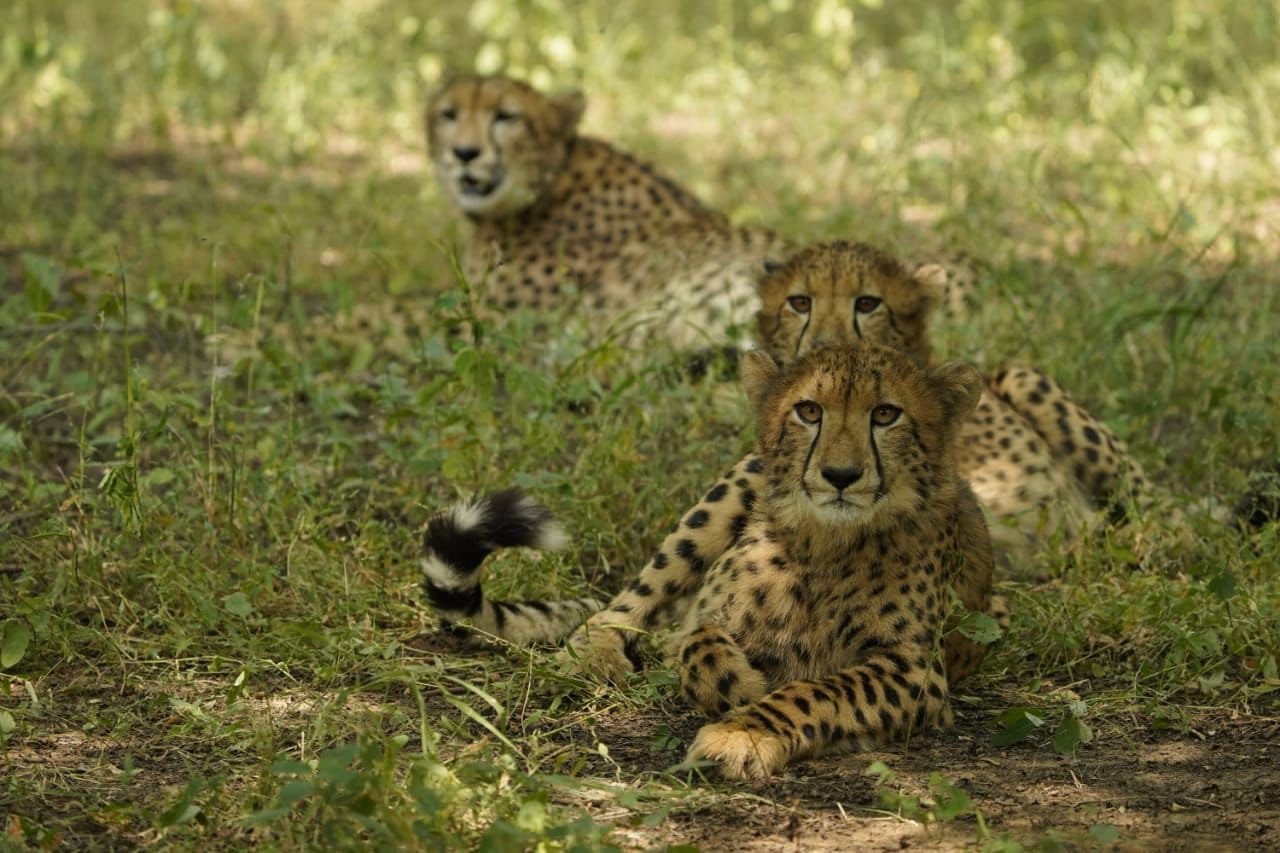
New Delhi: Prime Minister Narendra Modi’s warm wishes on International Cheetah Day today (December 4) struck an unmistakably upbeat note. Hailing the return of the “magnificent” animal to Indian soil, he praised Project Cheetah as a revival of biodiversity and a symbol of renewed ecological ambition. In a post on X, PM Modi extended his “best wishes to all wildlife lovers and conservationists dedicated to protecting the cheetah, one of the planet’s most remarkable creatures.”
Hailing the Centre’s role in translocating the species, the PM wrote: “Three years ago, our Government launched Project Cheetah with the aim of safeguarding this magnificent animal and restoring the ecosystem in which it can truly flourish. It was also an effort to revive lost ecological heritage and strengthen our biodiversity.” He added, “India is proud to be home to several cheetahs, and a significant number of them are born on Indian soil. Many of them now thrive in the Kuno National Park and the Gandhi Sagar Sanctuary.”
On International Cheetah Day, my best wishes to all wildlife lovers and conservationists dedicated to protecting the cheetah, one of our planet’s most remarkable creatures. Three years ago, our Government launched Project Cheetah with the aim of safeguarding this magnificent… pic.twitter.com/FJgfJqoGeA
— Narendra Modi (@narendramodi) December 4, 2025
The PM further invited the wildlife enthusiasts across the world to visit India and explore “cheetah tourism”.
“It is heartening to see cheetah tourism growing in popularity as well. I encourage more wildlife enthusiasts from across the world to visit India and witness the cheetah in all its splendour,” the PM wrote.
A day of celebration, a pause for reflection
It was the sort of message that invites pride and, for many, nostalgia for a landscape where the fleet-footed cat once raced across open grasslands. Yet, as with many conservation stories, the celebration sits alongside quieter, unresolved questions. And on a day dedicated to the world’s fastest land animal, it is difficult not to sense the undertow beneath the official cheer.
World’s fastest cat running out of time
Across the world, the cheetah continues a fragile existence. With only around 7,100 individuals remaining in the wild and 91% of their historic range lost, the global struggle to keep the species viable has intensified. The demise of Vincent van der Merwe — the South African conservationist whose metapopulation model helped stabilise cheetah numbers in his country — in March 2025, was a sobering reminder of how delicate these efforts are. His obituary in Mongabay noted that “his methods worked,” offering one rare conservation success.
India’s role in this global narrative is both inspiring and complicated. The reintroduction plan, launched 70 years after the cat’s extinction here, was nothing if not bold. 20 African cheetahs arrived from Namibia and South Africa in 2023, followed by a flurry of births on Indian soil. As of December 2025, India sustains a thriving population of 32 cheetahs, of which 21 are India-born cubs, according to a PTI report.
But progress has not come without loss. Nine of the imported adults died, along with nine cubs. South African conservationists described the fatalities as “unjustifiable”, even as official voices reiterated that mortality levels remained within “normal parameters for wild cheetah reintroduction”.
Placid questions, persistent uncertainties
The Wildlife Animal Protection Forum South Africa’s report, Moving South African Cheetah to India: Neither Ecologically Sustainable Nor Ethical, raised pointed concerns — though couched, like much scientific critique, in the language of caution rather than condemnation.
The report, published in March this year, noted: “… A total of twenty Cheetahs were exported to India from Namibia and South Africa. Currently, to the best of our knowledge, there are twenty-four cheetahs still alive, including the twelve cubs born in captivity in India. It is important to note that all twenty-four cheetahs are still in bomas (enclosures) ranging in size from 50 to 150 hectares. After two years, all attempts to release the cheetah from the bomas have been unsuccessful. The cheetahs that have been released have either died or have had to be recaptured after wandering away from the Kuno National Park in the central state of Madhya Pradesh.”
A study by the Centre for Wildlife Studies, published in Frontiers in Conservation Science in February this year, echoed similar anxieties, examining the “ethical, ecological and welfare challenges” of the Project Cheetah experiment and its long-term viability.
Vantara: The true star of the forest?
The involvement of private conservation ventures further complicates India’s cheetah landscape. According to the GZRRC 2023–2024 Annual Report, 56 cheetahs were exported from South Africa to Vantara — Reliance Industries Limited’s “rescue and rehabilitation centre”. The Vantara facility is located within the premises of the Jamnagar Refinery Complex in Gujarat, established by the Reliance scion and Mukesh Ambani’s youngest son — Anant Ambani. Although the official name of the facility is Greens Zoological, Rescue and Rehabilitation Centre (GZRRC), it is more often referred to as Vantara, which translates to “Star of the Forest”. In fact, calling the facility a “zoo” is actively frowned upon by its establishers and promoters. The facility describes itself as “willing to participate in the conservation breeding of certain endangered species”, offering naturalistic enclosures and veterinary care.
Yet the report also prompts lingering queries about scientific transparency, sourcing, and oversight — questions raised in the spirit of safeguarding a species already stretched thin.
Hope, tempered with hard lessons
On a symbolic day like this, it is tempting to lean entirely into optimism. And optimism has its place — conservation survives on it. But the cheetah, elegant and vulnerable, demands more than sentiment. It asks for patience, humility, rigorous science and, above all, the willingness to listen to hard truths.
India’s ambition is admirable. Its challenge now is to match that ambition with the measured, meticulous stewardship the cheetah has always needed — and still needs, urgently.