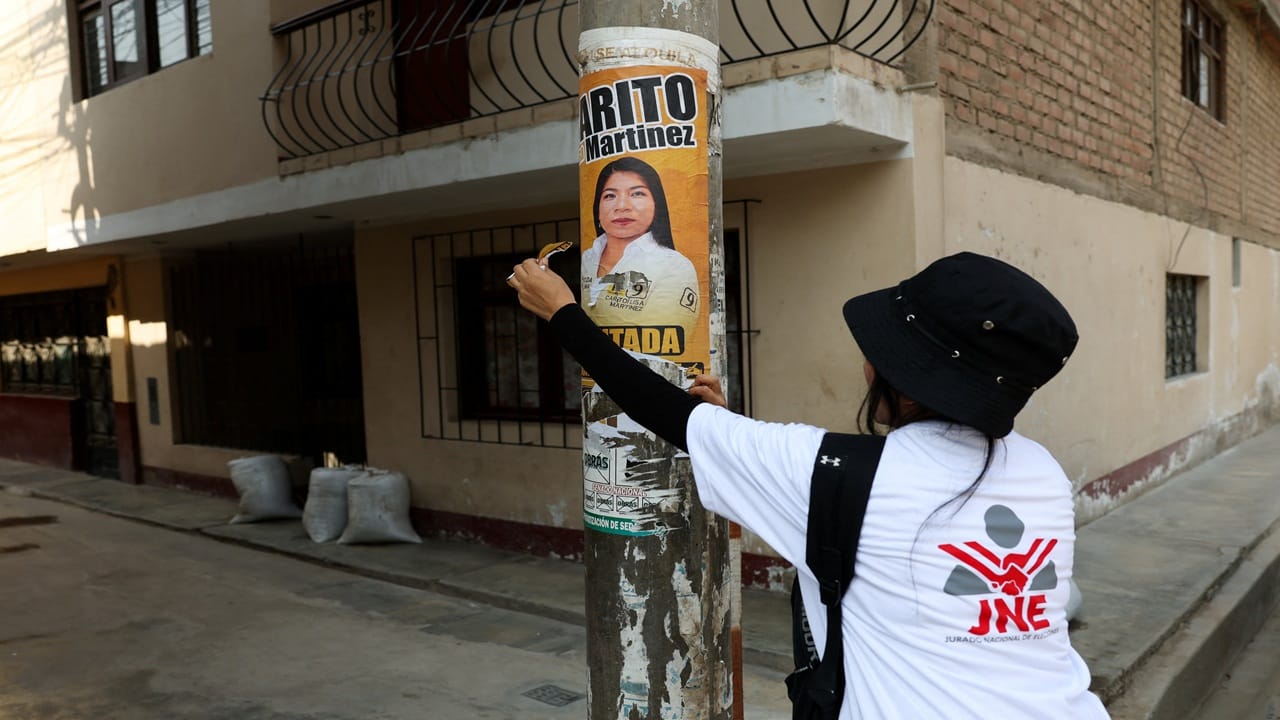
New Delhi: Peru is heading into a high-stakes presidential election, as general elections are currently being held in Peru on 12 April 2026.
The presidential elections will determine the president and the vice presidents, while the congressional elections will determine the composition of the Congress of Peru, which will return to being a bicameral legislature with a 60-seat Senate and 130-seat Chamber of Deputies. The vote comes against the backdrop of an extraordinary political instability as the country has seen nine presidents in the past decade.
How did Peru get here?
The roots of the crisis lie in a prolonged power struggle between the presidency and Congress in Peru. Frequent impeachment attempts, corruption allegations, and mass protests have repeatedly forced leaders out of office. From the dramatic resignation of Pedro Pablo Kuczynski to the turbulent presidency of Pedro Castillo, the system has been locked in a cycle of confrontation.
The last president, José Jerí, was removed from office in February 2026 by way of censure by a majority vote in Congress. This is where many experts have seen the problem to lie. The country’s political system has turned institutions into tools of political vendetta, and instead of providing checks and balances, institutions have led to several governments being ousted.
What about the current elections?
This year’s presidential race is unusually crowded, with politicians of varying political ideologies and hues contesting in what seems to reflect both political fragmentation and public disillusionment. With no dominant party or clear frontrunner, the field has expanded significantly and turned the election into one of the most unpredictable and interesting ones in the country’s recent history.
Meanwhile, questions are also being asked about the legitimacy of voting in Peru and the trust of the ordinary citizen in the system. With the successive changes in governments, often within short terms due to political uncertainties, many do not see elections in Peru as a long-term fix to their problems, but only as a temporary reset before the next crisis.
The stakes thus go beyond just choosing a president. The next leader will have to navigate a deeply fractured political landscape and make sure that its relations with the country’s strong-willed Congress are such that it does not lead to instability and rupture.
The election may also be another, and perhaps a major test, of how strong the political system of Peru is. After failing time and again, and the public trust at an all time low, even a strong electoral mandate may not be a guarantee to the new dispensation’s longevity which would have an uphill task in front of it to actualise a successful long-term majority government in Peru.