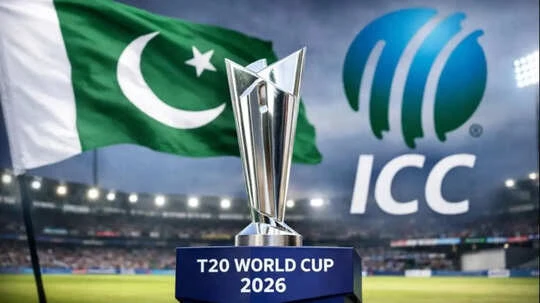
The 2026 T20 World Cup is now overshadowed by political drama, after Pakistan boycotted the tournament to express solidarity with Bangladesh – whose decision not to play in India was overruled by the International Cricket Council (ICC). The time has come for the ICC to follow the policies of FIFA and the International Olympic Committee (IOC) and set a firm precedent, sending a clear message that no member country dares to challenge its authority.
In South Asia, sometimes politics affects cricket; at other times, cricket affects politics. Mohsin Naqvi, the Pakistan Cricket Board (PCB) chairman and Pakistan Interior Minister, spilled political bad blood into cricket when he ran away with the Asia Cup 2025 trophy from Dubai, denying the champions India their deserved accolade. The trophy remains in his possession.
The shadow of diplomatic tension between India and Pakistan remains apparent on the larger context of cricket. The sport is currently facing a severe crisis, with Pakistan boycotting the 2026 T20 World Cup, to be played in India and Sri Lanka. The PCB, acting on behalf of the Pakistan government, has made a move that amounts to appeasement in its diplomatic outreach to Bangladesh, which has been ditched from the World Cup after refusing to play in India citing security reasons.
Overtly political
The case of Pakistan is unprecedented. At the time of scheduling of the tournament, the ICC, considering the PCB’s request, had set all of Pakistan’s matches in Sri Lanka. Hence, their decision to boycott the World Cup is overtly a political one and reflects an intent to align themselves with Bangladesh in South Asia’s regional political theatre.
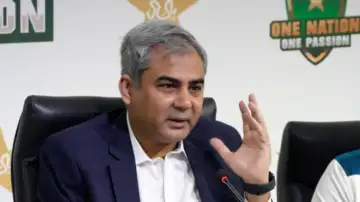
Since anti-India sentiment in Bangladesh is at its peak since Sheikh Hasina’s August 5, 2025 ouster, Pakistan, by forfeiting the World Cup, has opted to gain political mileage. The intent is clear: to strengthen their long-frozen diplomatic partnership with Bangladesh, given the prevailing political atmosphere.
Disruption of cricket
But for the ICC, such a blatant political decision by Pakistan means a disruption to the T20 World Cup, one of its key money spinners.
While countries forfeiting matches in a World Cup is not new – there are plenty of such examples. In the 1996 World Cup, West Indies and Australia gave a walkover to Sri Lanka due to the civil war in the South Asian country. But none had a problem with playing Sri Lanka per se. Their concerns were genuine, given the prevailing situation in Colombo, the venue for the World Cup matches. Two weeks before the tournament, the Colombo Bank bombing killed 91 people and left several more injured.
Similarly, England forfeited their 2003 World Cup match against Zimbabwe due to Tony Blair’s government’s anti-Robert Mugabe stance. New Zealand, in the same World Cup, refused to play in Kenya citing intelligence about a possible terrorist attack.
The ICC, chaired by Jay Shah, made it clear that Bangladesh’s request to move their matches from India to Sri Lanka – by rejigging group equations and affecting other teams – would disrupt the tournament and amount to an injustice to the affected teams. In response, Bangladesh, under the current interim government led by Mohammad Yunus, stood firm on its position and withdrew from the World Cup. Scotland was named as Bangladesh’s replacement.

The trigger for the strained relationship between the two countries was the BCCI’s decision to ask Indian Premier League side Kolkata Knight Riders to remove Bangladesh pacer Mustafizur Rahman from their squad. Following his ouster, a tweet by a member of the ruling Bharatiya Janata Party (BJP) hit out at Bangladesh, where minority Hindus became victims of unabated violence and killing, with the current regime failing to uphold their constitutional rights.
But in the case of Pakistan, given their venue in Sri Lanka, there are no such concerns. Their decision is purely political and has marred the spirit of the World Cup, scheduled for February 7-March 8.
Such a move not only ruins cricket’s noble objective of being a sport that fosters friendship, fairness, and a competitive atmosphere where excellence is tested, but also puts the World Cup at risk, as revenue may be affected. A Hindustan Times report suggested that the ICC might give Bangladesh a chance to replace Pakistan, fulfilling their demand to play in Sri Lanka. But with the India-Pakistan February 15 fixture in Colombo now in limbo, every stakeholder of the game should brace for major revenue loss. By any means, an India-Pakistan fixture is cricket’s most-watched event.
Following FIFA precedent
For the ICC, such an unprecedented development calls for unprecedented action. It must follow the precedent set by FIFA in the past. As international bodies of repute, the IOC and FIFA have never tolerated a country’s decision to forfeit an event or matches citing security reasons.
The IOC views such actions as a violation of the Olympic Charter’s principles of non-discrimination and political neutrality. The consequences are severe: suspension of the national Olympic committee and denial of hosting rights for future events. The IOC had suspended North Korea for the 2022 Winter Olympics and halted the funds after it had unlawfully withdrawn from the Tokyo Games in 2021, citing Covid-19 pandemic concerns.
In the past, the erstwhile Soviet Union was straightaway disqualified from the 1974 FIFA World Cup qualifiers when they refused to play Chile in Santiago. Most recently, FIFA stripped Indonesia of the hosting rights of the 2023 U-20 World Cup after protests against Israel’s participation. The tournament was held in Argentina.

Challenges for FIFA are immense ahead of the 2026 FIFA World Cup, with the USA, one of the host countries, imposing visa bans on several countries. Under the current situation, several qualified nations might face immense challenges travelling to the country. As boycotting the World Cup looms large, FIFA remains wary and may impose heavy sanctions on those countries.
The situation begs the ICC to take exemplary action, as inaction would only portray it as a weak governing body. Pakistan’s craving to gain diplomatic mileage over India has not only put the ICC in a precarious situation but has also diluted the gravity of the World Cup and put Asia as a host under immense uncertainty. With the ICC having already warned Pakistan of long-term consequences for “cricket in their own country” for their unjustified decision, mere warning would not sit well for the game of cricket.