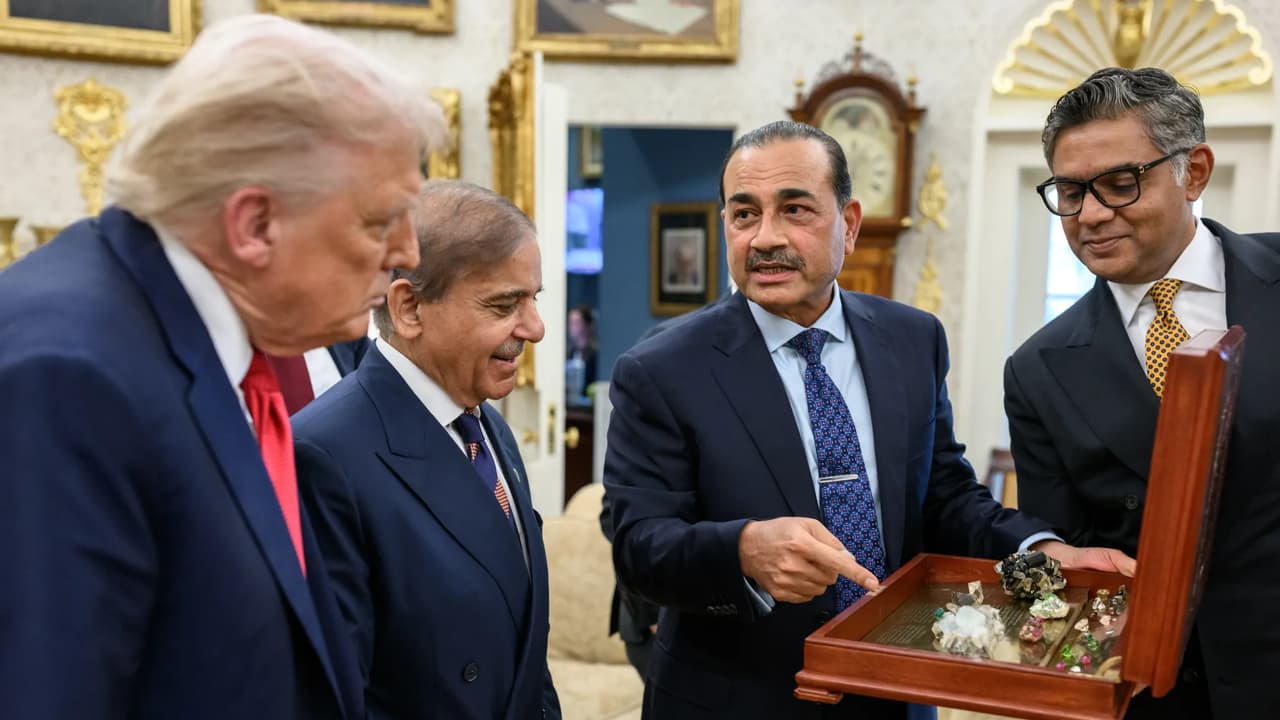
Pakistan’s increasing closeness with America in the Trump era is giving a new shape to regional geopolitics. This is affecting relations with China, West Asia, Iran and Turkey, and Islamabad’s strategic and economic strength is also increasing.
By Swasti Sachdeva and Mugdha Satpute: Since May 2025, Pakistan’s relations with the United States have witnessed a whirlwind. There are several reasons behind this rapprochement, notably US interest in Pakistan’s energy and oil reserves, its increasing focus on Bagram Air Base and other aspects of Afghanistan, as well as its security concerns in West Asia. Pakistan credited America for the ceasefire after the conflict with India in May 2025 and drew Washington’s attention. Trump’s unique foreign policy and continuously complicated relations with India have further boosted Pakistan-US relations.
As a result, Pakistani leaders have visited Washington, including army chief Asim Munir, who has visited the US capital three times since Trump’s second term. The US also declared the Balochistan Liberation Army (BLA) a terrorist organization, and a trade deal was agreed between the two sides. Additionally, World Liberty Financial, a fintech company co-founded by Trump family members, signed a cryptocurrency deal with the Pakistan Crypto Council. Top US leaders have shown interest in Pakistan’s energy and mineral resources, seek investment opportunities, and view it as a partner in the fight against terrorism. Moreover, a recent report to the US Congress described the May conflict with India as a “military success” for Pakistan, which reflects Washington’s view.
Although Pakistan has moved quickly to rebuild ties, it has embarked on a turbulent path that could affect relations with its neighbors in West Asia and China. They have strategic, ideological and historical ties with Islamabad, and recent events could create difficulties in those relations. Although there are deep differences between China and the United States, West Asian countries will have different reactions and may even remain neutral.
Beijing’s influence in Pakistan is multifaceted and deep, and at the moment, it does not seem too concerned about Pakistan-US relations. The traditional friendship remains unbroken as many bilateral visits continue, although China may exercise some caution in the future. For now, China may benefit from Washington designating the BLA as a terrorist organization, as its infrastructure, investments and civilians are frequently targeted by the group in northwest Pakistan. Instead of competing, both countries could aim to create an interim safe haven in the region. Additionally, Islamabad’s growing ties with Washington could help Beijing find a reliable diplomatic channel to the White House, especially given their ongoing trade talks and various geopolitical disputes. However, if Pakistan helps increase the US presence in Afghanistan, Beijing will certainly be angry—as it has sought to deepen its influence in Kabul since the US withdrawal. China would also be uncomfortable if Pakistan increases its economic and defense dependence on the US, as evidenced by its recent doubts over some of the China-Pakistan Economic Corridor (CPEC) projects.
For the countries of West Asia, the outcome of Pakistan-US rapprochement remains to be seen, and its future path will be important. Its impact, of course, will be dynamic and will create different opportunities and challenges. Gulf countries, especially Saudi Arabia and the UAE, may see this as an opportunity to balance Iran and deepen economic cooperation. Furthermore, with the recent signing of the “Strategic Mutual Defense Agreement”, Pakistan and Saudi Arabia have further deepened their long-established religious, political, economic and defense ties. Given the capabilities of the Houthis and the recent Israeli attacks on Qatar, this defense deal is important for Riyadh, and it also provides much-needed financial relief to Pakistan. It also reflects Islamabad’s growing role as a trusted security provider in the region with the help of the US.
Meanwhile, Iran is really wary of this Pakistan-US alliance. Strained historical relations between Washington and Tehran have intensified under President Trump, particularly with recent US air strikes on Iran’s nuclear infrastructure. Although Pakistan condemned these attacks, it also closed its border with Iran. On the one hand, these developments may help Tehran and Washington find a diplomatic channel. On the other hand, further deepening of ties could put pressure on Pakistan to comply with US sanctions on Iran and hinder the Pakistan-Iran gas pipeline, which the Americans have opposed in the past. It could also increase the US presence along the long Pakistan-Iran border, as Islamabad has traditionally been a key intelligence sharing and military partner for the US in the region.
For Turkiye too, recent Pakistan-US developments are important. Ankara’s brotherly ties with Islamabad are evident from its military assistance and operational help to Pakistan during its May conflict with India, as well as the recent signing of more than twenty agreements in the trade and defense sectors. President Trump’s second term has given Turkey hope to reset its relations with the US, which had deteriorated under the Biden administration. Furthermore, good bilateral relations can pave the way for trilateral opportunities. However, these developments challenge Turkiye’s conciliatory position in the region. Overall, Washington’s growing presence in the corridors of power could increase Pakistan’s influence in the region, positioning it as a bridge between the Islamic world and the West.
These foreign policy moves are not a new challenge for Pakistan. Like India, Pakistan has also struggled with many foreign policy contradictions and global balances. An example of this is the Cold War when it maintained strategic relations with the United States and continuously deepened relations with China; A policy that it may try to repeat in the era of the ‘new Cold War’, as some have described it. Furthermore, given Pakistan’s weakening economy and increasing visa restrictions from its ‘historic partners’, Islamabad is looking for greater financial assistance through its multinational engagements. Thus, while these growing ties may have some disadvantages vis-à-vis some countries, overall, they will help raise Pakistan’s stature on the world stage and provide greater economic and defense opportunities.
(Swasti Sachdeva is a Research Assistant and Program Coordinator for the Security Studies Program at Carnegie India. Her research interests include India’s foreign policy, security studies, South and West Asia. Swasti is a postgraduate in International Relations and holds a bachelor’s degree in Political Science.
Mugdha Satpute is a Youth Ambassador in the Security Studies Program at Carnegie India. Mugdha holds an LLM degree in International Law, and his research broadly covers India’s foreign policy, India-China relations and the Indo-Pacific.)