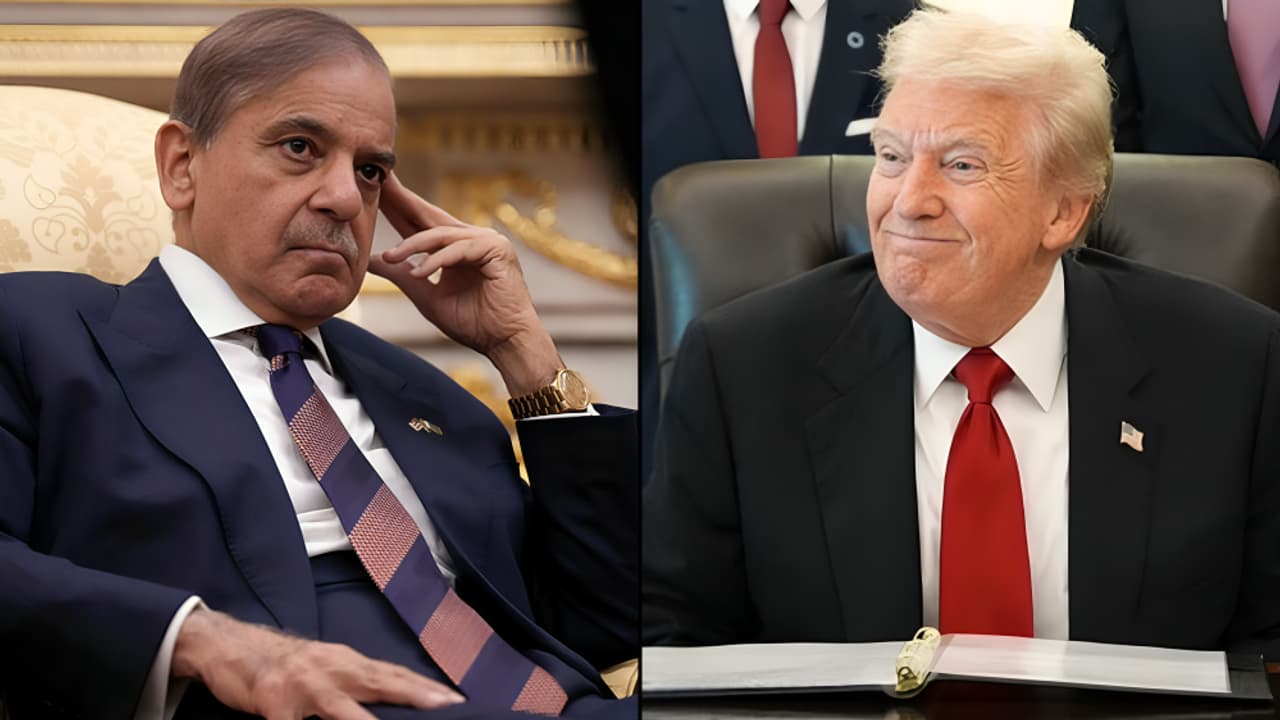
Pakistan has agreed to join Donald Trump’s proposed ‘Board of Peace’ to support lasting peace in Gaza. Islamabad said the move aims to help secure a permanent ceasefire, boost humanitarian aid, and support Gaza’s reconstruction under a UN framework.
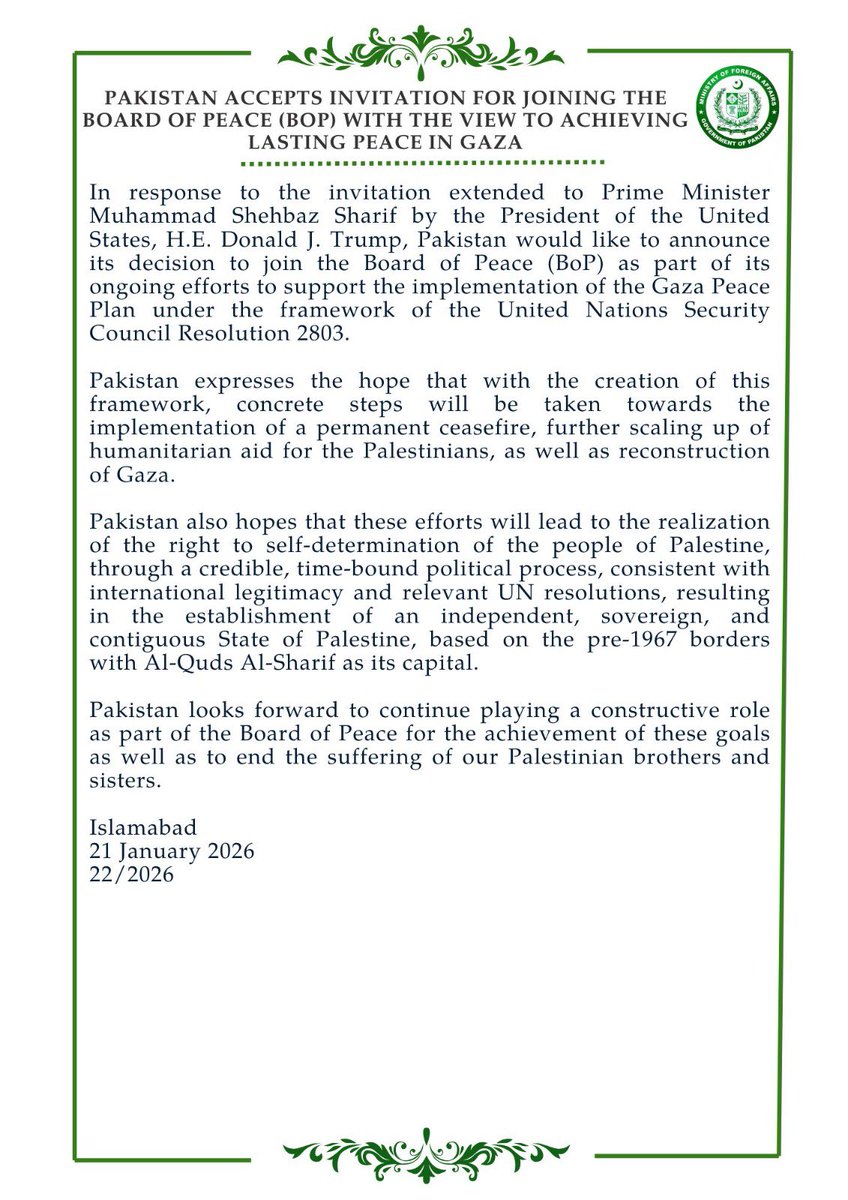
Pakistan has agreed to join the United States President Donald Trump’s proposed ‘Board of Peace’ to help work towards lasting peace in Gaza. The announcement was made by Pakistan’s Foreign Ministry on Wednesday, confirming Islamabad’s acceptance of an invitation sent to Prime Minister Shehbaz Sharif by President Trump.
The Board of Peace is part of Trump’s wider Gaza plan and was set up late last year. It aims to bring together several countries to support peace, stability and long-term governance in conflict-hit regions, with Gaza as a key focus.
Pakistan’s official stand
In an official statement, Pakistan said its decision to join the board reflects its ongoing efforts to support peace initiatives under the framework of the United Nations Security Council Resolution 2803.
Islamabad said it hopes the new platform will lead to concrete steps towards a permanent ceasefire in Gaza, increased humanitarian aid for Palestinians, and the reconstruction of the war-hit region.
Pakistan also reiterated its support for the right to self-determination of the Palestinian people, calling for a credible and time-bound political process that aligns with international law and UN resolutions. It said this process should lead to the establishment of an independent, sovereign, and contiguous State of Palestine, based on pre-1967 borders, with Al-Quds Al-Sharif (Jerusalem) as its capital.
How the Board of Peace is expected to work
According to reports, including details from a draft charter cited by Bloomberg, the Board of Peace for Gaza will be an international body focused on long-term stability, governance, and peace.
President Trump is expected to serve as the first chairman of the board and will hold final authority over decisions and membership. Each member country will have one vote, and decisions will be made by majority, but all outcomes will still need the chairman’s approval.
Member countries are expected to serve three-year terms. However, nations that contribute more than $1 billion in the first year will not face any term limits. The board will meet at least once every year, with additional meetings possible at the chairman’s discretion.
Part of a wider Gaza roadmap
The Board of Peace is linked to a broader US-backed roadmap for Gaza’s post-war future. As part of this plan, a 15-member Palestinian technocratic committee has already been formed to manage Gaza’s day-to-day administration.
US Special Envoy Steve Witkoff described this phase as “Phase Two” of Trump’s 20-point Gaza plan, which focuses on governance, reconstruction, and demilitarisation following a ceasefire.
Strong criticism from Baloch activist
Pakistan’s inclusion has also drawn sharp criticism. Baloch human rights activist Mir Yar Baloch strongly condemned the move, calling it “the ultimate mockery of peace”.
In a post on X, he accused Pakistan of having a long record of violence, repression, and alleged links to terrorism. He argued that such a background makes Pakistan unsuitable for a body meant to promote peace in Gaza.
Scroll to load tweet…
While the US has said that more than 20 countries have agreed to join the Board of Peace so far, several nations have reacted cautiously to the initiative. Despite this, Pakistan has said it looks forward to playing a constructive role and helping ease the suffering of Palestinians.