A new US Congressional report identifies Pakistan as a base for numerous terror groups, including Lashkar-e-Taiba and Jaish-e-Mohammed. The report notes that military offensives have failed to defeat these groups, bolstering India’s stance.
US Report: Pakistan a ‘Base of Operations’ for Terror Groups
A US Congressional research report of March 25 has stated that U.S. officials have identified Pakistan as a base of operations for numerous armed, terror groups, some of which have existed since the 1980s.
According to the report the terror groups are ether globally oriented, Afghanistan oriented, India oriented, domestic, or sectarian in nature. Twelve of these terror groups are designated as Foreign Terrorist Organizations (FTOs) under U.S. law and most follow Islamist extremist ideology. The report says several major military offensives, including airstrikes, and hundreds of thousands of “intelligence-based operations” have failed to defeat the numerous U.S.- and United Nations-designated terrorist groups that continue to operate on Pakistani soil.
India-Oriented Groups: LET and JEM
The report stated that India- and Kashmir-Oriented terror group Lashkar-e-Taiba (LET) was formed in the late 1980s in Pakistan and designated as an FTO in 2001. Led by Hafiz Saeed and based in Pakistan’s Punjab province and in Pakistan-administered (Azad) Kashmir, it has changed its name to Jamaat-ud-Dawa to circumvent sanctions. With several thousand fighters, LET was responsible for the mass-scale 2008 terrorist assault on Mumbai, India, as well as several other high-profile attacks.
Jaish-e-Mohammed (JEM) was founded in 2000 by terror operative Masood Azhar and designated as an FTO in 2001. JEM’s roughly 500 armed supporters operate in India, Afghanistan, and Pakistan. Other groups like the Harakat-ul Jihad Islami (HUJI) , Harakat ul-Mujahidin (HUM) and Hizbul Mujahideen (HM) also operate from Pakistan.
The Pahalgam Attacks and ‘Operation Sindoor’
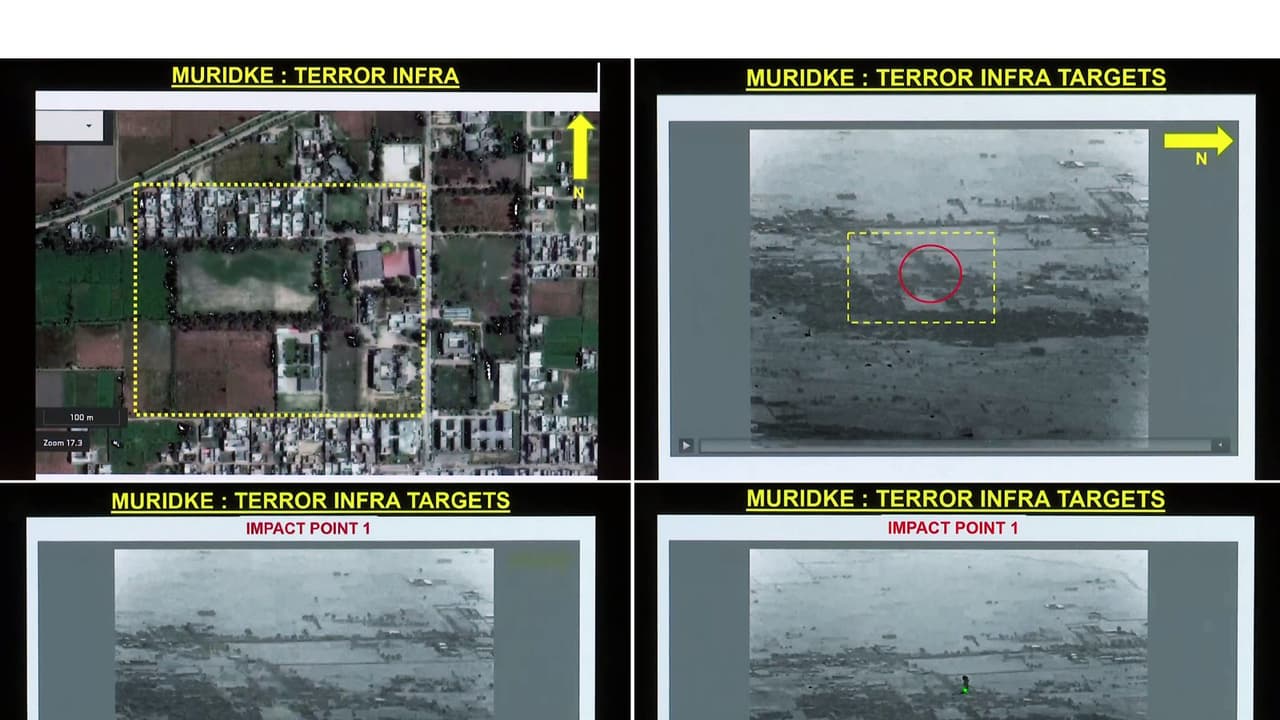
The US report bolsters India’s stance on Pakistan’s continued support for terror groups. One such, an offshoot of the Lashkar which calls itself “the resistance front” (TRF) was behind the Pahalgam attacks that killed 26 people. The TRF has been designated a global terrorist organisation. In its response to the Pahalgam attacks, India launched operation Sindoor on May 6 2025. The well-coordinated strikes carried out by the Indian Armed Forces precisely hit nine terrorist camps in Pakistan and PoJK, killing over 100 terrorists, their trainers, handlers, and associates. Most of the terrorists belonged to organisations like Jaish-e-Mohammed, Lashkar-e-Taiba, and Hizbul Mujahideen. The operation inflicted maximum damage on the terrorists and their hideouts, and minimum harm to the civilian population.
Military Escalation and Ceasefire
Pakistan’s Failed Retaliation and IAF’s Counter-Strike
On May 10, 2025 Pakistan launched an attack on Indian Air Force bases, Army ammunition depots, airports, and military cantonments using missiles, drones, and other long-range weapons. The Indian Air Defence System, Counter-Drone system, and electronic equipment completely thwarted the attack by Pakistan. The adversary failed to hit any targets.
The Indian Air Force then targeted Pakistani airbases, command and control centres, military infrastructure, and air defence systems on the Western Front. Major airbases like Chaklala, Sargodha, Rafiqui, Rahimyar Khan, Jacobabad, Sukkur, and Bholari were struck, and the mission was successfully accomplished.
DGMOs Agree to Halt Military Operations
On May 10, Pakistan’s DGMO contacted India’s DGMO and appealed for a halt to military operations. On May 12, formal talks took place between the two DGMOs, and both sides decided to cease military operations.
Now, this new US Congress report proves that Pakistan’s active support for terror groups continues. (ANI)
(Except for the headline, this story has not been edited by Asianet Newsable English staff and is published from a syndicated feed.)