The Nativity Fast
Leading up to Christmas, Orthodox Christians observe the Nativity Fast, abstaining from meat, dairy, and animal products. The fast encourages spiritual discipline and reflection, similar in importance to Lent before Easter.
Christmas Eve and the Holy Supper
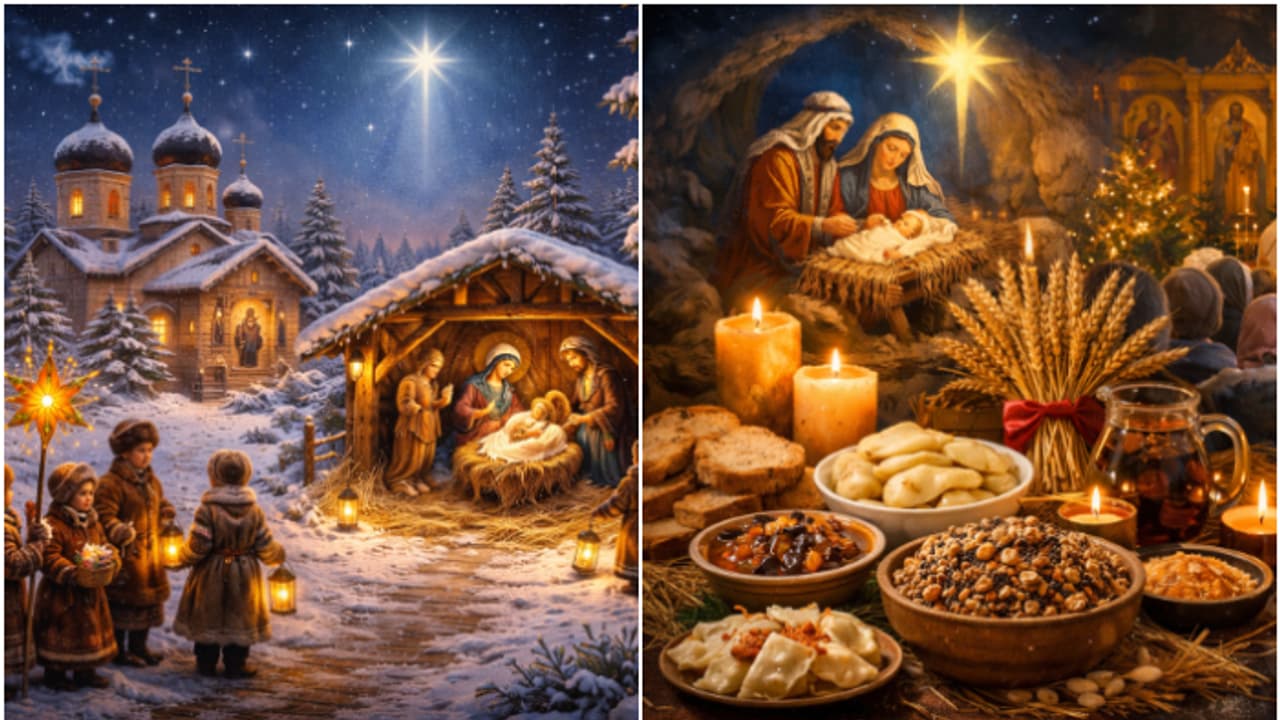
Christmas Eve, observed on January 6, is marked by the Holy Supper, known as Svyata Vechera in Slavic traditions. The meal is meatless and begins only after the first star appears in the sky, symbolizing the Star of Bethlehem.
Traditionally, the supper includes 12 dishes representing the 12 apostles. Common foods include kutia (a sweet wheat and honey dish), meatless borscht, dumplings filled with vegetables or mushrooms, fish, and dried fruit compote. In many homes, hay is placed under the table or a decorative bundle called a didukh is displayed, symbolizing the manger and honoring ancestors.
Midnight Liturgy
After the Holy Supper, many believers attend a midnight church service. These liturgies are central to Orthodox Christmas celebrations and feature ancient hymns, candlelit processions, and readings proclaiming Christ’s birth. The atmosphere is solemn, reverent, and deeply communal.
Christmas Day Celebrations
On January 7, the fast is broken. Families gather for festive meals featuring meat dishes, breads, pastries, and desserts. Visiting relatives, welcoming guests, and acts of generosity are central to the day.
Caroling, known as koliadky, is widespread in Slavic cultures. Groups go door to door singing traditional songs that celebrate the Nativity and offer blessings of health and prosperity in exchange for sweets or small gifts.
Modern Observance and Evolving Traditions
In 2026, Orthodox Christmas continues to adapt to modern life, especially among diaspora communities. While church services and fasting remain central, some families also exchange gifts, influenced by Western customs. Others are actively reviving regional traditions, old recipes, folk songs, and crafts to preserve cultural heritage for younger generations.