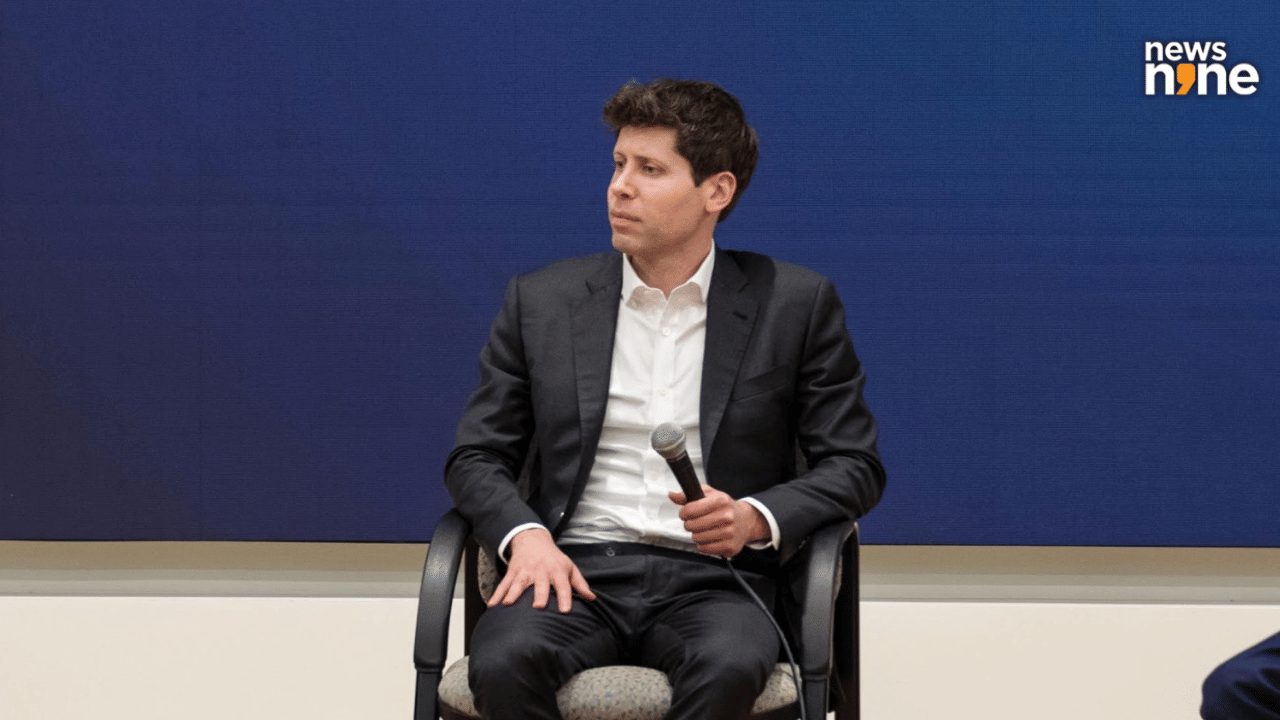
New Delhi: OpenAI is reportedly exploring another major government partnership, just days after securing a landmark agreement with the United States military. A report by The Wall Street Journal indicated that the company that owns ChatGPT is now weighing the possibility of entering into an agreement with the North Atlantic Treaty Organization (NATO).
The potential partnership would be another milestone of the increased engagement of OpenAI with government and defence organisations. Nevertheless, its proposed arrangement would be much different from the recent partnership with the Pentagon, especially on the nature of networks where its AI technology can be deployed.
OpenAI may deploy AI on NATO’s unclassified networks
In a reported conversation at an in-house town hall meeting, the OpenAI CEO Sam Altman stated that the company was looking at rolling out its AI systems on the networks of NATO. Altman proposed first that the technology would work on the classified systems in the alliance.
The company, however, explained later that Altman made a slip. The opportunity in question refers to the unclassified networks of NATO and not the classified infrastructure.
The distinction is too great. The networks which are classified deal with very sensitive military intelligence and planning of operations. Unclassified systems, which, however, still are important, hold information that does not reach the same level of national security sensitivity.
How OpenAI secured the Pentagon contract
The discussion of the NATO partnership by OpenAI is quite timely, as it recently signed an agreement with the Pentagon to apply its AI technology to the classified systems of the US Defence Department.
The contract was preceded by a significant realignment of AI50 alliances at the Pentagon. The US president, Donald Trump, had directed federal agencies to cease all collaboration with AI company Anthropic due to the position of the company regarding the military application of artificial intelligence.
Anthropic CEO Dario Amodei had gone on record to restrict the use of AI on the defence applications. Anthropic was later categorised by the Pentagon as a supply-chain risk, and the company was no longer related to the Pentagon.
Backlash and OpenAI’s response
OpenAI came in to cover the vacuum, although the action elicited criticism amongst some users and researchers of AI. The Pentagon deal backfired, and the company was reported to have registered subscription cancellations following the announcement of the deal.
OpenAI responded with a modified statement explaining the limits of use of its technology. The firm stated that its artificial intelligence systems would not be adapted to spy on domestic people and citizens of the US intentionally.
The Pentagon too affirmed that any intelligence agency, like the National Security Agency, would not utilise the services of OpenAI.
Sam Altman addresses criticism
During the same internal conference, Altman admitted that there was criticism of the Pentagon partnership in the eyes of the masses.
The Wall Street Journal reports that he informed its staff that the move had reputational risks but that it was eventually necessary.
According to Altman, I believe it was a complicated, yet correct, decision with very hard brand repercussions and very bad PR on our part in the short term.