New Delhi: Politics is rarely linear. It is a story of departures and returns. It has a strange way of repeating itself, sometimes as history. In politics, history never fully disappears. Rather, it awaits patiently in the shadows and quietly returns when the moment arrives.
For watchers of Odisha politics, the 2026 Rajya Sabha elections carry the unmistakable echo of an event that shook the political corridors more than two decades ago.
The 2002 rebellion
The year was 2000. Dilip Ray, who had played a significant role in shaping the early structure of the Biju Janata Dal (BJD), suddenly found himself on the wrong side of power. After a bitter fallout with BJD supremo and then Odisha Chief Minister Naveen Patnaik, Ray was forced to resign from the Union Cabinet and was subsequently expelled from the party he had helped build.
Two years later came the moment of reckoning — the 2002 Rajya Sabha elections. Ray entered the Rajya Sabha race as an Independent candidate, turning the election into a test of political nerve.
Patnaik left little to chance in his attempt to block Ray’s return to the Upper House of the Parliament. He pressed the BJP, his the then coalition partner, to stay away from supporting Ray. That was not all. Patnaik also struck a quiet understanding with the Congress — an arrangement under which the surplus BJD votes would be transferred to the Congress candidate, provided the Congress legislators did not back Ray.
But Ray proved far too astute to be outmanoeuvred so easily. As an Independent candidate, he crafted a rainbow coalition of support that cut across party lines. Moreover, six BJP MLAs, three Congress MLAs and three Independent legislators proposed his candidature.
What followed stunned the political establishment. In a dramatic act of defiance, as many as 15 BJD MLAs broke ranks with their party leadership and voted for Ray as their first preference. Six BJP MLAs further strengthened his position with crucial second-preference votes, ultimately ensuring Ray’s victory.
The result sent shockwaves through Odisha’s political corridors. At that time, Ray’s triumph was widely interpreted as a symbolic challenge to the authority of the then Chief Minister Naveen Patnaik, a moment when the carefully controlled arithmetic of power in the Assembly slipped beyond the grasp of the ruling leadership.
Biju legacy politician
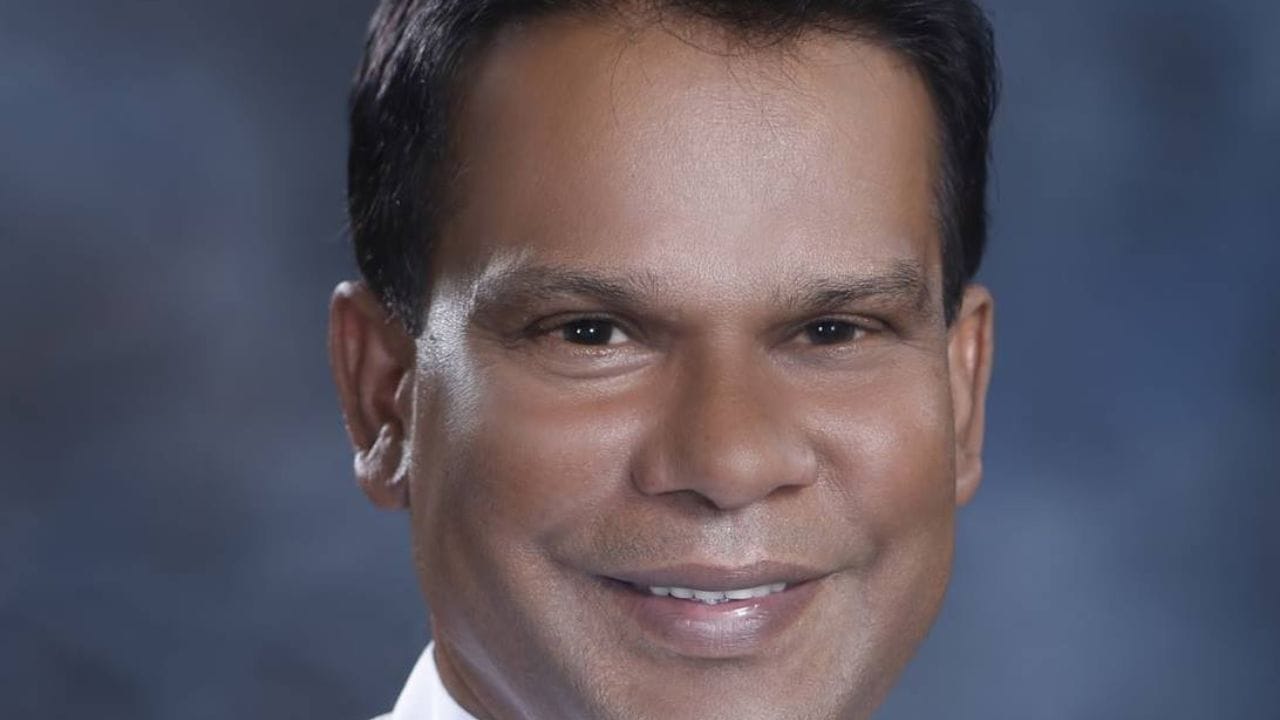
Now in his early seventies, though still youthful in spirit, businessman–politician Dilip Ray represents an older generation of Odisha politics, one shaped by personal networks and individual influence. One of the wealthiest politicians in the State, Ray has declared assets worth over Rs 313 crore. Beyond the political arena, he built a successful hospitality enterprise and has remained a prominent figure in Odisha’s public life.
Ray’s political journey has traversed several chapters. He served as a Union Minister, handling some of the key portfolios, including Steel, Coal and Food Processing Industries. His political identity has always been closely intertwined with the legacy of the legendary Biju Patnaik. To many observers, Ray represented a strand of the original Biju legacy.
His closeness to Biju Patnaik was not confined to political association alone, it carried deep emotional resonance. It was at Ray’s residence in New Delhi that Biju Babu breathed his last, a moment that forever etched their personal bond into the memory of Odisha’s political history.
Battle reopened old fault lines
Fast forward to the Rajya Sabha elections of 2026. The era of Naveen Patnaik, which once defined Odisha’s political landscape for nearly a quarter of a century, now belongs to the past after the BJP dislodged the BJD in the 2024 Assembly elections. Patnaik today occupies the Opposition benches as Leader of the Opposition in the Odisha Assembly.
Elections for four Rajya Sabha were held on March 16. The BJP had the strength to comfortably elect two candidates, while the BJD had the numbers to secure one. But the real suspense centred on the fourth seat.
In a calculated political move, BJD supremo Naveen Patnaik stiched a “tactical alliance” with the Congress. The two parties rallied behind Dr. Datteswar Hota, a veteran Urologist, projecting him as their joint candidate in a bid to block the BJP’s path.
Yet the real surprise was still to come. Dilip Ray, now a senior BJP leader, threw his hat into the Rajya Sabha race as an Independent candidate with the full backing of his own party. What followed soon transformed the election into one of the most dramatic political episodes in recent years.
While the BJP’s official nominees — State president Manmohan Samal and Sujit Kumar — secured two Rajya Sabha seats, the BJD’s Santrupt Mishra also emerged victorious. But the real drama unfolded in the contest for the fourth seat.
Dillip Ray sailed through with the help of cross-voting by eight BJD MLAs and three Congress legislators, further reinforced by crucial second-preference votes. Even as both Ray and Dr. Hota were tied at 23 first-preference votes each, ultimately, it was the second-preference votes that tilted the balance, helping Ray to clinch the coveted seat.
The list of cross-voters carried their own political story. Among the BJD legislators who defied the party line were Choudwar-Cuttack MLA Souvic Biswal, Banki MLA Devi Ranjan Tripathy and Basta MLA Subasini Jena. Their choices were layered with deeper political undertones. Souvic is the son of senior leader Prabhat Biswal, who was recently expelled from the BJD. Devi Ranjan Tripathy is the son of former BJD heavyweight Prabhat Tripathy, who too faced expulsion from the party. Subasini Jena is the wife of former Balasore MP Rabindra Kumar Jena, who recently joined the BJP after severing ties with the BJD.
Two suspended BJD legislators — Patkura MLA Arvind Mohapatra and Champua MLA Sanatan Mahakud — also voted in Ray’s favour. Arvind is the son of another Biju legacy leader Bijoy Mohapatra, a friend-turned-foe of Naveen Patnaik.
From the Congress camp too came an unexpected turn. Barabati-Cuttack MLA Sofia Firdous was among the three legislators who cross-voted. After the Congress expelled her father Mohammed Moquim, the veteran leader announced the formation of a new political outfit — the Odisha Janata Congress.
In a striking political coincidence, many of the cross-voters belong to the families whose patriarchs had fallen out with their respective parties. What unfolded during the Rajya Sabha voting underscores open rebellions. The political heirs appeared to converge in defiance, turning the Rajya Sabha election into a moment of collective retribution for the “injustice” meted out to their fathers.
A rattled Naveen Patnaik later targeted the young MLAs from his own party who had cross-voted, saying that “their parents have a criminal past.”
For Dilip Ray, however, the victory is as much a political message as an electoral success. “I had done my homework. I knew I would get the required votes. The outcome reflects the true strength of our democracy, where the larger interests of the people and the State bring everyone together,” Ray told reporters after the result.
In many ways, the contest for the fourth Rajya Sabha seat in Odisha evolved into a symbolic duel between BJD supremo Naveen Patnaik and BJD co-founder, now a senior BJP leader, Dilip Ray — both laying claim to the legacy of Biju Patnaik.
A rebellion comes full circle
Observers belive that Dilip Ray’s victory has revived the debate over what truly constitutes the political inheritance of Biju Patnaik.
“I had said earlier that 2026 will mark a decisive phase in Odisha politics. This is the opening chapter of that phase,” said veteran leader Bijoy Mohapatra.
For Dilip Ray, the race to Rajya Sabha was not merely another electoral contest. It represented something deeper — the culmination of a long political journey that began with rebellion and has now come full circle in the theatre of Odisha politics after two decades.
The episode may well mark the last nail in the political coffin of Naveen Patnaik. If the tremors within the BJD continue to deepen, historians may one day look back at this moment as the point from which the party’s political epitaph truly began to be written.
(The writer is senior multimedia journalist.)