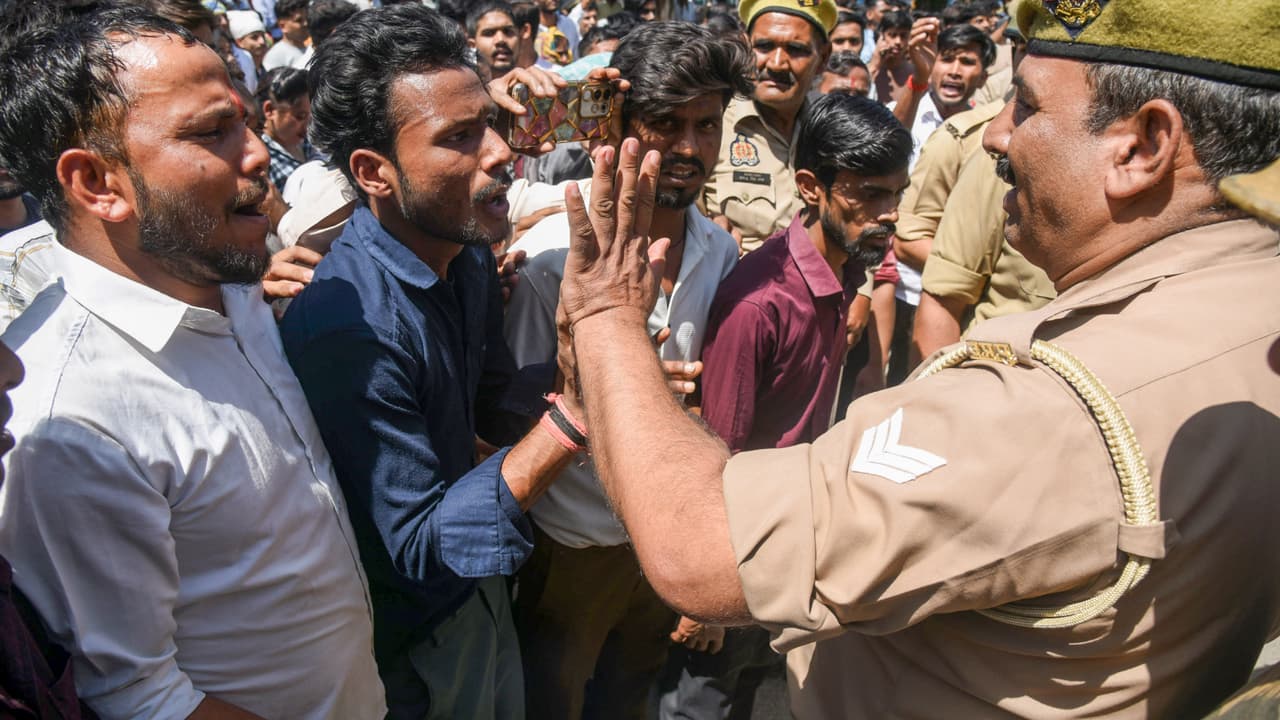
Factory worker protests, originating in Gurugram over low wages and rising living costs, have spread to Noida. The unrest escalated into violence, with workers vandalizing property and blocking roads. Key demands include a significant minimum wage hike to ₹18,000–₹20,000, fixed working hours, and improved safety.
How Protests Began: From Gurugram to Noida
The recent wave of factory worker protests in Noida did not emerge in isolation. The unrest began earlier this month in Gurugram’s industrial belt, particularly in Manesar, where thousands of workers demanded a revision in minimum wages amid rising living costs.
Workers highlighted the growing gap between wages and expenses, pointing out sharp increases in essential commodities and household costs. Many claimed they were surviving on as little as ₹11,000 a month while struggling to manage rent, food, and children’s education.
Following sustained protests, the Haryana government announced a hike in minimum wages. However, the development was not effectively communicated to all workers, leading to confusion and further agitation. The situation escalated when police action, including a lathi charge in Manesar, triggered violence and vandalism.
This unrest soon spilled over into neighbouring industrial hubs, including Faridabad and Noida, as workers in these regions raised similar demands for wage revision and better working conditions.
Why Noida Turned Violent
In Noida, protests had been building for days before turning violent in industrial areas such as Phase 2 and sectors 59, 60, and 62. Demonstrations escalated into clashes, with reports of stone-pelting, arson, and vandalism. Vehicles were torched and factory property damaged as tensions spiralled.
“Vehicles and properties vandalised and stones pelted…”
Large groups of workers took to the streets, blocking key roads and disrupting traffic, especially along routes connecting Noida to Delhi. The unrest caused massive traffic jams, leaving commuters stranded for hours.
The scale of the protest intensified as workers from multiple factories joined in, shutting down industrial operations in several areas. Authorities deployed heavy police forces, including the Provincial Armed Constabulary (PAC) and Rapid Action Force (RAF), to restore order.
Police reportedly used “minimum force” and tear gas in some areas to disperse crowds as the situation deteriorated.
Also Read: Noida workers’ protest for wage hike turns violent; vehicles torched
What Workers Are Demanding
At the core of the protests are long-standing grievances over wages and working conditions. Workers are demanding a substantial hike in salaries, with some calling for monthly pay in the range of ₹18,000–₹20,000.
Key demands include:
• Revision of minimum wages to match rising inflation
• Fixed working hours and proper overtime compensation
• Timely payment of salaries and bonuses
• Better workplace safety and medical coverage
One protester summed up the concerns, saying:
“Duty hours should be fixed, overtime… should be paid.”
Workers have also pointed to wage disparities between states, especially after Haryana’s wage hike, which they say has created inequality across the NCR region.
The protests reflect broader dissatisfaction with labour conditions in industrial hubs, where workers often face long hours, low pay, and limited benefits despite rising costs of living.
Government Response and What Happens Next
Authorities have moved quickly to contain the unrest and prevent further escalation. Heavy police deployment has been carried out across affected areas, and senior officials are engaging with worker representatives to resolve the crisis.
Uttar Pradesh Chief Minister Yogi Adityanath appealed for calm, assuring workers that the government “stands with you” while warning against attempts to incite unrest.
Administrative measures are also being considered, including ensuring timely salary payments, enforcing labour laws, and improving workplace conditions. In some areas, control rooms have been set up and discussions are underway between authorities, labour unions, and factory management.
Also Read: Noida Link Road blocked as Hosiery workers’ protest turns violent
Despite these efforts, tensions remain high. The protests have disrupted industrial activity, affected supply chains, and sparked a wider debate on labour rights in India’s rapidly growing industrial corridors.
Experts warn that unless wage concerns and working conditions are addressed systematically, similar unrest could continue to surface across other industrial regions. The Noida protests highlight a deeper structural issue—balancing economic growth with fair labour practices in one of India’s most important manufacturing belts.