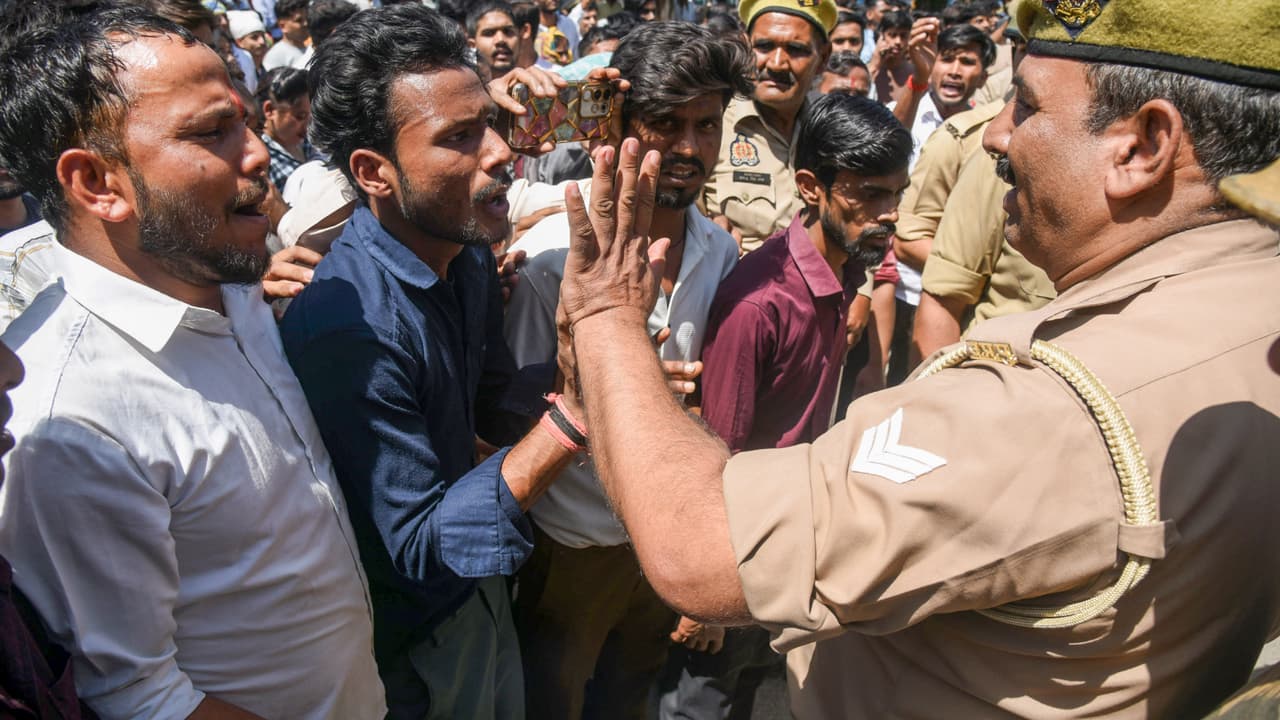
The workers’ protest that started from Gurugram turned violent in Noida. Amid rising inflation, workers are demanding raising the minimum wage to ₹18,000-₹20,000 and better working conditions. The demonstration resulted in vandalism and arson, after which the government is looking for a solution.
The recent demonstration of factory workers in Noida did not start suddenly. The foundation of this movement was laid earlier this month in the industrial belt of Gurugram, especially in Manesar. Thousands of workers there were demanding revision in minimum wage amid rising inflation. The workers said that the gap between their earnings and expenses is continuously increasing. There has been a huge increase in essential items and household expenses. Many workers claimed that they were living on just ₹11,000 a month, finding it difficult to meet the expenses of rent, food and children’s education.
After continuous protests, the Haryana government announced an increase in the minimum wage, but this information did not reach all the workers properly. This created confusion and the movement intensified. In Manesar, the police resorted to lathi charge, after which the situation worsened and violence and vandalism started. The fire soon spread to neighboring industrial hubs, such as Faridabad and Noida. The workers of these areas also started demanding increase in wages and better working conditions.
Why did violence erupt in Noida?
The protest was going on in Noida for several days, but it turned violent in industrial areas like Phase 2 and Sectors 59, 60, 62. Clashes broke out between protesters and police, with reports of stone pelting, arson and vandalism. Angry workers set vehicles on fire and damaged factory property.
“Vehicles and properties were vandalized and stones were thrown…”
Large groups of workers came out on the streets and blocked the main roads. Especially on the roads connecting Noida to Delhi, traffic came to a standstill, due to which commuters remained stranded for hours. Workers from many factories came together, due to which the scope of the protest increased and industrial work completely stopped in many areas. Authorities deployed heavy police force, including Provincial Armed Constabulary (PAC) and Rapid Action Force (RAF) to handle the situation. According to reports, as the situation worsened, police used “minimum force” and tear gas in some areas to disperse the crowd.
What are the demands of the workers?
At the heart of this entire protest are long-standing complaints regarding wages and working conditions. Workers want a substantial increase in their salaries. Some people are demanding that their monthly salary should be between ₹18,000 to ₹20,000.
The main demands are…
• The minimum wage should be revised according to rising inflation.
• Working hours should be fixed and overtime wages should be paid correctly.
• Salary and bonus should be given on time.
• Better safety and medical facilities at the work place.
One protester expressed his concern, saying:
“Duty hours should be fixed, overtime money should be paid.”
Workers have also raised the issue of wage disparity between states. He says that after the salary increase in Haryana, inequality has arisen in the NCR region. The protest sparked a major debate over the working conditions of workers in industrial centres, where they often have to endure low wages, long working hours and limited facilities.
Government’s response and what will happen next?
Authorities have taken swift action to stop the violence and prevent the situation from worsening. Heavy police force has been deployed in the affected areas and senior officials are in talks with labor representatives to resolve the crisis. Uttar Pradesh Chief Minister Yogi Adityanath has appealed for peace. He assured workers that the government “stands with you”, while also warning those trying to incite unrest.
Many steps are also being taken at the administrative level, such as ensuring timely salary payments, enforcing labor laws and improving the working environment. Control rooms have been set up in some areas and talks are going on between officials, labor unions and factory management.
Despite these efforts, tension still persists. The protests have disrupted industrial activities, impacted supply chains and sparked a broader debate on worker rights in India’s fast-growing industrial corridors.
Experts say that if concerns related to wages and working conditions are not addressed systematically, such movements may be seen in other industrial sectors also. This demonstration in Noida highlights a deeper problem – striking a balance between economic growth and fair rights for workers in one of India’s most important manufacturing belts.