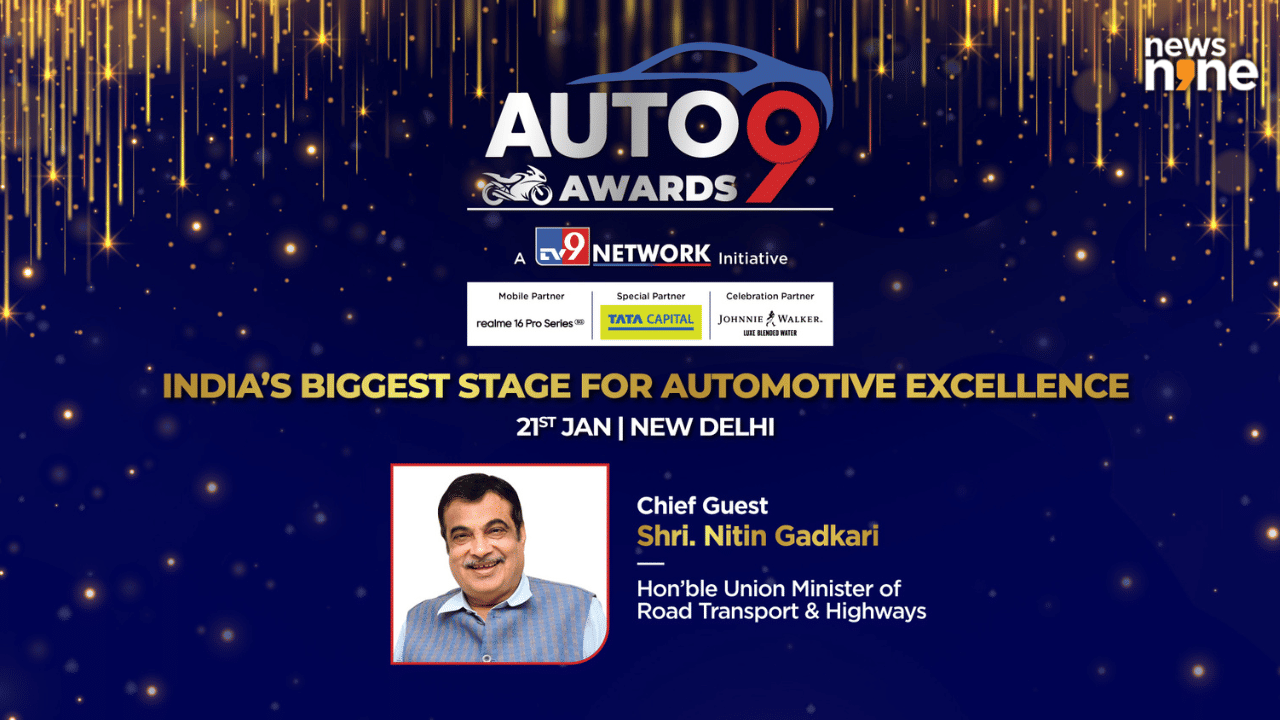
New Delhi: TV9 organised the Auto9 Awards, where 27 jury members participated in judging the best cars that the industry witnessed in 2025. The auto industry has been constantly growing, evolving and improving. The event was also graced by the Honourable Union Minister of Road Transport and Highways, Nitin Gadkari.
During the event, he interacted with the automotive industry and spoke about the current scenario of the auto world, transport sector and how the industry is.
In his interaction, the Honourable Union Minister noted that the automotive sector is one of the most critical pillars of India’s economy today. It is not just an industry, it is a powerful engine of growth, employment, innovation and revenue generation. In fact, it is among the most important sectors contributing to national income, and in the coming five years, India will emerge as a global leader in this space.
Speaking on the strengths of the industry, Mr Gadkari said, “One of our biggest strengths lies in the availability of skilled manpower. India has a vast, capable workforce that supports manufacturing, research and innovation at scale. Complementing this is the success of the vehicle scrappage policy, which has begun to show tangible results. Scrap material is becoming more affordable, volumes are rising, and this is creating a strong foundation for cost-efficient and sustainable production.”
Mr Gadkari explained that it needed to be recognised that the future of mobility cannot rely solely on fossil fuels. Today, India imports nearly 22 lakh crore rupees worth of fossil fuels, making energy security a national priority. Eventually, the country must move towards alternatives that are indigenous, cost-effective and environmentally responsible.
Gadkari believes this is where alternative fuels come into focus. Biodiesel, ethanol, methanol, LPG, CNG, electricity and hydrogen will collectively define the future of mobility. Agriculture and construction equipment, in particular, will benefit significantly from these cleaner energy solutions. Ethanol blending has already shown encouraging results, with no major efficiency issues reported, and flex-fuel engines capable of running on 100 per cent ethanol represent a promising path forward.
Talking about how important the automobile sector is, Gadkari said, “The automotive industry today contributes nearly 4.5 crore jobs and plays a decisive role in India’s economic momentum. With the IMF projecting 7.4 per cent GDP growth, the sector is poised to expand further. India is currently the seventh-largest economy, and with sustained growth, we aim to become the third-largest, surpassing major global players.”
Going further into the concerns with rising pollution levels, Gadkari said, “Policy support will be crucial in this journey. The CAFE norms have been finalised and will be filed shortly, with similar regulations being extended to trucks as well. Emission standards such as Euro 6 norms underline our commitment to reducing pollution while ensuring public affordability. Diesel and petrol will continue to play a role, but the focus must be on technologies that dramatically lower emissions. Innovation, entrepreneurship, science, technology and research are central to this transformation. The conversion of innovation into wealth creation will define the automotive sector of the future. India already enjoys lower production costs due to proven technologies, economic viability, availability of raw materials and a strong domestic market.”
Gadkari noted that export was key, with almost 50 per cent of two-wheeler production from companies like Bajaj, TVS and Hero being exported. Increased participation from foreign brands will only enhance competition, improve quality and boost exports further.
Diving into alternative energy, Gadkari said, “Hydrogen and electric mobility are key focus areas, though challenges remain. Hydrogen transportation and refuelling infrastructure need urgent attention, while EV charging stations and roadside amenities must expand rapidly. Projects such as the deployment of hydrogen-powered trucks and electric buses show promise, but scale remains a challenge. Where we need one lakh electric buses, we currently operate in thousands. Energy pricing for electric vehicles must also be rationalised, with dedicated tariffs to encourage adoption. Battery-swapping policies and waste-recycling frameworks will further strengthen the ecosystem, even as we work to reduce dependence on imported materials like copper.”
Gadkari concluded, “Of course, the auto sector isn’t just a wealth maker but a massive employment generator as well. It makes national capability, enhances brand value, and makes technological progress. With road infrastructure improving and connectivity expanding, vehicle demand will rise, export markets will grow, and India’s position as a global automotive hub will strengthen.”