New Delhi: Dense knots or clumps of cold gas grow by pulling in gas and dust from the surrounding regions. The infalling material flattens into a disk, with the temperatures and pressures increasing in the core till the fusion of hydrogen into helium can be sustained, marking the birth of a star. The rest of the planets are assembled in the debris disk surrounding a newborn star, from the leftover waste material. Here, a gradient forms with ices, gas and dust interacting in complex ways, as the planets are assembled. This is how worlds are made, at least in theory.
In the inner regions, closest to the host star, the gas and ices are blown away, leading to the formation of small terrestrial worlds. At distances from the host star where the gas is not blown away, gas giants can form, that can then migrate inwards, resulting in Hot Jupiters, giant worlds in tight orbits around host stars where years are just a few Earth days or even hours. In the outer regions, where ices can exist, ice giants can form, along with Super Earths, and these can subsequently migrate inwards, resulting in surprisingly configured planetary systems. Our astronomical instruments continuously challenge our assumptions.
Good neighbour Hot Jupiter
In the infancy of our own Solar System, it is believed that Jupiter prevented a formation of a planet where the asteroid belt exists today. All gas giants that migrate inwards after their formation were believed to clear their orbits, kicking out any small rocky exoplanets in the vicinity. However, astronomers have spotted an ice giant and a super Earth in the Wasp-132 system at a distance of 403 lightyears in the constellation of Lupus.
The fastest jetstream
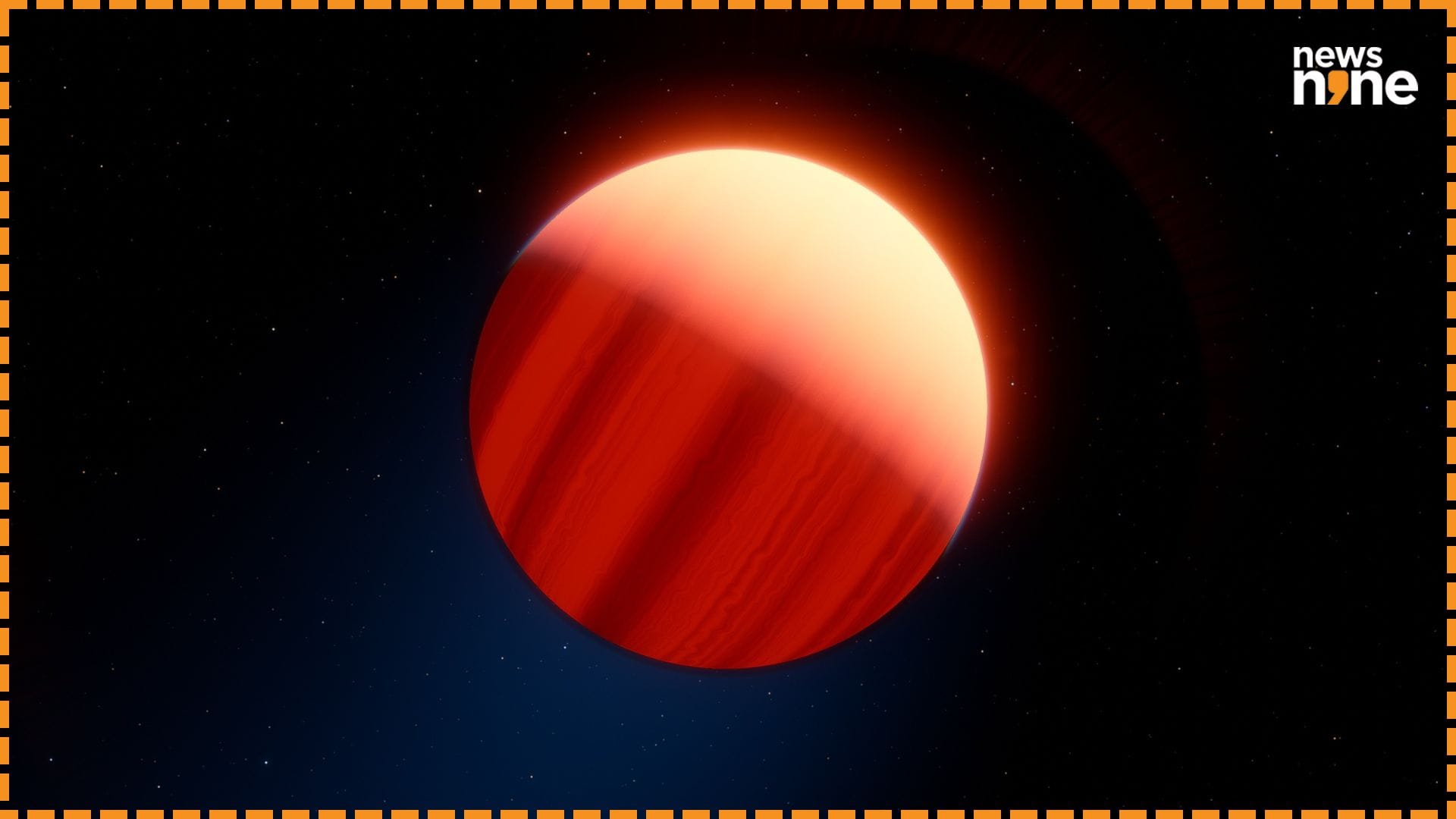
At a distance of 500 lightyears from the Earth in the constellation of Virgo is the WASP-127 system, which hosts a tidally locked Hot Jupiter. The proximity to the host star has inflated the atmosphere much like a hot air balloon, resulting in what is known as a ‘puffball’ exoplanet. The difference of temperatures between the day side and night side is so much, that supersonic winds whip around the planet at 33,000 km/h. This is the fastest jetstream detected on any known exoplanet.
A trio of Super Earths
HD 20794 is only 20 lightyears from us in the constellation of Eridanus, and is among the closest known exoplanetary systems. The discovery of HD 20794 d was reported earlier in the year. Both b and c, discovered about a decade ago, are Super Earths, just like d. There are three nearby worlds larger, and more massive than the Earth. It is unknown if the worlds are rocky, icy or both, but the system is a prime target for future observations. The residents of these worlds would have to build far more powerful rockets than Earthlings to get into orbit.
The Super Venus
GJ 1214 b is at a distance of 48 lightyears from the Earth in the constellation of Ophiuchus is an exoplanet unlike any previously characterised. The world has an atmosphere rich in carbon dioxide, with hints of metals dominating in the deeper layers of the atmosphere. A world like Venus with a dense, hellish atmosphere is difficult to study in the planetary neighbourhood itself, so peering into the skies of such worlds over astronomical distances is incredibly challenging. The discovery expands the possible atmospheres of rocky exoplanets.
A Rare Sub-Saturn
TOI-6038A b is a Sub-Saturn exoplanet at a distance of 581 lightyears from the Earth. The exoplanet was discovered by Indian astronomers, and falls fairly in what is known as the Hot Neptune Desert. While astronomers have discovered many gas giants in tight orbits around their host stars, there are only a handful of ice giants in similar tight orbits. Astronomers believe that these worlds may be getting rapidly stripped to their cores. Very little is known about the compositions and atmospheres of worlds that straddle the mass gap between Super Earths and Sub-Saturns, especially in tight orbits.
Super Speedy World
Hypervelocity stars have been violently kicked out of the cluster that they formed in because of gravitational interactions. These zip around the galaxy at tremendous velocities. It was not believed that such stars could harbour planets, but astronomers were surprised to discover a star moving through the central regions of the galaxy at 540 kilometres per hour, with a Super Neptune in tow! This was a serendipitous discovery because of a microlensing event, where a chance foreground alignment bent the light from the distant source, indicating a pair of objects.
Impossible Jupiter
About 240 lightyears from the Sun in the constellation of Leo is a small red dwarf star containing only 20 per cent the mass of the Sun, designated as TOI-6894. Now this tiny star was discovered to host a Hot Jupiter exoplanet. It was not thought possible that such small stars could form gas giants at all, as scientists did not believe that there would be enough material leftover after the birth of the star. Now, astronomers are looking for more worlds that are similar to TOI-6894 b.
Circumbinary exoplanet in Polar Orbit
For the first time, astronomers have discovered an exoplanet in a polar orbit around a binary pair of brown dwarfs. Brown dwarfs are massive objects that begin their formation much like stars, but are not able to scoop up enough gas and dust to sustain nuclear fusion, and hence are described as ‘failed stars’. The pair of brown dwarfs are in a tight orbit around each other, close enough to not perturb the polar orbit of the circumbinary planet, designated as 2M1510 (AB) b. The researchers were not even looking for an exoplanet when they stumbled across it!
Humans know of over 6,000 exoplanets
At the time of writing, there are 6,065 exoplanets known. The number of known exoplanets crossed 6,000 in 2025, about two years after the tally reached 5,500. The James Webb Space Telescope has ushered in a new era of exoplanetary science, where we are characterising these remote worlds and understanding more about their environmental conditions. The technique of observing planets through secondary eclipses is allowing scientists to start mapping temperature gradients across exoplanets, exposing their conditions and potential topographies.