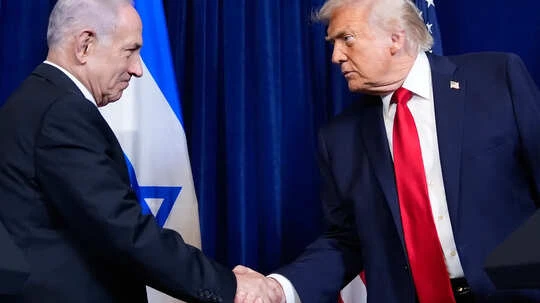
Israeli Prime Minister Benjamin Netanyahu is navigating a complex foreign policy landscape as he engages the United States in a military campaign against Iran.
This partnership, aimed at countering what Netanyahu perceives as an existential threat, could strain U.S.-Israel relations amid evolving public sentiment.
The ongoing conflict raises concerns about long-term implications for both nations. While Netanyahu celebrates the collaboration with U.S. President Donald Trump, he risks alienating American public opinion, which has shifted towards supporting Palestinian perspectives in recent years.
Strategic Gamble with U.S. Support
Netanyahu’s successful persuasion of Trump to engage in military action against Iran marks a significant moment in their relationship. This collaboration highlights the strong personal ties between the two leaders, which Netanyahu has leveraged to pursue a shared objective of destabilizing the Iranian government.
However, as the conflict progresses, the potential for prolonged engagement could test the durability of U.S.-Israeli relations. Concerns about public backlash in the U.S. are mounting, with analysts warning that prolonged military involvement could lead to diminishing support for Israel among American citizens.
Shifts in U.S. Public Opinion
Recent polling indicates a notable decline in American support for Israel, particularly among Democrats, which has been exacerbated by the ongoing violence in Gaza. The changing dynamics have raised alarms for Netanyahu, who has historically positioned himself as a crucial link between Israel and the United States.
Despite his past successes in fostering relationships with U.S. leaders, Netanyahu faces challenges as criticism grows regarding Israel’s military actions. The increasing isolation of Israel on the international stage due to the conflict with Hamas further complicates the situation.
Consequences of Military Engagement
The recent military operations against Iran have resulted in significant casualties, including U.S. troops, and have disrupted travel in the region. The escalation has led to rising oil prices, which could impact the U.S. economy and influence public opinion regarding continued support for Israel.
Analysts caution that if the military campaign falters or drags on, Israel could bear the brunt of American dissatisfaction. The potential for blame to be directed at Israel is a critical concern, as losing American public support could have long-term ramifications for the country.
Netanyahu’s Political Calculations
As elections approach, Netanyahu may seek to use the conflict to shift focus away from recent security failures. By positioning himself as a decisive wartime leader, he hopes to reinforce his political standing while relying on U.S. support to bolster his narrative.
Experts suggest that Netanyahu has little to lose politically from the conflict, as the U.S. president retains the power to de-escalate military actions if necessary. This dynamic may allow Netanyahu to navigate the political landscape while managing the complexities of international relations.