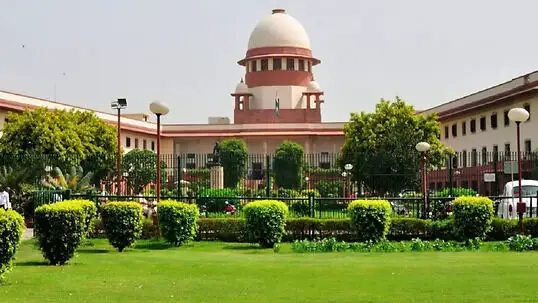
New Delhi: A 12-member expert committee on Tuesday (November 3) told the Supreme Court that the National Medical Commission (NMC) had proposed introducing a rank-based merit system for NEET-PG and NEET-SS, replacing the existing percentile-based format.
The panel submitted a report before the bench comprising Justices PS Narasimha and Alok Aradhe. The panel report came in a PIL filed by social activist Harisharan Devgan through SC advocate Satyam Singh Rajpoot
The report reportedly addressed the reduction in the cut-off percentile for NEET-PG 2025-26. Notably, the committee was constituted on the Court’s recommendation.
The Expert Committee Report submitted in the Supreme Court case Harisharan Devgan & Ors. v. Union of India & Ors. (Writ Petition (C) No. 136 of 2026)-in which advocate Satyam Singh Rajput represents the petitioner-outlines comprehensive administrative and technological overhauls to streamline the medical counselling process while safeguarding educational standards.
Key changes include the National Medical Commission’s in-principle approval to introduce a rank-based merit system for NEET-PG and NEET-SS by 2027, replacing percentile-based cut-offs to prevent arbitrary reductions. The NMC will also directly upload seat matrices online to avoid duplication errors. Digital ‘Freeze’ and ‘Float’ options, along with a single-point fee payment system, will make the admission process easier and reduce travel and reporting difficulties.
Furthermore, the report recommends state-level fee rationalisation for private and deemed universities, service bond exemptions for vacant non-clinical courses, and biometric/KYC verification protocols to curb candidate seat-blocking.
Notably, the Commission is yet to take a decision on finalising the regulations.
Several petitions are being examined by the Supreme Court challenging the Centre’s decision to sharply lower the qualifying cut-off percentiles for NEET-PG 2025. The revised cut-offs brought the qualifying marks down from 276 to 103 for general category candidates, and from 235 to minus 40 for SC, ST and OBC candidates.
The report was submitted following extensive discussions and a review of recommendations put forward by senior advocate Maninder Singh, who is assisting the Supreme Court as amicus curiae.
The committee is also exploring steps to curb seat-blocking, including introducing KYC or biometric verification during entrance exams to prevent candidates from appearing multiple times.