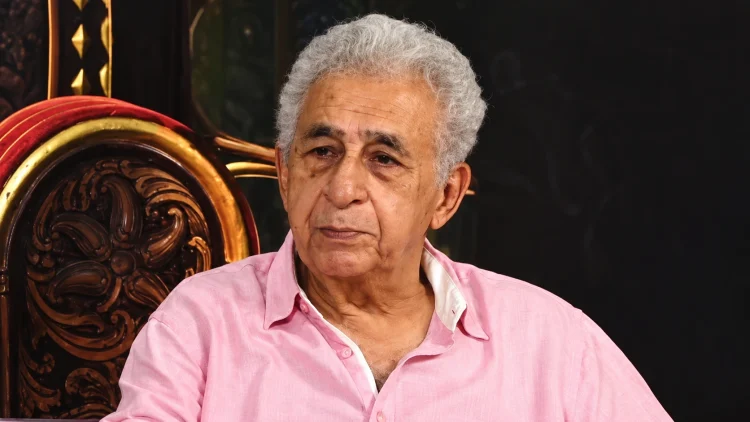
Naseeruddin Shah has spoken out against the central government in a video shared on social media, expressing solidarity with students protesting at Jamia Millia Islamia in Delhi. The veteran actor, widely recognised for his performances in Indian cinema, questioned the treatment of young people and educational institutions, while warning that democratic values must be protected. During the video, Shah also described himself as a “mental Naxal”, referring to labels he said had been used against people who criticise the government. His remarks come amid an ongoing dispute at Jamia over student union elections and disciplinary action against students.
Naseeruddin Shah Uses Strong Words in Video Message
In the video, Shah said he was proud to call himself a “mental Naxal” and referred to other terms, including “anti-national” and “tukde-tukde gang”, which he said had been used to describe critics of the government. He also made sharply worded allegations against the ruling establishment, expressing anger over what he views as pressure on dissenting voices.
The actor questioned how far the government intended to go in its treatment of young people, educational institutions and democratic processes. He also criticised people he accused of supporting the government’s approach, using forceful language to convey his opposition.
Shah’s comments were framed as a message of support for students involved in protests. He said their courage would not be broken and expressed confidence that young people would continue to stand up for their concerns. He ended his message by offering his greetings and support to the country’s youth.
Actor Raises Concerns About Universities and Student Rights
A significant part of Shah’s statement focused on educational institutions. He referred to Jawaharlal Nehru University, the Satyajit Ray Film and Television Institute and Jamia Millia Islamia while criticising what he described as the mistreatment of students.
He argued that actions taken against protesting students would be remembered, and challenged the authorities to reconsider their approach. His comments reflect a wider debate about student activism, the freedom to express disagreement and the responsibilities of university administrations when handling campus protests.
Shah has frequently attracted public attention for expressing strong views on social and political issues. In this latest video, his focus was on the treatment of students and the importance of protecting their ability to raise concerns. His remarks were sharply critical of the government, though the video primarily conveyed his personal position rather than a detailed account of the administrative decisions at the centre of the Jamia dispute.
What Is Behind the Jamia Millia Islamia Protests?
The demonstrations at Jamia Millia Islamia are linked to demands for the restoration of student union elections and opposition to decisions taken by the university administration. Protesters, including members associated with student organisations such as the Students’ Federation of India (SFI), the National Students’ Union of India (NSUI) and the All India Students’ Association (AISA), have called for elections to be held.
Their demands also include the removal of the chief proctor and the withdrawal of disciplinary action taken against students. Some protesters have undertaken hunger strikes as part of their campaign to press the administration to address their concerns.
The dispute has brought questions of student representation and university governance into focus. Student union elections are often viewed by campaigners as an important means of giving students a formal voice in campus affairs. The current protests reflect disagreements over how those concerns should be addressed and what role students should have in decisions affecting university life.
Shah Expresses Confidence in Young People
Toward the end of his video, Shah said attempts to discourage young people would not succeed. He maintained that students would continue to defend their aspirations and expressed hope that educational institutions and democratic processes would remain resilient.
His remarks add a prominent film-industry voice to the public discussion surrounding the Jamia protests. The actor’s message was direct and confrontational, with strong criticism of the government and people he believes support its response to dissent.
The immediate dispute at Jamia centres on student elections, the position of the chief proctor and disciplinary measures. How the university administration responds to the protesters’ demands will be important in determining the next stage of the standoff. Shah’s video, meanwhile, has drawn attention to the broader questions of student rights, political criticism and the place of dissent in a democracy.