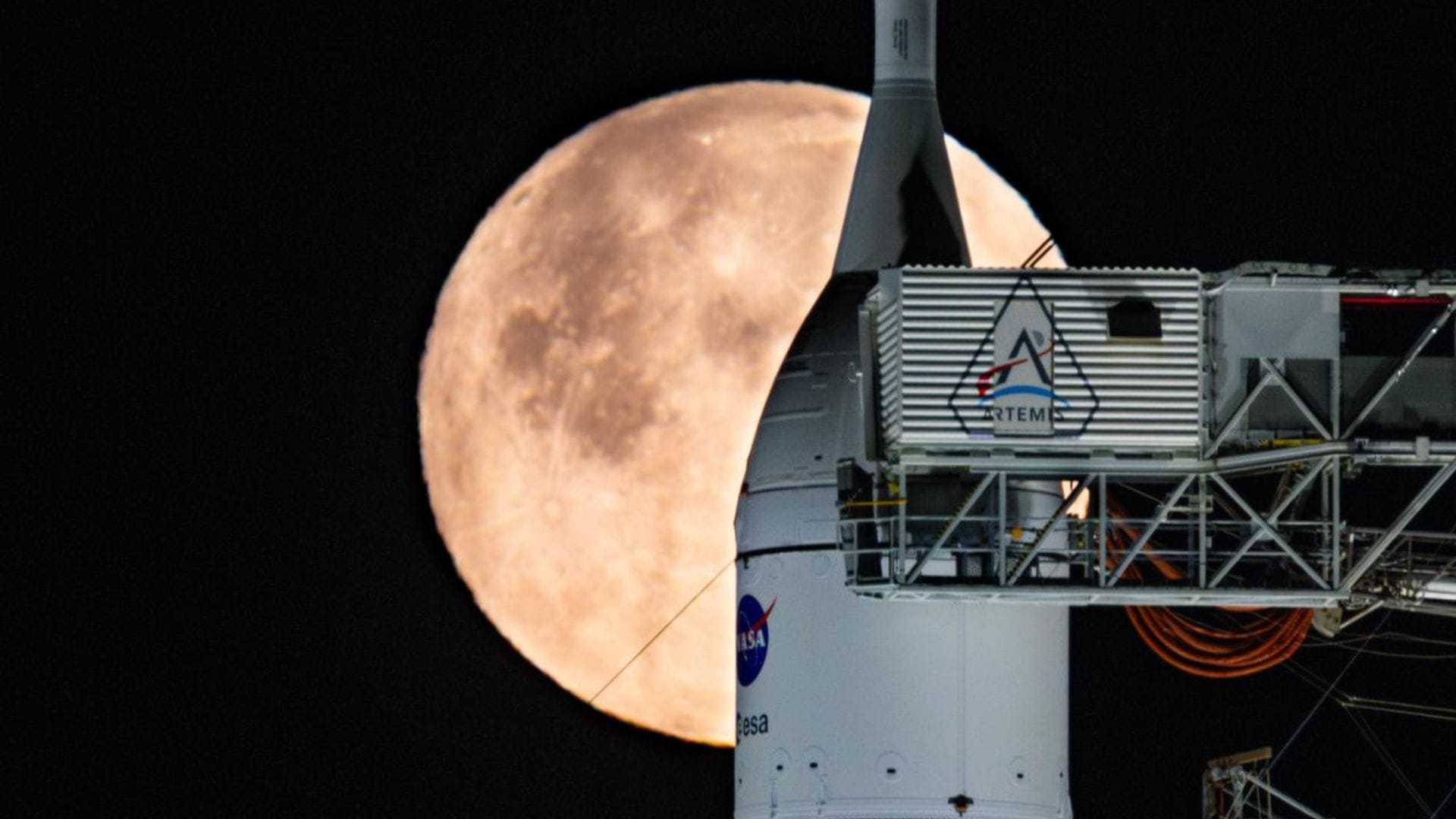
New Delhi: NASA has concluded a wet dress rehearsal for the Artemis II mission on the morning of 3 February, 2026. The test met several key objectives, but technical challenges have shifted the timeline of the mission. The primary goal of the rehearsal was to practice the timelines and procedures for the first crewed mission of the Artemis programme, that will see a crew of four astronauts travelling to Moon orbit and returning. For the first time, teams successfully loaded cryogenic propellant into the core and upper stage tanks of the brand-new Space Launch System rocket, using a new 5.2 million litre hydrogen sphere.
The test was terminated five minutes and 15 seconds before liftoff time. During the final phase of the countdown, as the core stage began pressurisation, engineers detected a spike in liquid hydrogen leak within an interface used to route propellant into the rocket. NASA has established a 16 per cent concentration limit for hydrogen leaks in the umbilical cavity, based on data indicating that ignition cannot occur at that level. The leak rate exceeded this threshold during the terminal countdown, triggering the automatic cutoff. The teams also identified an issue with a valve on the Orion crew module during hatch pressurisation, that required retorquing, as well as recurring audio communication dropouts among ground teams.
Astronauts moved out of quarantine
Because the mission has been delayed, the four Artemis II crew members, Reid Wiseman, Victor Glover, Christina Koch, and Jeremy Hansen have all been released from the quarantine they entered on 21 January. The remain in Houston and will re-enter quarantine approximately two weeks before the next launch attempt.
NASA aims to launch Artemis II in March
NASA is now looking at March 2026 as the earliest possible launch opportunity for Artemis II. NASA aims to conduct another wet dress rehearsal before the launch to practice the remaining objectives, including a three-minute hold capacity and countdown recycles before setting an official launch date. Engineers are reviewing the data to mitigate the leak and the communication issues. NASA anticipates that the necessary work can be conducted at the launch pad itself. This means that the rocket does not have to be rolled back to the Vehicle Assembly Building (VAB).