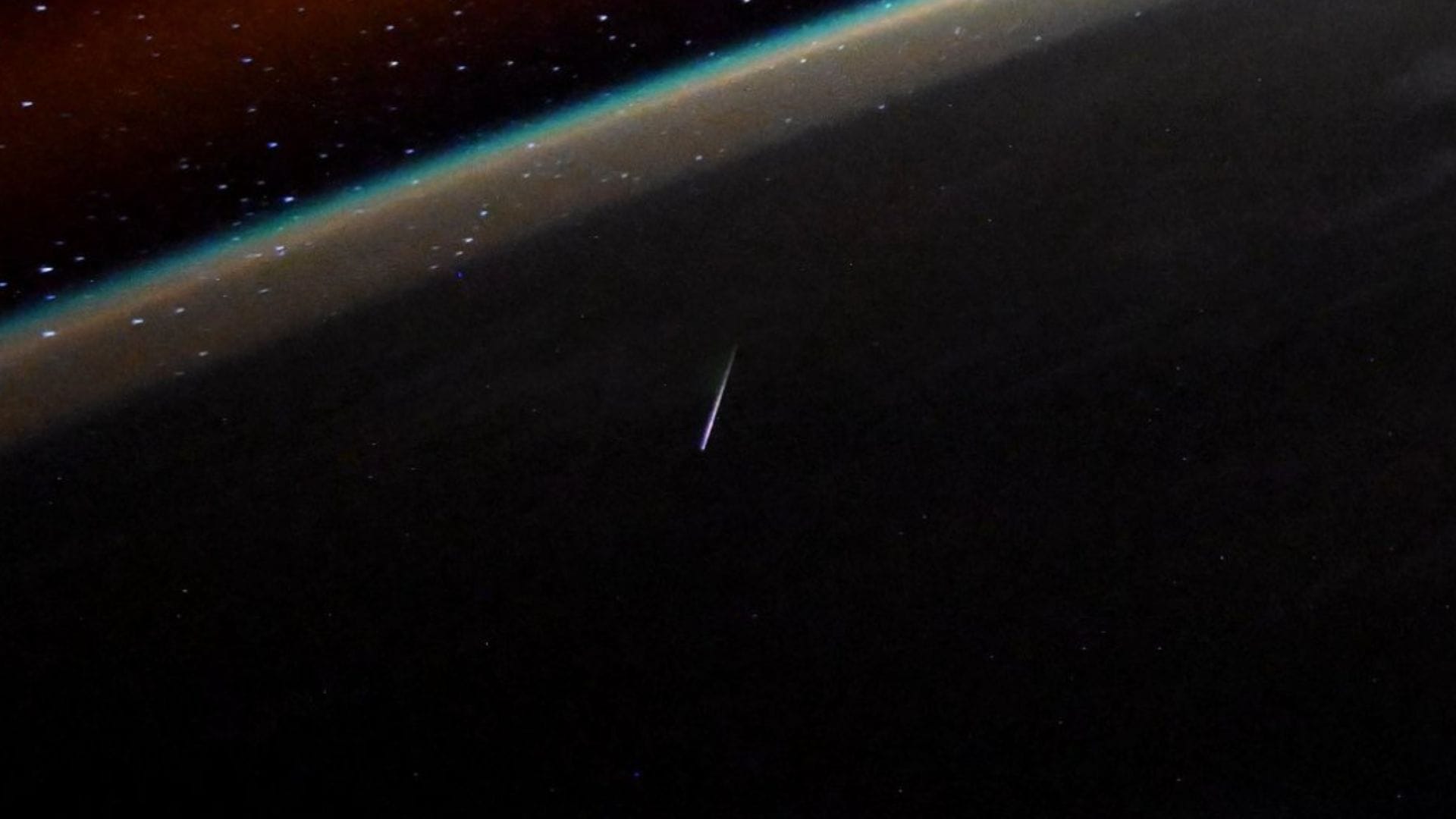
New Delhi: NASA astronaut Jessica Meir has shared an image of a shooting star from the Lyrid meteor shower, captured from the cupola of the International Space Station (ISS). The Lyrid meteor shower is among the oldest known meteor showers, and has been recorded by Chinese astronomers as far back as 687 BC. The meteor shower will peak between 21-22 April, with between 10-20 shooting stars visible every hour. The Lyrid meteor shower is known for its fast streaks and bright fireballs.
Have you seen any shooting stars lately? We’re in the midst of the Lyrid Meteor shower, and I was lucky enough to photograph some from the @Space_Station cupola. The Lyrids are an annual event best viewed in the Northern Hemisphere by looking toward the constellation Lyra in the… pic.twitter.com/B2FqMdEuqs
— Jessica Meir (@Astro_Jessica) April 20, 2026
The meteors will appear to originate from close to Vega, the brightest star in the constellation of Lyra. This is the radiant, and can be found easily, but it is better to look away from the radiant and not towards it. Because of an effect known as foreshortening, the shooting stars closer to the radiant tend to leave shorter streaks. The source of the meteor shower are fragments from the comet C/1861 G1 Thatcher, discovered in 1861 by the American amateur astronomer AE Thatcher. This is a long-period comet that takes 415.5 years to orbit the Sun, and is not expected to return to the inner Solar System for 200 years.
Is the Lyrid meteor shower visible in India?
Yes, the Lyrid meteor shower is visible in India. The visibility of the meteors improves with better viewing conditions, which here means a lack of cloud cover, or light pollution. The weather conditions are also ideal at this time of the year. It is a good idea to head away from city lights. The Lyrid meteor shower can be viewed any time from sunset to sunrise. There are fewer meteors visible closer to the night, but they tend to trail for longer. Before dawn, there are more meteors visible, but they do not have as long trails. The Moon is a waxing crescent, so it will become fuller and brighter as the meteor shower fades.