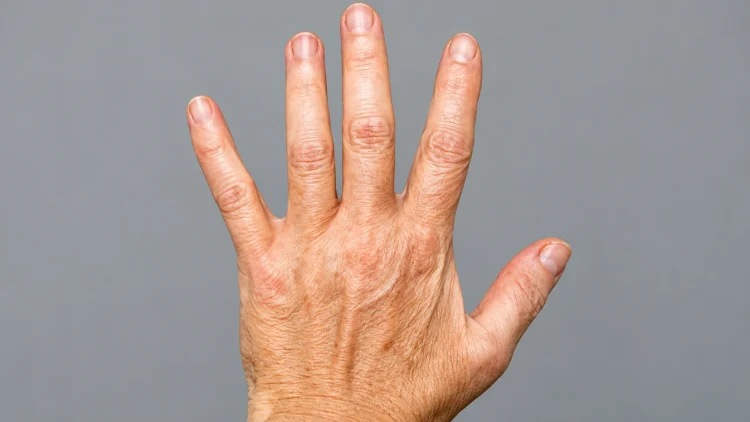
Nail health can reveal useful clues about your overall well-being, although changes in appearance do not always indicate a vitamin or mineral deficiency. Darkened knuckles, brittle nails, unusually loose skin, swollen finger joints and yellow discolouration may develop for several different reasons. Homeopathic doctor Manu Gupta has advised people not to ignore these changes, particularly when they persist or appear alongside other symptoms. Rather than relying on appearance alone, it is important to understand what these signs might mean and when medical advice is needed.
1. Dark Knuckles May Have Several Causes
If the skin around your finger joints becomes noticeably darker, it may be tempting to assume that you have a vitamin B12 deficiency. However, dark knuckles can develop for various reasons, including friction, natural skin pigmentation, certain skin conditions and some metabolic or hormonal disorders. Vitamin B12 deficiency can occasionally be associated with changes in skin pigmentation, but dark joints alone cannot confirm that your body lacks this vitamin.
Vitamin B12 plays an important role in red blood cell formation and normal nerve function. A deficiency may also cause symptoms such as tiredness, weakness, numbness or tingling in the hands and feet, and balance difficulties. If darkening appears unexpectedly or is accompanied by other symptoms, consult a healthcare professional. A medical assessment and appropriate blood tests can help establish whether a deficiency or another condition is responsible.
2. Brittle, Pale or Frequently Breaking Nails
Nails that split easily, become unusually brittle or appear paler than normal can sometimes be associated with nutritional problems. Iron deficiency is one possible explanation, particularly if the nails are accompanied by fatigue, weakness, dizziness or shortness of breath. In more advanced cases, iron deficiency may cause changes in nail shape as well as colour.
Iron is essential for producing haemoglobin, the protein in red blood cells that carries oxygen around the body. When iron levels become too low, the body may struggle to produce enough healthy red blood cells. However, brittle nails can also result from frequent exposure to water, cleaning products, nail polish removers, ageing or other medical conditions.
Instead of starting iron supplements based only on the appearance of your nails, speak to a doctor about whether blood tests are appropriate. Taking unnecessary iron supplements can be harmful, and the correct treatment depends on the underlying cause.
3. Loose Skin on the Back of the Hands
Skin on the back of the hands may look less firm as people age because collagen and elastin gradually change over time. Temporary changes in skin appearance can also occur when the body is dehydrated, but loose skin is not a reliable way to diagnose dehydration on its own.
Other signs of dehydration may include thirst, a dry mouth, darker urine, reduced urination, dizziness and unusual tiredness. Drinking enough fluids throughout the day can help maintain normal hydration, with individual requirements varying according to activity, weather and health conditions.
If your skin appears persistently different or you notice other symptoms, consider seeking medical advice rather than assuming that a lack of water or nutrients is the only explanation.
4. Swollen Fingers and Painful Joints
Finger joints that become swollen, stiff or painful deserve attention, especially if symptoms occur repeatedly or affect both hands. Rheumatoid arthritis is one possible cause. This autoimmune condition can cause inflammation in the joints, and people may experience stiffness that is particularly noticeable in the morning.
Other conditions, including osteoarthritis, injuries and infections, can also cause finger pain or swelling. The symptoms alone cannot establish which condition is responsible. Although calcium and vitamin K are important nutrients for health, increasing their intake will not necessarily treat inflammatory joint disease.
Seek medical assessment if swelling persists, morning stiffness becomes frequent or everyday activities such as gripping objects become difficult. A clinician can evaluate the symptoms and recommend appropriate tests or treatment.
5. Yellow or Discoloured Nails
Nails that turn yellow, become thick or begin to crumble may be affected by a fungal infection. Such infections can develop gradually and may cause changes in nail texture as well as colour. However, yellow nails can also result from nail polish stains, smoking, certain medications or other health conditions.
A fungal infection cannot always be identified accurately by appearance alone. A healthcare professional may examine the nail and, if necessary, arrange testing before recommending antifungal treatment. This matters because treatments differ depending on the cause, and some nail conditions can resemble fungal infections.
Avoid scraping or aggressively filing discoloured nails in an attempt to remove the problem. Keep nails clean and dry, do not share nail tools, and seek advice if the changes spread, cause pain or affect several nails.
When Should You Consult a Doctor?
Changes in the hands and nails can provide useful health clues, but they should be treated as signals to investigate rather than proof of a specific deficiency. Persistent nail breakage, unexplained pigmentation, ongoing joint swelling or unusual nail discolouration may warrant a medical assessment, particularly when several symptoms appear together.
A balanced diet, regular hydration and gentle nail care support general health, but supplements should be used when appropriate rather than as a substitute for diagnosis. If you notice a sudden change, worsening symptoms or signs such as severe pain, spreading redness or significant swelling, seek medical advice promptly.