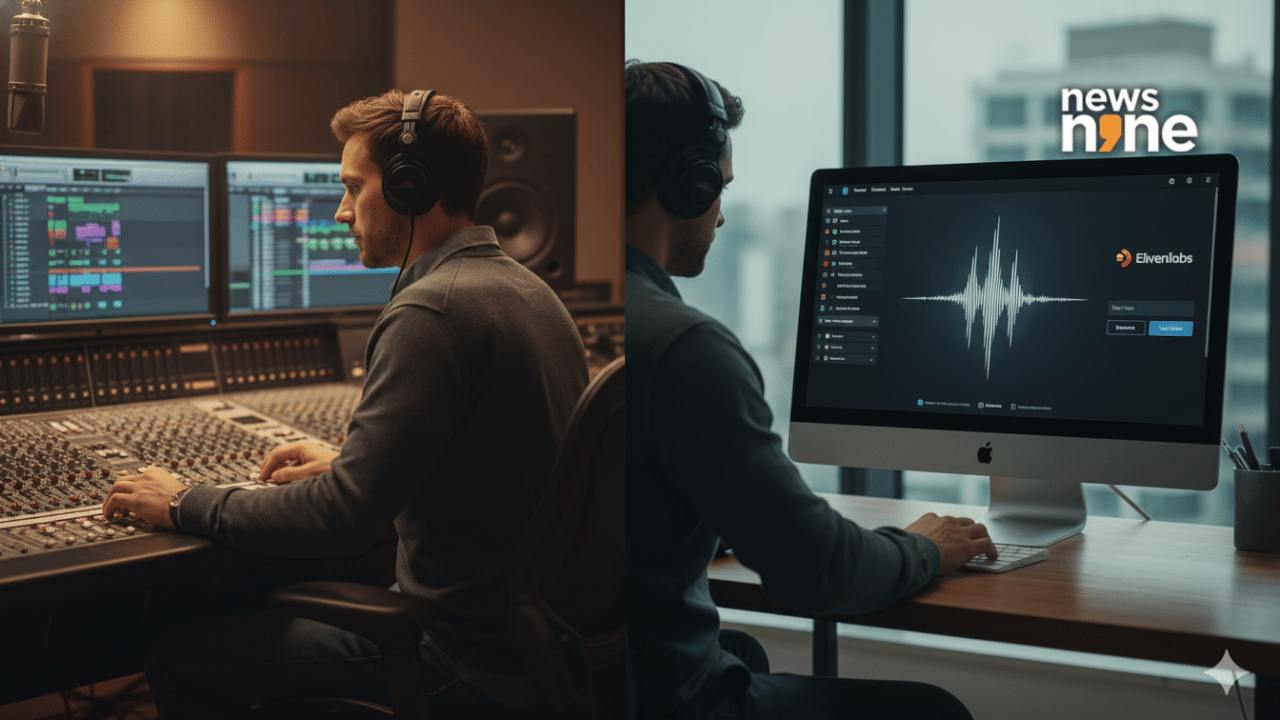
New Delhi: Artificial intelligence is reshaping sound, music, and voice production in a serious way this year. What once demanded expensive studios, specialist skills, and long timelines is now being handled by AI systems that write music, sing lyrics, narrate podcasts, and speak in multiple languages with human like emotion. For creators, studios, media houses, and even students, this shift is not hype. It is a practical change in workflows, costs, and storytelling reach.
From music generation tools that can build complete songs to voice platforms that sound almost indistinguishable from real humans, AI is quietly rewriting the global audio economy. It is speeding work, cutting budgets, and opening opportunities while also raising sharp questions about ethics, ownership, and authenticity.
AI music tools like Suno are rewriting creation workflows
AI powered music tools now compose cinematic backgrounds, emotional scores, digital songs, and expressive sound layers in minutes. Systems learn rhythm, melody, tone, and mood from massive datasets and then generate tracks based on simple instructions. Suno has emerged as one of the most influential platforms in this space, capable of creating full songs with vocals, lyrics, and melody. Several creators globally have already tried releasing AI generated tracks on streaming platforms, as quality continues to improve.
This shift is helping independent filmmakers, YouTubers, small businesses, educators, and game developers. They do not need to hunt for licensed tracks or worry about missing budgets. Many now generate unique background music, emotional scores, and adaptive sound designs on their own. At a time when production spending is tightly controlled worldwide, AI is quietly becoming a financial cushion.
ElevenLabs and multilingual AI voices are changing narration
The biggest jump in 2025 is visible in the voice space. Modern AI voice systems can speak naturally, carry emotion, stress sentences correctly, and even sound conversational. ElevenLabs is seen as a benchmark platform and has built capabilities like voice cloning with consent, emotional tone control, and multilingual narration. A single AI voice can speak in multiple languages with the same tone and emotion, which is becoming critical in global content distribution.
For podcasters, broadcasters, learning platforms, and news organisations, AI voices enable faster publishing cycles and wider reach. Many creators now launch multilingual content without building separate recording teams. AI narrated news updates, automated podcasting, and digital presenters are becoming common across industries.
Expressive soundscapes, smarter editing, and everyday use
AI is transforming audio quality as well. Tools that remove noise, enhance clarity, improve tone, and edit audio like text are being widely adopted. Studio quality sound cleaning, automated mixing, and post production polishing are no longer limited to big studios.
Real world use cases include independent YouTubers avoiding copyright issues, startups producing advertising music, educators recording content at scale, game developers designing dynamic background scores, and creators publishing international content without multi team audio setups. Everyday production pipelines are lighter, faster, and more controlled.
Ethics and ownership debates remain serious
The rapid growth of AI sound has also triggered clear ethical conversations. Copyright, ownership of AI generated music, artistic authenticity, and voice misuse are under scrutiny. Experts point to the risk of fraud, misinformation, and privacy violations if voice cloning is misused. Platforms are working on safety systems, and legal frameworks are evolving to address consent and accountability.
The industry continues to stress that AI remains a tool, not a replacement. It works best when human creativity leads and technology supports.
India pushes new age creative storytelling with AI² Awards 2026
In India, tech driven storytelling is also receiving institutional encouragement. TV9 Network has launched the AI² Awards 2026, a filmmaking competition focused on blending artificial intelligence with human imagination. The initiative invites students, independent creators, and early filmmakers to experiment with AI powered storytelling across documentaries, animations, branded content, and music video formats. The aim is to support creative exploration in a fast changing AI media era.