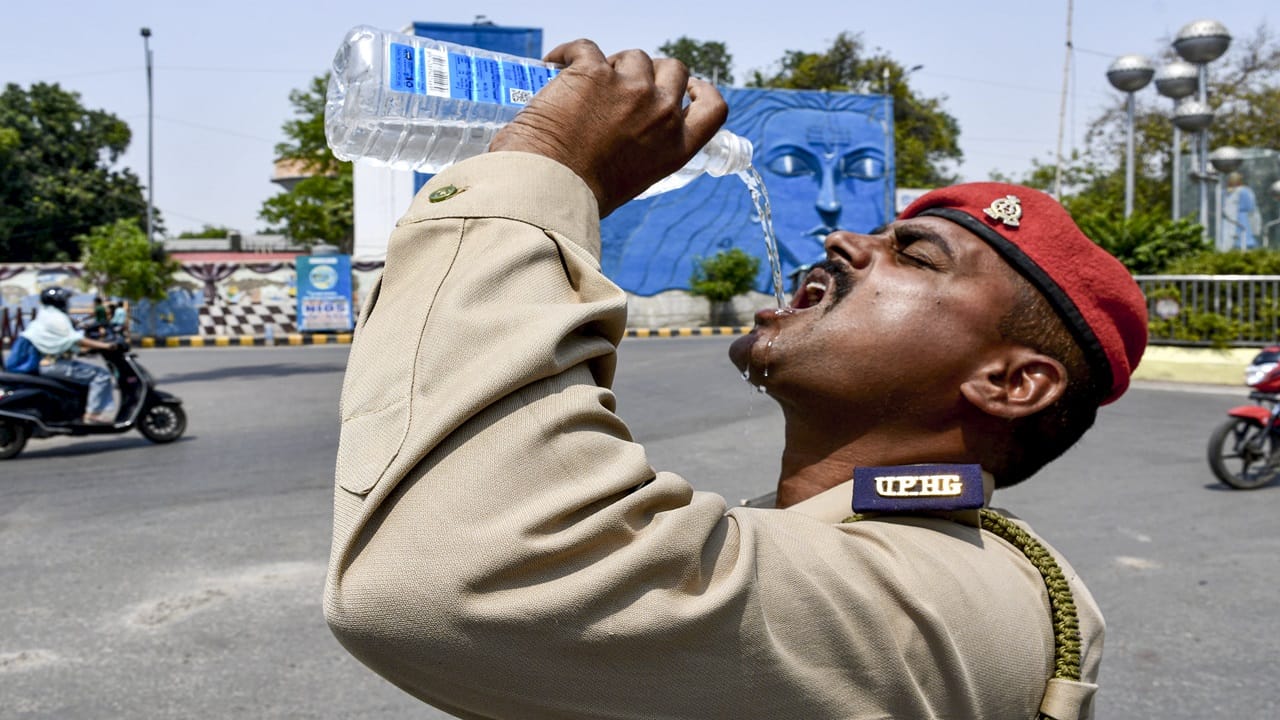
Mumbai: India’s financial capital is tightening its taps. As a relentless heatwave burns much of Maharashtra, Brihanmumbai Municipal Corporation (BMC) Commissioner Ashwini Bhide has announced a mandatory 15 per cent water cut for the city, effective from May 15.
The decision follows a high-level pre-monsoon review meeting held to address a brewing water crisis in the city. The city’s lifeline, the seven reservoirs that supply its drinking water, saw their collective water levels plummet to a staggering 28.79 per cent on Monday.
A thirsty summer for Mumbaikars
Mumbai’s massive appetite for water requires between 3,950 and 4,100 million litres per day (MLD). This supply is drawn from a network of seven lakes consisting of Tulsi, Vihar, Bhatsa, Tansa, Modak Sagar, Upper Vaitarna, and Middle Vaitarna.
While Tulsi and Vihar are nestled within the city’s Sanjay Gandhi National Park, the primary heavy-lifters are located further afield in the Thane, Nashik, and Palghar districts. With a total holding capacity of 14,47,363 MLD, these lakes usually sustain the city until the monsoon arrives in June. However, the current reserves are only projected to last until the end of July, leaving no room for error.
The El Niño shadow
The situation is compounded by a grim forecast from the India Meteorological Department (IMD). Meteorologists have pointed to the El Niño effect, which is expected to weaken the southwest monsoon this year. With the prospect of below-normal rainfall, the BMC is opting for immediate conservation to ensure the city doesn’t run dry before the lakes can be replenished in August.
State in the eye of the storm
While Mumbai manages its reserves, other parts of Maharashtra are enduring an “inferno.” The IMD has issued a severe heat warning for the Vidarbha, Konkan, and Marathwada regions.
The statistics are harrowing, with Akola recording a blistering 46.9 degrees Celsius, its highest in years.
Yavatmal, Amravati, and Wardha were declared “critical” zones as mercury touched the 47-degree mark. Several other cities have already breached the 46-degree threshold.
Safety protocols and outlook
Authorities have issued a stern advisory to citizens, urging them to remain indoors between 12:00 PM and 4:00 PM, when the sun is at its peak. The administration has also released specific health guidelines to prevent heatstroke and dehydration.
Unfortunately, there is no immediate relief on the horizon. The Meteorological Department warns that the heatwave is likely to persist for at least the next two to three days, with no significant drop in temperature expected.