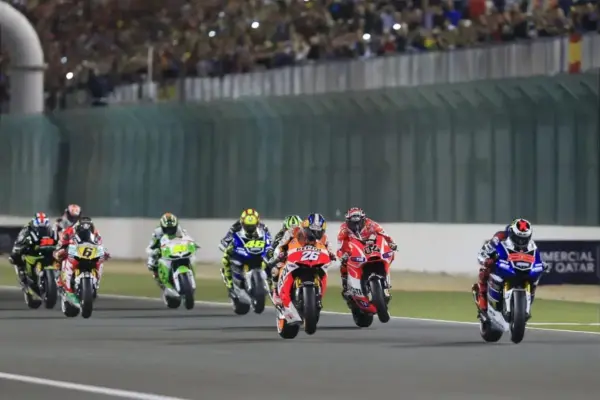
Faces Urgent Call to Act on Qatar GP as F1 Moves Swiftly with Bahrain Replacement
The calendar still officially includes the Qatar Grand Prix, but for how much longer?
Originally postponed from spring to November amid escalating geopolitical tensions, the race remains shrouded in uncertainty. With no guarantees that conditions will allow the event to proceed, a pressing question arises: why hasn’t MotoGP followed Formula 1’s lead in preparing a concrete alternative venue?
When regional instability worsened, Dorna and the FIM opted not to cancel Qatar outright but to defer it to the end of the season, hoping for a stabilisation of the situation. This decision preserved a key fixture in the but severely unbalanced the calendar, compressing an already intense schedule into the latter part of the year while leaving teams, sponsors, and fans in limbo.
In stark contrast, Formula 1, also under Liberty Media’s stewardship, confronted similar geopolitical risks in the region with decisive contingency planning. The F1 management swiftly developed multiple backup scenarios to ensure the s continuity regardless of circumstances. This proactive strategy provides stakeholders with crucial clarity and operational security for the season’s climax.
‘s current stance appears to be one of cautious patience, maintaining Qatar on the schedule as long as conditions do not deteriorate further. While understandable, this reactive posture carries substantial risk. Should a cancellation be forced mere weeks before the event, scrambling to secure an alternative circuit capable of hosting a Grand Prix on such short notice would be near impossible. The would face a significant gap with no viable replacement.
Previous discussions about rescheduling have identified potential backup venues, including Argentina, which has the homologation and infrastructure to accommodate a swift addition. Other circuits also meet the technical standards and could serve as substitutes if negotiations begin promptly. Preparing these options now is essential.
Establishing a Plan B does not signal giving up on Qatar but rather ensures readiness to pivot if required. Beyond sporting considerations, this uncertainty undermines the entire ecosystem: teams must manage logistics months in advance, broadcasters and promoters require assured schedules, and sponsors demand reliable commitments.
Prolonging ambiguity until the eleventh hour threatens the ‘s credibility and operational stability. Announcing a reserve circuit immediately would provide reassurance to all parties, while still leaving the door open for Qatar if the geopolitical climate improves.
Since taking charge of ,Liberty Media has emphasized elevating the professionalism of management and emulating best practices from . The Qatar GP dilemma represents a crucial test of this vision.
While no one can predict the trajectory of a geopolitical crisis, its sporting repercussions can and must be anticipated. By proactively securing an alternative venue, leadership would demonstrate control and safeguard the ‘s integrity through the season’s conclusion.
Ultimately, the debate transcends Qatar’s fate. Everyone hopes the race will go ahead as planned. The critical question remains: can afford to wait any longer, or is it time to officially unveil a fallback plan before the calendar is blindsided once again?