MotoGP’s Sprint Race Explosion: A High-Stakes Gamble on Rider Safety
MotoGP has embraced a radical departure from traditional race formats by doubling its race weekends to include a Sprint race at every event, resulting in an unprecedented 44 races-and crucially, 44 starts-across the 2026 season’s 22 Grand Prix weekends.
This aggressive approach contrasts sharply with Formula 1’s more conservative adoption of Sprint races, which currently stand at six per 24-race calendar, though F1’s leadership is openly considering doubling that number from 2027 onwards.
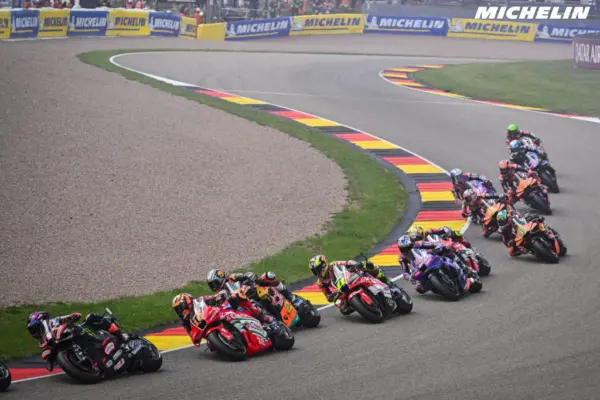
Carlo Pernat, a veteran MotoGP commentator, has persistently highlighted the physical toll this format imposes on riders, questioning the sustainability of 44 races and starts per season. The stakes are uniquely high in motorcycle racing, where each start is a perilous moment as 22 riders accelerate simultaneously towards tight first corners, compressed within mere meters of each other. Unlike Formula 1 drivers, who benefit from the protective monocoque chassis and safety devices such as the Halo, MotoGP riders are exposed atop their machines, transforming any fall into a potentially catastrophic multi-bike incident.
The inherent dangers have not gone unnoticed. In response to escalating safety concerns, MotoGP has recently implemented significant regulatory changes mid-season. From the Dutch GP onwards, the use of front holeshot devices-mechanical aids designed to lower the bike at the start-was banned early to reduce risks. Additionally, from the Sachsenring round, the starting grid’s configuration was altered: longitudinal spacing between riders increased from three to four meters, and lateral spacing between rows expanded from nine to twelve meters. These measures explicitly aim to mitigate the high-risk nature of starts but raise a provocative question: if starts are so hazardous that the sport must modify both machinery and grid layout, does multiplying them twice per weekend make sense?
While Sprint races have undeniably invigorated MotoGP’s Saturdays with aggressive starts, overtakes, and unpredictable outcomes, the price of these thrills is steep. The sport faces a paradox: striving to enhance start safety while simultaneously doubling the frequency of these perilous moments. This stands in contrast to Formula 1’s incremental approach to Sprint races, which began with three events in 2021 and is cautiously moving toward expansion, balancing commercial appeal with sporting integrity.
The commercial rationale behind MotoGP’s format is clear. More races mean more competitive content, richer television programming, increased ticket sales, heightened social media engagement, and greater sponsorship appeal. Stefano Domenicali, Formula 1’s CEO, underscores the value of making every day of a race weekend relevant, a philosophy backed by data showing a 10% higher television audience for weekends featuring Sprint races. Yet, the economic logic that fuels this trend in F1 cannot be uncritically transplanted onto motorcycle racing, where the consequences of incidents are far more severe.
Rather than abandoning Sprint races altogether-which would be commercially difficult given their acceptance since 2023-MotoGP could explore a middle ground. Limiting Sprint events to select circuits with safer layouts or less hazardous first corners could preserve their excitement while reducing risk. This approach would restore the Sprint to a special spectacle rather than a routine occurrence, maintaining fan anticipation and rider safety.
Ultimately, the critical difference remains stark: a Formula 1 car crash involves vehicles and drivers enclosed within protective structures, whereas a MotoGP rider’s fall places their body directly in harm’s way amidst a cluster of speeding motorcycles. This reality demands that no commercial imperative or broadcast contract overshadow the paramount need to safeguard riders’ lives. As MotoGP pushes the boundaries of race formats, it must not lose sight of this fundamental truth.