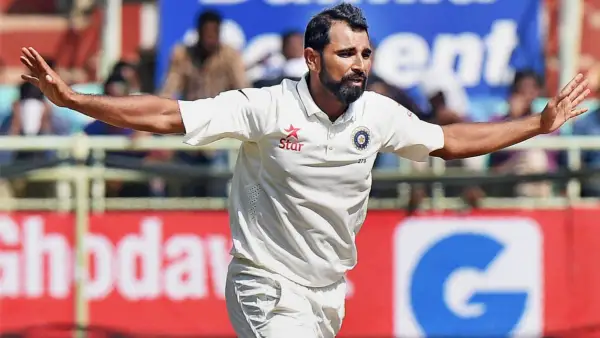
Bengaluru: October 20, 2024: India had just suffered a humiliating defeat, losing the first Test against New Zealand inside two days at the M Chinnaswamy Stadium.
Once the presentation ceremony was over, bowling coach Morne Morkel and former assistant coach Abhishek Nayar were out there with some of the squad’s reserve bowlers. Shubman Gill, who had missed the Test because of a stiff neck, walked out to bat on the very pitch where India had been humbled barely an hour earlier. While Nayar kept an eye on Gill, Morkel turned his attention to the bowlers.
Then Mohammed Shami made his way to the ground through the entrance connecting it to the erstwhile National Cricket Academy, where he had been undergoing rehabilitation after surgery on his left ankle in February 2024. With his left leg heavily strapped, the veteran pacer began bowling to Gill and then Nayar. Over the next few minutes, he gradually lengthened his run-up and increased pace.
Shami continued for close to 30 minutes, with then India captain Rohit Sharma in the dressing room. On the eve of the Test, Rohit had expressed doubts about whether the fast bowler would regain full fitness in time to travel to Australia for the Border-Gavaskar Trophy, which was due to begin in a month’s time.
That spell on the Chinnaswamy pitch seemed more than just a routine bowling session. It was almost as if Shami was making a statement to his captain: he was working his way back, and he was not ready to give up on the Australia tour.
November 06, 2026: After more than two years of waiting, Shami finally gave up hope of playing Test cricket for India again on Friday. It was exactly 13 years to the day that the quick made his India debut against West Indies at Eden Gardens. It was the farewell Test-series for the great Sachin Tendulkar but it was a launch pad for Shami’s glittering career.
During these two years of his bid to return, Shami turned out in 10 Ranji Trophy matches for Bengal and three Duleep Trophy games for East Zone, besides featuring regularly in white-ball cricket. His performances in the Ranji Trophy, in particular, left little doubt about his fitness or ability to take wickets. Across those 10 matches, Shami bowled 317 overs and claimed 51 wickets. Yet, the Indian team management remained committed to its policy of looking ahead rather than revisiting past choices, even if that approach has appeared inconsistent at times.
With a heavy heart, but also a sense of gratitude, the 35-year-old announced his retirement from Test cricket on Friday night, bringing the curtain down on a 13-year career that yielded 229 wickets in 64 matches.
“Test cricket is not just a format for me, it is a very special part of my life. Today I am deciding to retire from Test cricket with a heavy heart and unlimited beautiful memories,” Shami wrote on his Instagram post.
The Uttar Pradesh-born cricketer finished as India’s sixth-highest wicket-taking fast bowler in Tests. Kapil Dev leads the list with 434 wickets, followed by Ishant Sharma and Zaheer Khan (311 each), Javagal Srinath (236) and Jasprit Bumrah (234).
Beyond the two years marked by recurring injuries, rehabilitation, hope and despair, Shami gave Indian cricket several magical moments and memorable performances that cemented his place among the country’s finest fast bowlers. With a near-perfect seam position and the ability to move both the new and old ball, Shami was as compelling to watch as he was difficult to face. There was little about his appearance that suggested he was a special fast bowler. His presence was unimposing, his run-up unhurried and his approach uncomplicated. But the moment the ball left his hand, you knew you were watching something sublime. The sight of Shami landing it on the seam and making it move almost at will was a joy that can only be experienced, not explained.
Born in Sahaspur Alinagar village in Uttar Pradesh, Shami moved to Kolkata in search of a career after being overlooked in his home state. Bengal recognised his talent and gave him the opportunity to develop. He moved quickly through age-group cricket into the Ranji Trophy, and a call-up to the national team soon followed. In a fitting twist, Shami made his Test debut at his karmabhoomi and marked the occasion with a nine-wicket match haul. Only a superb 171 from fellow debutant Rohit Sharma denied him the Player of the Match award. Even in that first outing, Shami displayed the full range of skills that troubled the West Indies batters: seam movement, conventional swing and reverse swing. He also generated impressive pace despite not having typical fast bowler’s physical traits.
Shami was already one of India’s leading fast bowlers, but he reached another level after joining forces with Jasprit Bumrah at the beginning of 2018 in South Africa. Umesh Yadav, Bhuvneshwar Kumar, Ishant Sharma and, later, Mohammed Siraj were part of the group too. Together, they helped India become one of the most feared attacks in world cricket, winning series in Australia and coming close in England and South Africa. Shami’s average and strike rate (see table) improved significantly during this period.
From Johannesburg and Centurion to Adelaide and Lord’s, Shami delivered some of the finest fast bowling by an Indian in overseas conditions. He complemented an attack whose range of skills few teams in the world could match at the time. There is little doubt, too, that he was at his best under Virat Kohli’s captaincy, between 2018 and 2023. He could reverse the ball at pace, unsettle set batters and change the course of a session with one spell.
After failing a fitness test ahead of the Afghanistan Test in Bengaluru in June 2018, and amid an acrimonious marital separation, Shami began to turn things around. His attitude to fitness changed, and the results soon followed.
“Him (Shami) failing the fitness test was a blessing in disguise,” said Shanker Basu, former Indian team’s strength and conditioning coach during the 2019 World Cup. “After that, he was a changed man. He was so determined. The best part is he has changed his entire training regimen, I think training is now part of his lifestyle which never used to be the case before. Everything has changed over the last three, four years and he wasn’t the last person to get on to the bus but after that little bit of personal setbacks and failing that fitness test, he is a changed man. This is 2.0 version of Mohammed Shami.”
Shami, Bumrah and Siraj joining forces to dismantle England during the 2021 series remains one of the enduring images of Indian Test cricket. India led 2-1 when a Covid outbreak in the camp forced the fifth Test to be postponed; it was eventually played the following year with England winning the match to level the series.
Was there more Test cricket left in Shami when his repeated attempts to return to the Indian squad went unrewarded? Ravi Shastri, India’s coach from 2018 to 2021, certainly thinks so.
“It’s sad when someone who’s played so well for the country has to go. I definitely thought he had another 30 or 40 wickets in him. He should have played in the last 12 months and perhaps should have been in the side as a Test-match bowler,” Shastri told Sony Sports during the second ODI against New Zealand.
Whatever the circumstances of his exit, Shami has given Indian Test cricket memories that will endure. The game was a beautiful sight when, with those supple wrists, he made the ball sing. He will be missed.
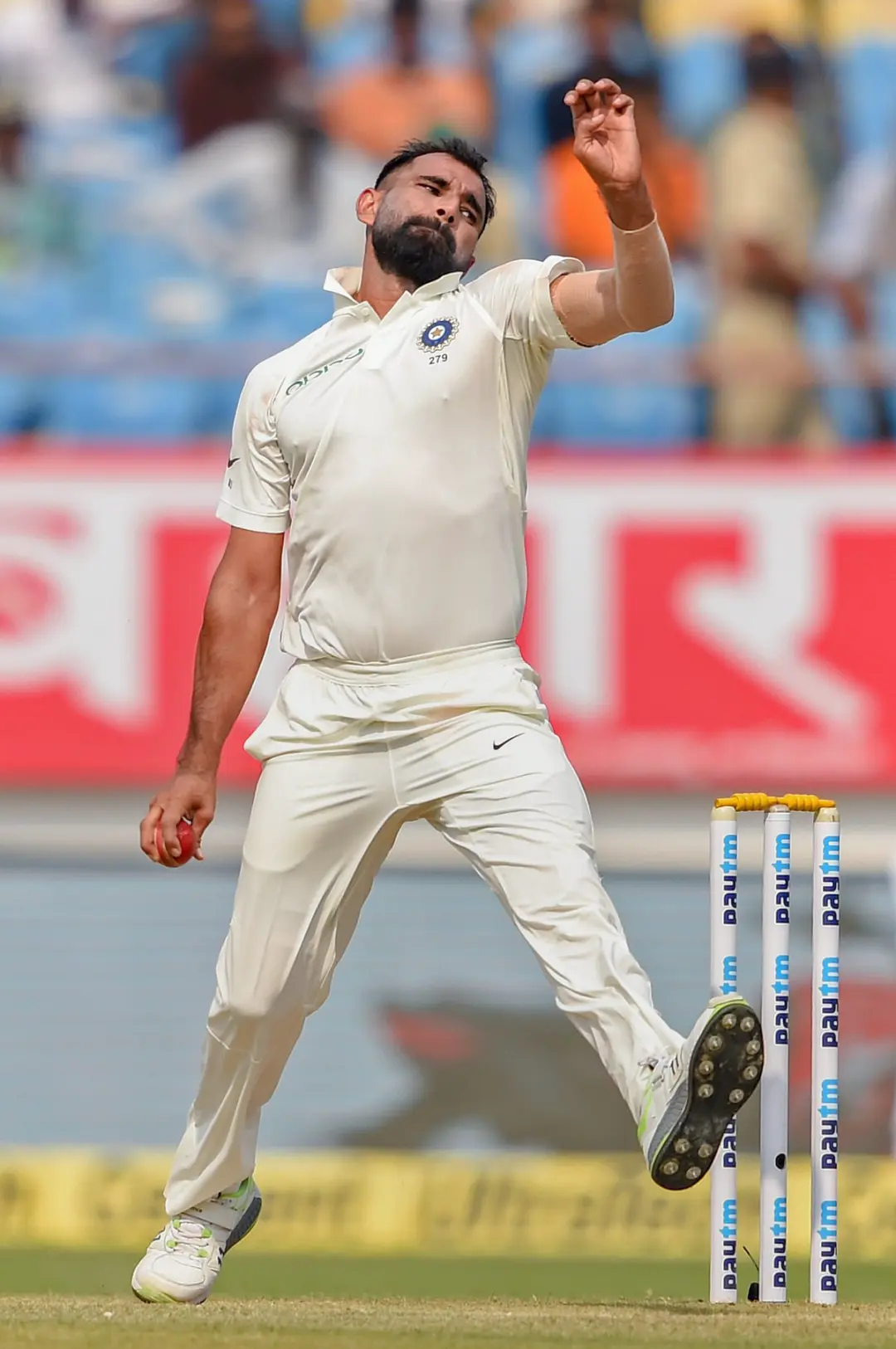
Mohammed Shami brought an end to a 13-year Test career on Friday.