Mercedes Faces Reliability Woes as Antonelli Holds Drivers’ Lead Midseason
At the midpoint of the 2026 Formula 1 season, Kimi Antonelli commands the drivers’ championship with 219 points, ahead of Mercedes teammate Lewis Hamilton’s 169. Mercedes also leads the constructors’ standings with 379 points, outpacing Ferrari’s 307. However, the German powerhouse’s early-season dominance is under threat as persistent reliability issues erode their advantage.
Both Antonelli and George Russell have suffered costly engine failures during critical moments-Russell in Canada while leading, Antonelli at Barcelona while running second. Mercedes responded by introducing a new battery architecture and updated control electronics from the Austrian Grand Prix onwards, alongside comprehensive power unit reliability enhancements.
Though Mercedes unveiled a significant aerodynamic upgrade at Montreal, their chassis development has been limited to that single step. Meanwhile, tensions simmer as Mercedes publicly questions Ferrari’s frequent upgrades under the budget cap, intensifying the intra-paddock rivalry. With the season’s second half looming, Mercedes faces a strategic dilemma: how aggressively to pursue aero improvements before shifting focus to the 2027 car, all while managing the internal battle between Antonelli and Russell. Antonelli currently holds an edge by optimising electrical deployment, but it remains unclear how much Russell’s pace deficit stems from his driving style versus software limitations, especially after a software glitch derailed his Hungarian GP. Engine penalties also threaten to influence the title fight-Antonelli is on his fourth engine, Russell his third.
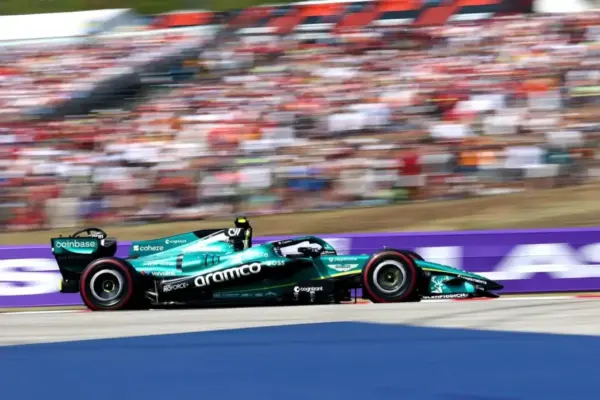
Aston Martin and Honda Stand at a Crucial Crossroads
Following Aston Martin’s long-delayed AMR26 chassis overhaul unveiled in Hungary, Honda is set to deliver a power unit upgrade at the Dutch Grand Prix. Both chassis and engine have underperformed drastically, frustrating team owner Lawrence Stroll, who invested heavily in personnel and resources. The car’s delayed pre-season debut and ongoing unreliability have plagued the team. Stroll reportedly considered drastic technical staff changes after Australia but was swayed by promises of a full car revision. While Hungary’s upgrade yielded immediate improvements, Aston Martin remains mired in the midfield, far from Stroll’s ambitions.
Honda’s struggles stem from an underpowered and fragile internal combustion engine, compounded by a hybrid system with a vulnerable battery and an unconventional motor placement ahead of the engine-an aerodynamic compromise requested by Adrian Newey’s design team. The upcoming Dutch GP upgrade is critical for Honda’s reputation and Aston Martin’s competitiveness.
Verstappen’s Future Secured as Red Bull Reaffirms Dominance
Throughout the summer, relentless speculation swirled around Max Verstappen’s potential departure from Red Bull, despite limited viable alternatives. Verstappen’s management has tactically leaked contract unrest to the Dutch press amid Red Bull’s reduced dominance this season. However, most top teams have secure driver line-ups, dampening genuine transfer prospects. The McLaren-linked rumours, particularly surrounding Lando Norris’s contract, were widely dismissed as media hype.
Verstappen has expressed dissatisfaction with the current regulations and a drop in competitiveness but prefers to remain at Red Bull. Ahead of the Dutch GP, Red Bull confirmed Verstappen’s contract extension through 2030, quelling transfer chatter. Team principal Laurent Mekies acknowledged the challenge ahead: “We will not be satisfied until we go back to having a race car that has the pace to win on merit.”
Power Unit Politics Intensify Ahead of 2031 Regulation Shift
The debate over Formula 1’s next-generation power units, slated for introduction either in 2030 or 2031, is heating up. FIA president Mohammed Ben Sulayem advocates for naturally aspirated V8 engines with minimal electrical assistance, while manufacturers like Audi favor turbocharged solutions. Agreement on the new format must be reached by year-end to enable adequate development time, but consensus remains elusive. The current 50/50 split between electric motor and internal combustion engine is widely regarded as flawed, leaving F1 stakeholders grappling with balancing technical progress, manufacturer engagement, and racing spectacle.
McLaren’s Resurgence Signals Shift in Midfield Dynamics
Lando Norris’s victory in Hungary marked McLaren’s return to form after a rocky start to 2026. Initially trailing the works Mercedes, McLaren has closed the gap through continuous development, including a revised floor upgrade. Team principal Andrea Stella praised Mercedes AMG High Performance Powertrains for cooperation in optimising power unit usage, highlighting McLaren’s improved understanding of electrical deployment strategies. Norris’s pole lap in Budapest showcased this progress, helping him climb within striking distance of Antonelli-91 points adrift. Norris’s climb illustrates that large deficits remain surmountable in this unpredictable season.
The Development Dilemma: When to Pivot Toward 2027?
Budget cap constraints complicate teams’ mid-season development strategies. While lower-ranked squads might abandon 2026 projects early to focus on 2027, frontrunners must carefully time upgrades to protect championship positions. Mercedes faces the toughest choice as its early-season supremacy wanes, and both Mercedes and Ferrari juggle upgrade schedules and power unit component penalties. Ferrari’s frequent updates and power unit improvements contrast with Mercedes’ measured approach, fueled by uncertainty over rivals’ budgets and strategies. Toto Wolff stressed the need for strategic deployment of upgrades: “We just need to be really strategic about when to bring the upgrades… when they will have the biggest impact on performance.” With 2027 power unit regulations shifting power distribution toward the internal combustion engine, teams have further incentive to conclude 2026 development promptly.
The second half of the 2026 F1 season promises intense battles on and off track as teams wrestle with reliability, development, and political challenges shaping the sport’s future.