New Delhi: A public spat between Bahujan Samaj Party (BSP) chief Mayawati and Nagina MP Chandrashekhar Azad has added a new dimension to Uttar Pradesh politics ahead of the Assembly elections.
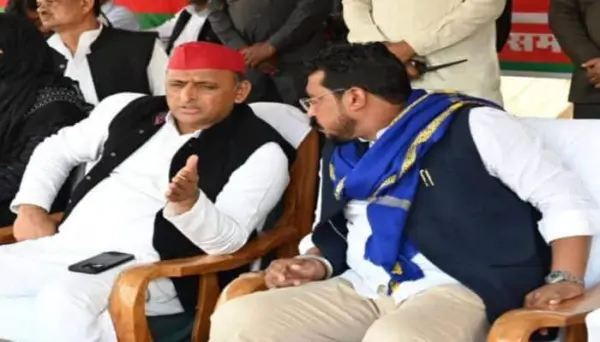
The clash has also led to speculation that the formers Azad Samaj Party (ASP) could join hands with the Samajwadi Party (SP). If the two parties come together, the alliance could change the electoral equations in several seats across western Uttar Pradesh.
For years, Mayawati was regarded as the undisputed face of Dalit politics in Uttar Pradesh. However, over the past few years, Chandrashekhar has built his own support base among Dalit voters, particularly in western Uttar Pradesh. Competition between the two leaders has long been evident, but this is the first time their differences have come out in the open.
The latest flashpoint came after the law maker visited the family of Dalit student Lalita Gautam in Meerut and took part in a protest over the case. Responding to his visit, Mayawati accused him of shedding “crocodile tears” over the issue.
Her comments prompted a strong response from Chandrashekhar, who has generally spoken about the BSP chief with respect in the past, but this time openly criticised her.
“If Mayawati really understood the pain of Dalits, she would not have stayed at home and issued a statement. She should have come to Meerut, met the victim’s family and protested against police excesses,” Chandrashekhar said.
He added, “I have never made any personal comments against Mayawati. But the way she made personal remarks about me today has disappointed me.”
What could change if Azad joins hands with SP?
The clash has added to talk of a possible alliance between the ASP and the SP. Although there has been no formal announcement on any alliance so far, political circles are abuzz with the possibility of the two parties contesting together.
Such a deal could have the biggest impact in western Uttar Pradesh, where Chandrashekhar has built most of his political base. The region has traditionally been one of the BSP’s strongest areas, while the SP has struggled to establish itself in several constituencies.
Seats in districts such as Nagina, Bijnor, Meerut, Saharanpur, Ghaziabad and Agra could witness closer contests if the ASP and the SP come together. A transfer of Dalit votes towards the SP through Chandrashekhars support could improve the party’s position in areas where it has historically lagged behind both the ruling Bharataiya Janata Party (BJP) and the Bhujan Samaj Party (BSP).
Ghaziabad Sadar and Loni are among the examples that are cited in this context. The BJP has usually dominated these seats, though the BSP has also registered victories there in the past. The SP has finished in third place. If a sizeable section of Dalit voters backs the SP through an alliance with the ASP, the electoral equation in such constituencies could change.
A section of Dalit voters is also looking for an alternative. With Mayawati seen as less active on the ground in recent years, Chandrashekhar has increased his presence by taking up issues related to Dalit rights and visiting affected families after major incidents.
While there is still no concrete move towards an SP-ASP alliance, the latest confrontation between the two leaders has become a major political issue in Uttar Pradesh. If the two Opposition parties decide to work together, western Uttar Pradesh is likely to become one of the major battlegrounds in the Assembly elections. Several seats in the region could see a different political contest compared to previous elections.