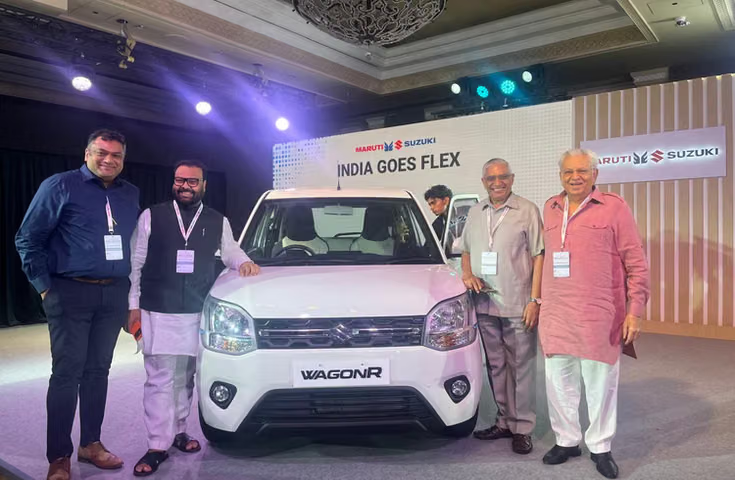
India’s largest carmaker, Maruti Suzuki India Ltd, today said it will take a patient approach to the flex-fuel vehicle business, focusing first on helping build an ethanol-fuel ecosystem rather than chasing immediate sales volumes.
“We are in no hurry to see results,” Maruti Suzuki Senior Executive Officer (Corporate Affairs) Rahul Bharti said during a media interaction. “What is more important is to take the first step and give confidence to the other stakeholders that they can also start investing and build the pillars of the ecosystem.”
The company believes a market leader must introduce the technology first and encourage fuel retailers, policymakers and other stakeholders to develop the supporting infrastructure.
“When the ecosystem comes together, the dots will be joined, and then it will become a very mainstream kind of option. Till such time, we are very patient, and we can wait,” Bharti said.
Maruti Suzuki also positioned flex-fuel technology as part of India’s broader push towards energy self-reliance.
“We believe this is a technology that will help India in a long way to become Atmanirbhar,” the company said, adding that wider adoption of domestically produced ethanol can reduce dependence on imported crude oil while supporting local value creation.
Maruti Suzuki launched the WagonR Flex Fuel model in June 2026. The vehicle can operate on ethanol-petrol blends ranging from E20 to E100 through changes to its engine calibration and fuel system.
The company said it has opened bookings across the country and would not wait for a nationwide E85 retail network because the vehicle can also run on conventional petrol and lower ethanol blends currently available in the market.
Maruti Suzuki also said the model has been priced strategically below the comparable CNG variant, although it did not disclose booking or sales numbers during the interaction.
Fuel network to expand gradually
According to the company, the government is working to expand the E85 retail network from around 50 outlets in the coming months to about 500 by December 2026 and nearly 5,000 outlets by December 2027, creating the infrastructure required for wider adoption of flex-fuel vehicles.
E85 contains around 80-85 per cent ethanol, with the balance comprising petrol. It is designed for vehicles equipped with fuel systems, engine components and software calibrated to handle high ethanol blends.
Maruti Suzuki said wider availability of fuel stations, competitive fuel pricing and support from different states will determine how quickly flex-fuel vehicles move beyond a niche offering.
Part of a multi-technology strategy
Maruti Suzuki continues to position flex-fuel technology as one pillar of a broader clean-mobility strategy that includes battery electric vehicles, strong hybrids, CNG and compressed biogas.
The company maintains that no single technology can address India’s diverse mobility needs and that different powertrains will coexist depending on customer requirements, infrastructure availability and affordability.
By encouraging greater use of domestically produced ethanol, Maruti Suzuki believes flex-fuel vehicles can contribute to lower crude oil imports, reduced emissions, stronger farm incomes and greater domestic value addition, aligning with India’s long-term objective of becoming more self-reliant in energy.