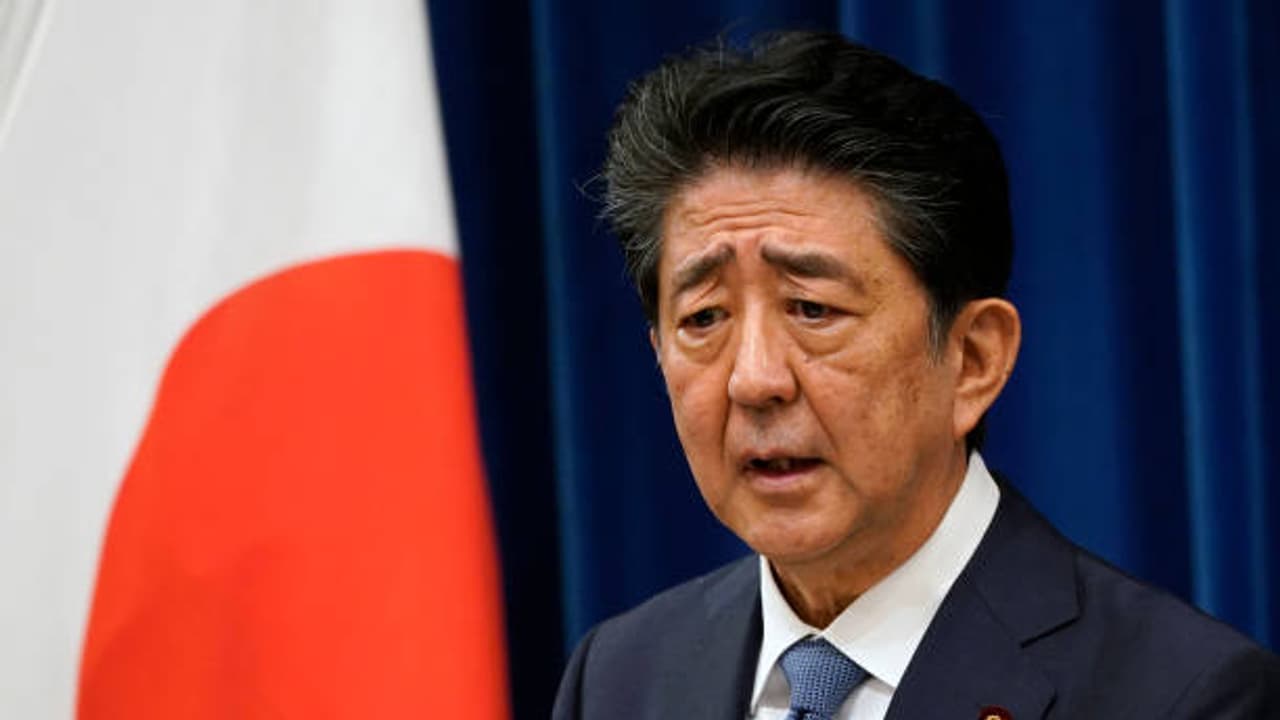
The gunman charged with killing Japan’s former prime minister Shinzo Abe was found guilty and jailed for life Wednesday, more than three years after the broad-daylight assassination shocked the world.
The gunman charged with killing Japan’s former prime minister Shinzo Abe was found guilty and jailed for life Wednesday, more than three years after the broad-daylight assassination shocked the world. Judge Shinichi Tanaka handed down the sentence at a court in the city of Nara.
Tetsuya Yamagami, 45, faced charges including murder and firearms control law violations for using a handmade gun to kill Japan’s longest-serving leader during his campaign speech in July 2022.
Yamagami admitted to murder as the trial opened in October. He contested some of the other charges, media reports said.
Prosecutors sought a life sentence for Yamagami, calling the murder “unprecedented in our post-war history” and citing the “extremely serious consequences” it had on society, according to local media.
Japanese version of life imprisonment
The Japanese version of life imprisonment leaves open the possibility of parole, although in reality, experts say many die while incarcerated. At the trial opening, prosecutors argued that the defendant’s motive to kill Abe was rooted in his desire to besmirch the Unification Church.
The months-long trial highlighted how his mother’s blind donations to the Church plunged his family into bankruptcy and how he came to believe “influential politicians” were helping the sect thrive.
Abe had spoken at events organised by some of the church groups.
Yamagami “thought if he killed someone as influential as former prime minister Abe, he could draw public attention to the Church and fuel public criticism of it,” a prosecutor told a district court in western Japan’s Nara region in October.
The Unification Church was established in South Korea in 1954, with its members nicknamed “Moonies” after its founder Sun Myung Moon.
In a plea for leniency, his defence team stressed his upbringing had been mired in “religious abuse” stemming from his mother’s extreme faith in the Unification Church.
In despair after the suicide of her husband, and with her other son gravely ill, Yamagami’s mother poured all her assets into the Church to “salvage” her family, Yamagami’s lawyer said, adding that her donations eventually snowballed to around 100 million yen ($1 million at the time).
Yamagami was forced to give up pursuing higher education. In 2005, he attempted to take his own life before his brother died by suicide.
Investigations after Abe’s murder led to cascading revelations about close ties between the Church and many conservative lawmakers in the ruling Liberal Democratic Party, prompting four ministers to resign.
In 2020, Yamagami began hand-crafting a lethal firearm, a process that involved meticulous test-firing sessions in a remote mountainous area.
This points to the highly “premeditated” nature of his attack on Abe, prosecutors say.
(With inputs from AFP)