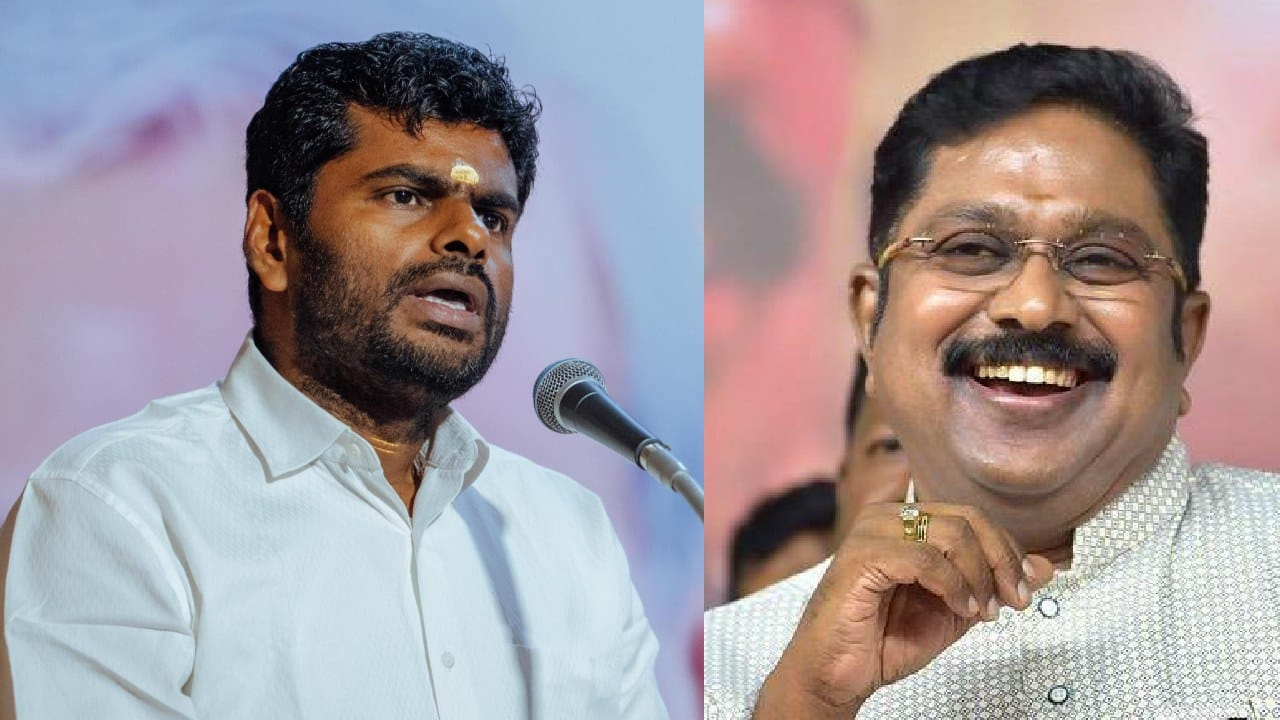
Chennai: In a surprising pre-election twist, former Tamil Nadu BJP president K. Annamalai has announced he will “temporarily step back” as the party’s election in-charge for six key Assembly constituencies, including Singanallur and Virugambakkam. This development, coupled with AMMK leader TTV Dhinakaran’s earlier announcement that he will not contest the upcoming polls, has triggered intense political debate and raised questions about the stability and messaging of the AIADMK-BJP-led National Democratic Alliance (NDA) just months before the state elections.
Analysts: Resignations will send “wrong signal,” risk voter demoralization
Political analysts are interpreting the consecutive withdrawals of two prominent faces as a potential setback for the opposition alliance. They argue that Annamalai’s decision, in particular—having been the aggressive public face of the BJP’s state campaign—could demoralize the party cadre and send a “weak signal” to voters seeking change.
Similarly, Dhinakaran’s choice to stay off the ballot is seen as potentially dampening the enthusiasm of his base in the southern districts. Experts suggest these moves risk projecting an image of internal disarray at a critical juncture when the alliance needs to project unity and strength to consolidate anti-incumbency votes.
Seat-sharing tensions and a fragmented opposition field
The resignations come amid intense, and reportedly challenging, seat-sharing negotiations within the NDA. While the ruling DMK-Congress alliance is largely expected to renominate sitting MLAs, the NDA partners are navigating complex demands. The uncertainty over final seat allocation is said to be causing operational slowdowns in some constituencies. Furthermore, the opposition field is fragmented, with Vijay’s TVK and Seeman’s NTK poised to contest separately, splitting the anti-DMK vote.
Potential advantage for DMK?
Analysts note that a scenario where the primary opposition alliance appears unstable, and its key leaders are not on the frontline, could inadvertently benefit the ruling DMK. It may prevent the consolidation of anti-incumbency sentiment into a single, powerful voting bloc.
The perception of a stumbling NDA, critics say, could scatter disgruntled votes and reduce the intensity of the opposition’s critique against the government, making the DMK’s path to retention comparatively smoother.