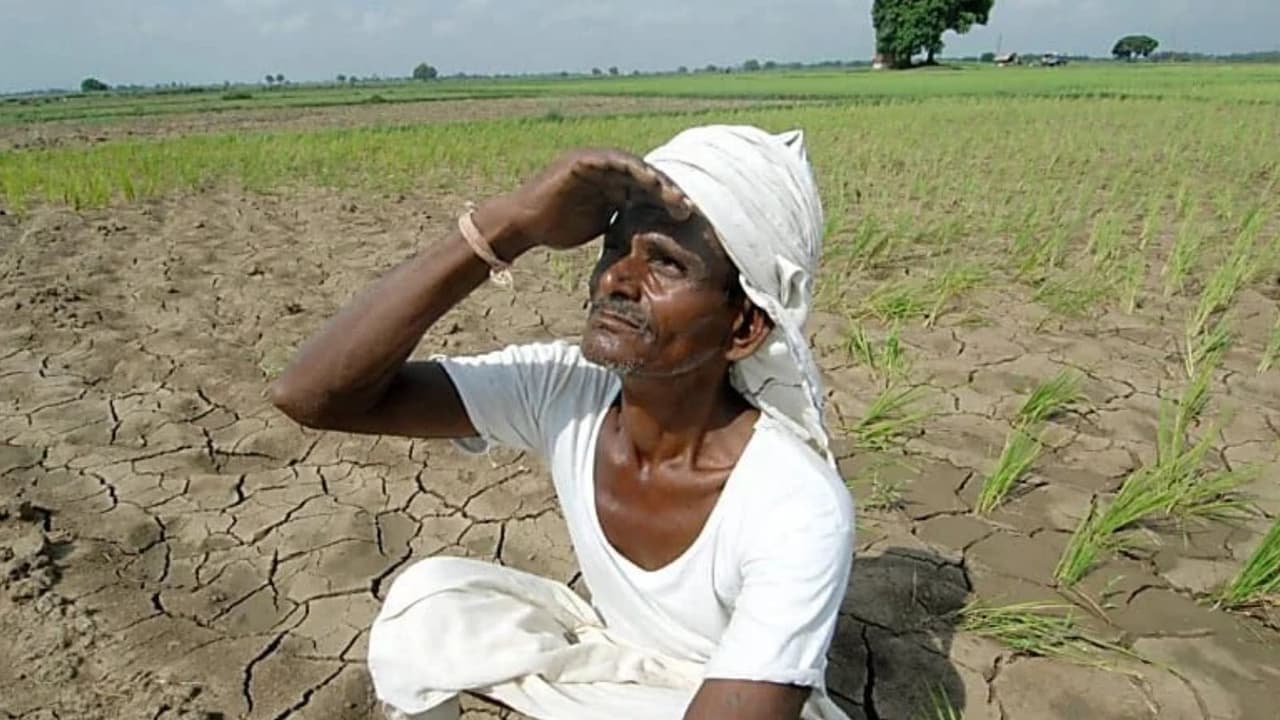
With water cuts looming and drought conditions spreading across large parts of Maharashtra, attention is turning toward a growing challenge that years of investment and policy action have yet to fully resolve.
Maharashtra is entering a period of heightened water stress despite years of investment in water conservation, groundwater recharge and wastewater reuse programmes, raising fresh concerns about the state’s ability to withstand recurring droughts.
The concern has gained urgency after nearly 265 talukas, accounting for about 74 per cent of Maharashtra, were declared drought-affected following one of the weakest monsoon seasons in recent years.
In response, the state government has directed urban and rural local bodies to implement a 10 per cent reduction in water use from October 16. Authorities have also ordered reservoir-wise and sector-wise planning of available supplies to manage water resources through August 31, 2027.
Among the measures being emphasised is the increased use of treated wastewater for non-potable applications such as gardening, construction and industrial activities.
The move comes as rainfall shortages, declining groundwater levels and rising demand continue to place pressure on existing water resources.
While Maharashtra has introduced multiple policies aimed at strengthening long-term water security, implementation challenges continue to limit the impact of those initiatives.
The issue is particularly visible in rapidly expanding urban centres and industrial corridors, where dependence on groundwater, private tankers and borewells has increased significantly.
Cities on the outskirts of Mumbai Metropolitan Region and Pune, along with industrial belts such as Thane-Belapur, Chakan and Pimpri-Chinchwad, have witnessed growing pressure on aquifers as demand continues to rise.
At the same time, large volumes of wastewater remain untreated and eventually enter rivers, drains and lakes.
Policies Exist, But Execution Remains Uneven
Over the years, Maharashtra has developed a broad policy framework addressing water conservation and wastewater management.
Key measures include the Maharashtra State Water Policy 2019, groundwater regulations and the Safe Reuse and Management of Treated Wastewater Policy introduced in 2025.
The state later strengthened its approach through a circular water economy policy that encourages reuse of sewage and treated wastewater across hundreds of urban local bodies.
Under these initiatives, treated wastewater is intended for use in industries, thermal power stations, irrigation projects and urban non-drinking purposes.
Despite these efforts, significant operational gaps remain.
The state water policy requires urban local bodies to achieve at least 30 per cent wastewater reuse, but implementation has proven difficult due to limited funding, inadequate treatment infrastructure and the absence of detailed operational guidance.
Institutional challenges also persist, with overlapping responsibilities among regulatory agencies often slowing enforcement and accountability.
These factors have contributed to a continuing gap between policy objectives and actual outcomes.
Untreated Wastewater And Distribution Losses Add Pressure
One of the most significant concerns involves wastewater treatment capacity.
Maharashtra generates approximately 9,073 million litres of wastewater every day, yet only 57 per cent undergoes treatment.
Even more striking is the scale of reuse.
Only 17 per cent of the state’s wastewater is currently reused, meaning substantial quantities of treated water remain unavailable for secondary purposes while freshwater resources continue to face pressure.
Distribution inefficiencies add another layer to the challenge.
Major cities rely heavily on distant water sources. Mumbai, for example, transports water from reservoirs located as far as 180 kilometres away.
Long transmission networks contribute to losses through leakage, infrastructure deterioration and theft. Research has estimated losses in major urban centres at between 30 and 40 per cent, with Mumbai alone recording around 34 per cent non-revenue water.
Informal settlements and peri-urban areas further complicate planning.
Many communities depend on borewells, hand pumps and tanker supplies that are not fully reflected in official water-use calculations. As a result, wastewater generation is often underestimated, making treatment and reuse planning less effective.
Experts argue that avoiding future crises will require more than additional infrastructure.
Cities will need stronger regulation, improved maintenance, local water-source restoration, better wastewater recovery systems and broader reuse adoption.
As Maharashtra confronts another drought season, the state’s experience is highlighting an increasingly important question: whether large-scale investments in water management are translating into the resilience required when rainfall becomes scarce.