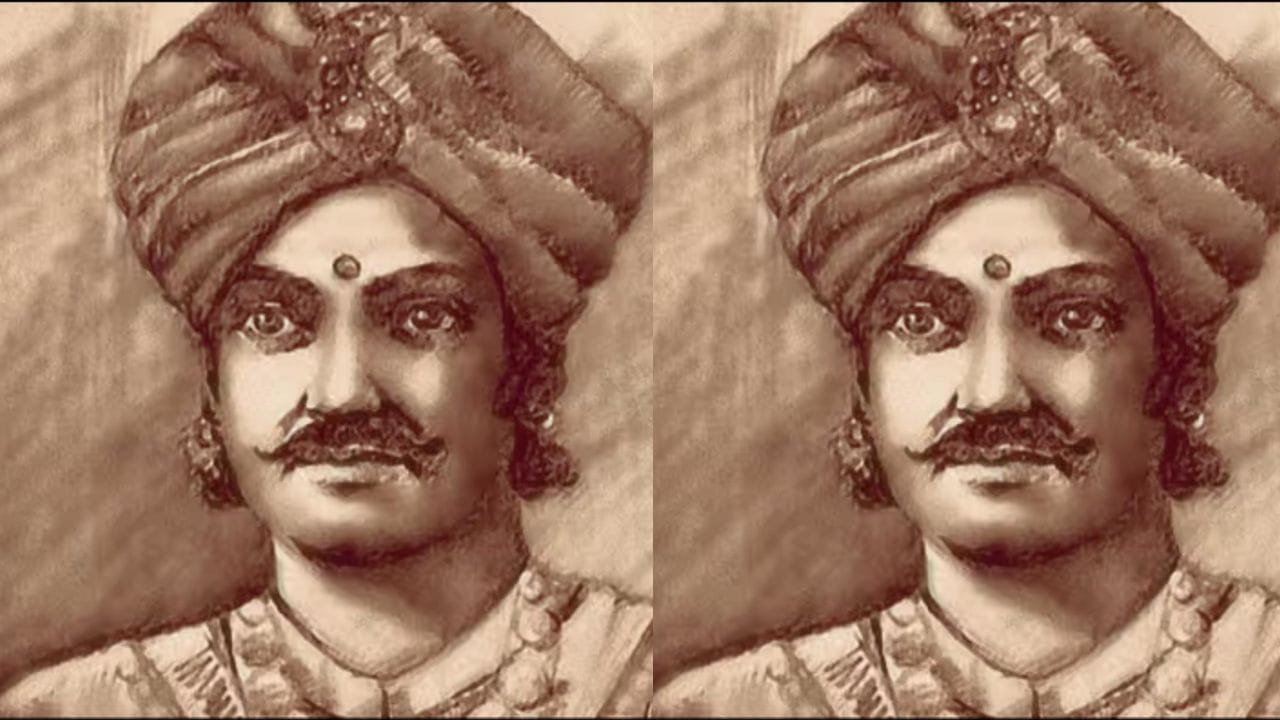
New Delhi: The remembrance of Maha Vijay Diwas evokes one of the most significant yet insufficiently acknowledged episodes in the history of eastern Bharat – the defeat of the Turkish military commander Muhammad Bakhtiyar Khilji by the ruler of Kamarupa, Maharaja Prithu, in 1206 CE, on the 13th day, during the sacred month of Chaitra. This event unfolded during a transformative and turbulent period in the Indian subcontinent when political power structures were rapidly shifting following the establishment of the Ghurid Conquests in India and the emergence of early Delhi Sultanate authority in northern India.
By the closing years of the twelfth century, northern India had already witnessed dramatic upheavals. The defeat of Prithviraj Chauhan in the Second Battle of Tarain opened the Gangetic plains to Turkic expansion. In the decades that followed, commanders serving the Ghurid rulers launched aggressive campaigns across Bihar and Bengal. Among them, Bakhtiyar Khilji rose rapidly due to his daring cavalry raids and military mobility. Around 1193–1197 CE, his forces attacked some of the most celebrated centres of learning in the world like Nalanda, Vikramshila, and Odantapuri, institutions that had functioned for centuries as hubs of Indic philosophy, science, grammar, and international scholarship connecting Bharat with Tibet, China, and Southeast Asia.
By 1203–1204 CE, Bakhtiyar Khilji had conquered large parts of Bengal, defeating the Sena dynasty ruler Lakshmana Sena and establishing his headquarters at Lakhnauti (Gaur). Having secured Bengal, Khilji’s ambitions turned toward the northeast. His objective was strategic as much as imperial: control over the trade and pilgrimage routes linking Bengal to Tibet through Kamarupa. These routes carried horses, silk, salt, and precious goods and also enabled diplomatic and religious exchanges between Himalayan and Southeast Asian regions. Persian chroniclers describe his plan as an ambitious expedition toward Tibet via Assam, a campaign that would extend Turkic authority into regions never before subdued by western invaders.
The primary contemporary account of this campaign appears in the Persian chronicle Tabaqat-i-Nasiri, written around 1260 CE by Minhaj-i-Siraj Juzjani, a historian associated with the Delhi Sultanate court. He refers to the ruler of Kamarupa as “Bartu,” widely identified by historians with Maharaja Prithu. According to the chronicle, Khilji advanced with a mounted force estimated in thousands, expecting a swift victory similar to his earlier campaigns in the plains. However, the expedition entered unfamiliar terrain infested by dense forests, riverine barriers, heavy rainfall zones, and strategically defended passes of Kamarupa.
Unlike the open plains warfare that favored fast-moving cavalry, Assam’s geography neutralized Turkic military advantages. Local forces employed defensive warfare, supply disruption, and terrain-based tactics. As recorded by Minhaj-i-Siraj, the invading army faced starvation, disease, and constant resistance. Assamese defenders cut off supply lines and harassed retreating troops. The campaign ended in catastrophe: only a fraction of Khilji’s army survived the retreat. The chronicle recounts that the once-feared commander returned devastated and physically broken; within a short period, he lost authority and died around 1206 CE following internal rebellion.
This defeat marked one of the earliest and most decisive halts to Turkic expansion in eastern India. While large parts of northern India fell under successive Sultanate rule, Kamarupa remained outside sustained foreign domination with innumerable successful push backs. The victory therefore had implications beyond regional politics. By preventing the establishment of an expansionist military base in Assam, the campaign preserved the cultural autonomy of not only the Brahmaputra valley but also the cultural identity of Southeast Asia and ensured continuity of indigenous political institutions.
Material and epigraphic references reinforce this historical memory. The Kanai-Barasi Rock Inscription near present-day North Guwahati commemorates military successes of local rulers led by Prithu against Turkic forces, offering corroborative evidence of resistance traditions in the region. Later colonial-era surveys conducted by Scottish physician and explorer Francis Buchanan-Hamilton in the early nineteenth century documented ruins at Bhitargarh, associated in regional traditions with Prithu’s capital, suggesting the existence of a powerful polity capable of organised defence. Scholars such as S. K. Chatterji also noted Prithu’s rise from a local chief to a formidable monarch who successfully resisted repeated invasions during his reign.
The broader geopolitical context further highlights the importance of this victory. During the early thirteenth century, Turkic power was consolidating across the Indo-Gangetic plains, eventually giving rise to the Delhi Sultanate. Regions that fell under sustained conquest experienced administrative restructuring, religious transformation, and shifts in trade networks. Assam’s successful resistance meant that the eastern Himalayan corridor remained politically distinct. This autonomy enabled later indigenous powers, including the Ahom kingdom, established in 1228 CE by Sukaphaa, to flourish and build one of the longest-lasting dynasties in Indian history expanding as long as 600 years, which would later repel multiple Mughal invasions in the seventeenth century.
From a civilisational perspective, the victory also preserved the cultural interactions between Assam and Southeast Asia that developed through pilgrimage, trade, and shared religious traditions rather than imperial imposition. The Brahmaputra valley continued to nurture diverse traditions like Shaiva, Shakta, Vaishnava, and indigenous belief systems that evolved organically over centuries.
Despite these far-reaching consequences, Maharaja Prithu occupies only a marginal place in popular Indian historical narratives. Colonial historiography often prioritised imperial chronologies centered on Delhi, while autochthonous resistance histories were treated as peripheral episodes. Post-colonial academic frameworks frequently continued this imbalance, emphasising administrative achievements of ruling dynasties while underrepresenting defenders who prevented expansionist conquests altogether. The result has been a historical memory that celebrates conquerors’ campaigns in detail but seldom examines the strategic successes that stopped them.
Reassessing Prithu’s victory encourages a more balanced historiography grounded in diverse sources such as Persian chronicles, inscriptions, regional literature, archaeology, and oral traditions. It also highlights Assam’s role not as a remote frontier but as a civilisational bastion that safeguarded eastern Bharat during a critical historical transition. The resistance of Kamarupa demonstrates that medieval Indian history was not a uniform narrative of conquest but a dynamic landscape where indigenous polities actively shaped outcomes.
This historic day, getting popular as “Maha Vijay Diwas,” thus represents more than remembrance of a single battle. It symbolizes the endurance of a civilisation defended repeatedly by native powers whose contributions remain underexplored. The story of Maharaja Prithu stands as evidence that history advances not only through empires that expand, but also through those who successfully resist expansion and preserve continuity. Recognising such moments enriches historical understanding, restores neglected perspectives, and affirms that Bharat’s civilisational survival was secured through conscious resistance, strategic leadership, and unwavering cultural resolve across centuries.