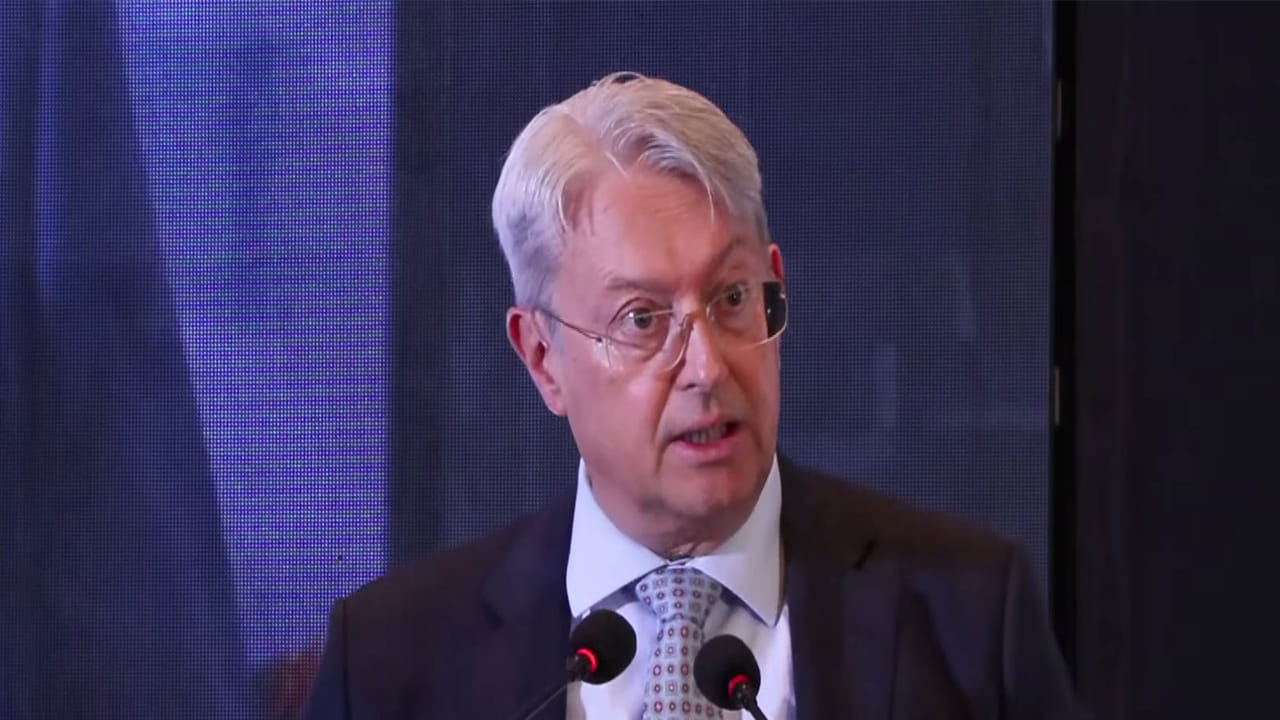
At IISC 2026, Luxembourg’s Ambassador emphasized deepening ties with India in satellite communication, Earth observation, and space research, highlighting the complementary strengths both nations bring to the evolving global space sector.
India and Luxembourg Strengthen Space Cooperation
New Delhi [India], November 24 (ANI): Luxembourg and India have significant opportunities to deepen cooperation across satellite communication, Earth observation, space research, entrepreneurship and emerging areas such as lunar exploration and space resources, Luxembourg Ambassador to India Christian Biever said, highlighting the complementary strengths of the two countries in shaping the future of the global space sector.
Addressing the fifth edition of the India International Space Conclave (IISC 2026) in New Delhi, Biever said innovation, responsible governance, human potential and international collaboration would play a crucial role in determining the future of space exploration and technological development.
Describing the theme of the conclave, ‘Shaping the Future of Space Through Innovation, Governance, Human Potential, and Global Collaboration’, as timely, Biever said space had evolved from a domain dominated by a handful of nations into an integral part of modern economies and societies. “Today, we are living through a remarkable transformation in humanity’s relationship with space. Once a domain of a few nations, space has become an integral part of our economies, our societies, and our daily lives. Satellites connect continents, monitor our climate, support agriculture, strengthen disaster preparedness, and provide essential services upon which modern society has increasingly depended,” he said.
He noted that technological advancements, private entrepreneurship and international partnerships were creating opportunities that would have been difficult to imagine a decade ago. However, he stressed that expanding capabilities must be accompanied by greater responsibility and effective governance. “The main question to ask is not what humanity can achieve in space, but what kind of future we want to build in space and how we build it together,” Biever said.
He emphasised that innovation, governance, human potential and international cooperation were interconnected foundations for the future of the space sector, adding that space exploration could not be shaped by individual countries working in isolation. “Space transcends national borders. Its opportunities are global, its challenges are shared, and its future cannot be shaped by one nation alone,” he said.
Highlighting Luxembourg’s experience in developing its space ecosystem, Biever said a country’s contribution to the sector was not determined by its geographical size but by its vision and commitment to technological advancement. “Luxembourg’s journey demonstrates that a country’s contribution to space is not determined by the size of its territory, but by the size of its vision,” he said.
He recalled that Luxembourg had made a strategic decision more than four decades ago to invest in satellite communications through European satellite company SES, which has since emerged as one of the world’s leading satellite operators. He also highlighted the company’s important partnerships in India.
Biever said Luxembourg had developed a dynamic space ecosystem through cooperation between the government, industry and research institutions, while working closely with the European Space Agency and supporting established companies as well as emerging space entrepreneurs. He also referred to Luxembourg’s SpaceResources initiative and the establishment of the European Space Resources Innovation Centre, which aim to develop technologies and capabilities that could support sustainable human activities beyond Earth.
Turning to India-Luxembourg relations, Biever described India’s achievements in space as remarkable, citing its satellite applications, launch capabilities, Chandrayaan-3 mission and ambitious human spaceflight programme. “India’s rapidly expanding space ecosystem, supported by private enterprise, startups, and a new generation of innovators, offers immense opportunities for international collaboration,” he said.
He added that bilateral relations had gained considerable momentum through high-level political and economic engagements during the year, including visits by India’s External Affairs Minister S Jaishankar and Luxembourg’s Deputy Prime Minister and Foreign Minister, as well as its Minister of Economy and Space, Lex Delles. Biever said Delles’ September visit to India included engagements with ISRO, IN-SPACe and representatives of the country’s space industry in Bengaluru, alongside participation in the Bengaluru Space Expo. He further announced that Luxembourg was preparing a high-level delegation, led by its Space Agency and comprising representatives of space companies, to visit India in early January. The delegation is expected to travel to New Delhi, participate in the Vibrant Gujarat Summit and visit Mumbai and Bengaluru to explore partnerships with Indian companies.
Referring to the bilateral Memorandum of Understanding signed in 2022, Biever said the agreement had created opportunities for closer cooperation between the two countries. “India brings remarkable scientific and engineering capabilities, a very dynamic industrial base, and an ambitious vision of the future; whereas Luxembourg brings long-standing expertise in satellite communication, a specialised space industry, an innovation-friendly environment, and experience in developing regulatory frameworks for emerging space activities,” he said.
He identified satellite communication, Earth observation, research, entrepreneurship, lunar exploration and space resources as key areas where both countries could work together. Concluding his address, Biever said the future of space would depend not merely on technological achievements but also on responsible governance, innovation and the ability of countries to work together. “I am confident that together, alongside our international partners, we can help shape a future in which space remains a source of discovery, opportunity, and inspiration for us all,” he said.
The fifth edition of the India International Space Conclave, organised by the Indian Space Association, was held in New Delhi on November 23 and 24. The event brought together policymakers, representatives of space agencies, defence officials, industry leaders and startups to discuss India’s expanding role in the global space sector and opportunities for international cooperation. (ANI)