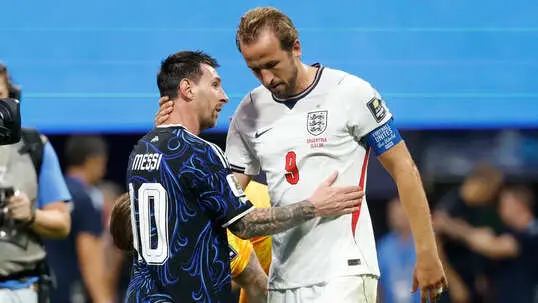
For nearly an hour, England looked destined to book a place in the FIFA World Cup final. Thomas Tuchel’s side frustrated Lionel Messi, defended with discipline and carried the greater attacking threat.
Then, almost without warning, the match turned on its head. Argentina struck twice late on, continued their remarkable habit of finding decisive goals in the dying moments and marched into yet another World Cup final.
What changed? Was it Lionel Messi’s intelligence? Lionel Scaloni’s tactical brilliance? England’s retreat into a defensive shell? Or was it something much deeper-a mentality that Argentina have quietly built throughout this tournament?
Former India striker Dipendu Biswas, who represented the national team and both Mohun Bagan and East Bengal, believes the semifinal was won as much on the bench as it was on the pitch. In an exclusive conversation, he dissects Scaloni’s masterstrokes, explains why Lautaro Martinez has become the tournament’s ultimate “super substitute”, analyses Messi’s evolution into a footballing mastermind and questions Thomas Tuchel’s decision to abandon England’s attacking identity.
The Substitution That Changed Everything
“Look, if you observe Argentina’s last five matches in this World Cup, they have been snatching victories right toward the end. In almost every game-especially after the coach brings on Martinez as a substitute-the entire dynamic of their attack changes completely. Out of the last five or six matches, Martinez has come on late in about three of them. For instance, in the previous game, Alvarez scored after Martinez came on, and then Martinez scored one himself. Yesterday too, he came on in the 80th minute, which was followed by two assists from Messi-one from outside the box, and another being a header from Martinez himself,” he said.
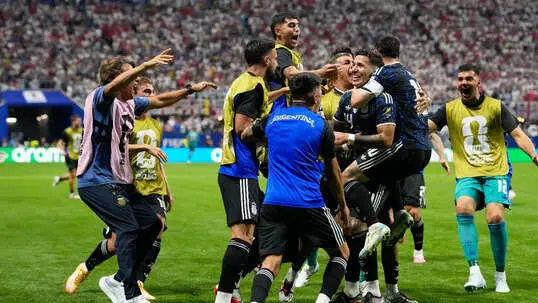
“I would call this a masterstroke in the coach’s strategy. To bench a striker of his caliber-someone who plays for Inter Milan-and utilise him so effectively as a late substitute is brilliant. It has worked successfully every single time. Spain has benefited from a similar approach in their previous two matches. So, the ‘super sub’ has been a massive factor in this World Cup,” he pointed.
England’s defensive structure did exactly what it was designed to do for long periods. between the lines and was constantly surrounded whenever he received possession. Dipendu explains why England’s plan initially worked.
“They marked him heavily and didn’t let him cut through. Moreover, Messi usually operates in a free role, but yesterday, he was tightly man-marked at all times. There was constantly a player right on him,” he highlighted.
As his explosive pace has naturally declined, Messi has reinvented himself. Dipendu believes the Argentine captain now beats opponents less with acceleration and more with anticipation, intelligence and flawless reading of the game.
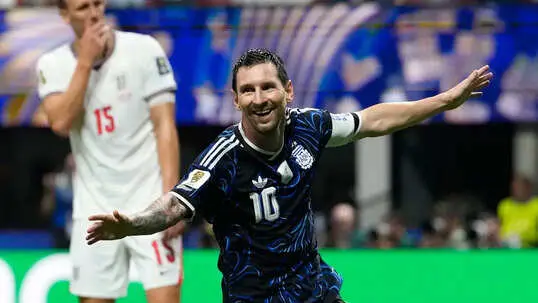
“It has definitely reached another level. Think about it: Messi has reached back-to-back World Cup finals, and he played in another one prior to that. Playing in three World Cup finals is a rare feat; I don’t think anyone other than Pele has done that. That speaks volumes about his sharp footballing intellect.”
“His biggest advantage over the last five years is that he’s been based in America. By staying away from the grueling demands of the English Premier League, the Spanish League, or other European leagues, he has been able to focus his concentration entirely on the World Cup. He has completely acclimatised and adapted himself to that environment and those conditions,” the former India striker added.
The semifinal may ultimately be remembered for one decisive coaching decision. According to Dipendu, England stopped believing in the football that had carried them to the last four, and that invited relentless Argentine pressure.
The Moment Tuchel Lost Control
“Tuchel, I don’t know why? And it’s not just me saying this; former English players have started pointing it out as well. All the big players are saying that this was a flawed strategy. How long can ten defenders hold out? Given the relentless waves of attacks Argentina launched in the last 30 minutes. Especially when they have players like Bellingham and Kane in their squad. Instead of sitting back and defending, it would have been much better if they had just played their natural, attacking game,” he opined.
Why do teams suddenly abandon their identity after taking the lead against elite opposition? Dipendu believes psychology inevitably influences tactical decisions, especially in World Cup knockout football.
“It is a factor. Why Tuchel deviated from the style they played in their previous matches is certainly a question… but sometimes, that’s just a tactical gamble taken by coaches,” he defended the England coach.
While Argentina celebrated another famous comeback, Scaloni barely reacted on the touchline. For Dipendu, that composure reflects a coach whose substitutions are rarely desperate-they are carefully planned long before the final whistle approaches.
“He has incredible squad depth at his disposal. He brought Martinez on in and around the 80th minute, just like the previous day. If you look at Argentina’s recent run: they scored against Austria in the 95th minute. Messi scored against Jordan in the 80th minute. They scored against Cape Verde in the 92nd minute. Against Switzerland, they scored in the 112th and 120th minutes. Against England, it was the 85th and 90-plus minutes.”
“Notice how they score so late in almost every game. Holding Martinez back is calculated because Scaloni has so many quality players available. Did you notice how calm Scaloni remained even after they scored? He didn’t show any wild celebrations,” Dipendu pointed out.
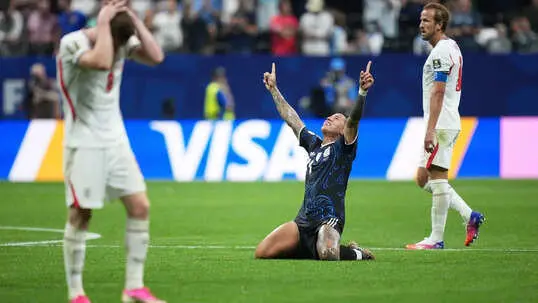
Argentina’s domination during the closing stages wasn’t simply about attacking harder. Dipendu believes Scaloni anticipated England would gradually sink deeper, allowing Argentina’s fresh legs and superior bench strength to dictate the game.
“Well, when a coach is in a winning position, they naturally try to protect that lead. That’s what the opposing coach did, and Scaloni anticipated it. He had excellent substitutes at his disposal and deployed them at the exact right moment to capitalise on the situation,” he highlighted.
Coming from behind has almost become routine for the reigning world champions. Dipendu feels every successful comeback has strengthened the squad’s belief that no match is beyond recovery, regardless of the scoreline.
“Yes, it builds a specific character within the squad. Coming from behind to win isn’t just a one-off for them; they’ve conceded and fought back in about five matches. It shapes their mentality and builds the character to fight until the very end,” the former India footballer revealed.
Why This Argentina Never Panics
Much of the focus has been on Messi and Martinez, but Dipendu points to another subtle decision that deserves equal attention. Scaloni’s willingness to alter his starting XI, despite continuous victories, reflects the depth and flexibility that few teams can match.
“He didn’t start De Paul. That was a clear tactical change. Scaloni just has so many players to choose from. Before the World Cup started, we observed that, with Ronaldo and Messi, Portugal and Argentina had the strongest squads on paper if you look at their rosters,” Dipendu recalled.
The World Cup will now conclude with two teams possessing completely different strengths. Spain suffocates opponents through possession, while Argentina thrives on resilience, experience and decisive moments. Dipendu explains why he refuses to separate the finalists.
“Between Argentina and Spain, I wouldn’t put either team ahead. It’s a 50-50 game; anyone can win. The football Pedri and his team are playing is extraordinary-their ball possession is so high that they barely let their opponents play. On the other hand, Argentina has this knack for overcoming deficits and scoring crucial late goals. You have to admit that the Argentine players are far ahead in terms of endurance and mental fortitude,” he concluded.