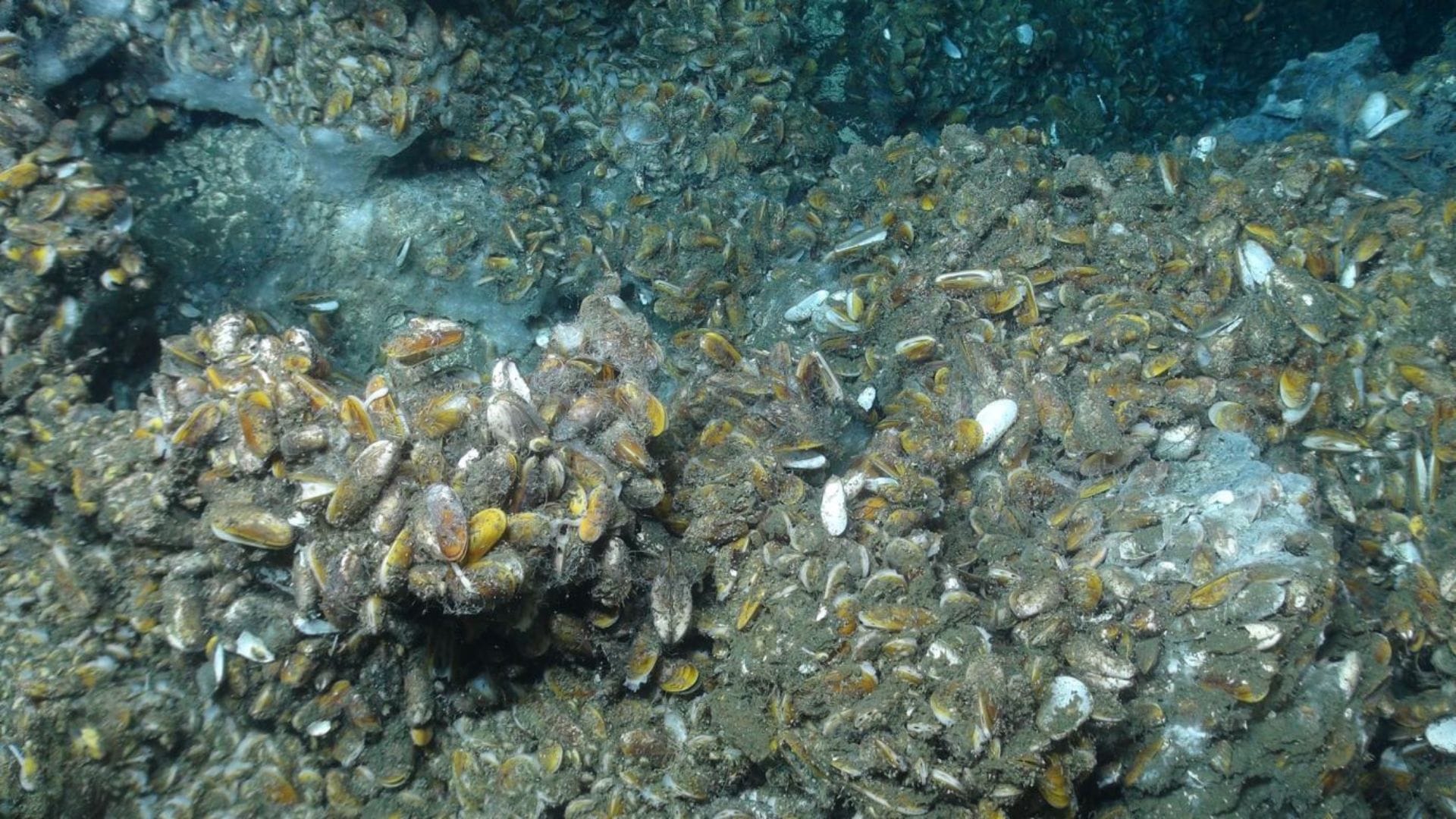
New Delhi: Researchers from the University of Chicago have revealed that bivalves, including lineages of mussels and hatchet shells colonised the deep sea through multiple evolutionary pathways rather than a single mechanism. The deep sea is the largest habitat on Earth, but is a hostile place, that is dark and near-freezing, with no sunlight for photosynthesis, and high pressures. Most bivalves feed on phytoplankton, making deep-sea survival challenging without alternative energy sources. Some species survived by forming symbiotic relationships with bacteria in their gills, that convert energy from chemicals such as sulphur and methane and hydrothermal vents and cold seeps, providing nutrition to the hosts.
Hatchet shells acquired this bacterial symbiosis early, over 450 million years ago in the early Palaeozoic, while the organisms still occupied shallow waters. They remained in shallower regions for roughly 300 million years, before gradually invading the deep sea in the mid-Mesozoic. The species ventured into the deep sea sporadically, in small numbers, described as a piecemeal or dribs-and-drabs model. The adaptations because of the symbiosis allowed the occasional species to opportunistically occupy deep sea habitats, but these animals rarely diversified in these environments.
Some species were preadapted, others diversified
One lineage of mussels gained the bacterial partnership relatively recently, around 60 million years ago. This single entry into the deep sea allowed for rapid diversification, resulting in at least 70 species. The patterns indicate that some lineages were preadapted and invaded gradually without much subsequent radiation, while others made breakthroughs through adaptations, that then exploded in diversity. Some lineages fall in between these to extremes. The researchers used public data on geography, fossils and molecular sequences to construct phylogenies, and used them alongside 3D micro-CT scans of shells to examine traits such as shape, texture, muscle attachments and hinge structure. The researchers were able to trace which groups failed to reach the deep sea, which arrived and went extinct, and which were able to establish a lasting presence. A paper describing the research has been published in Proc Biol Sci.