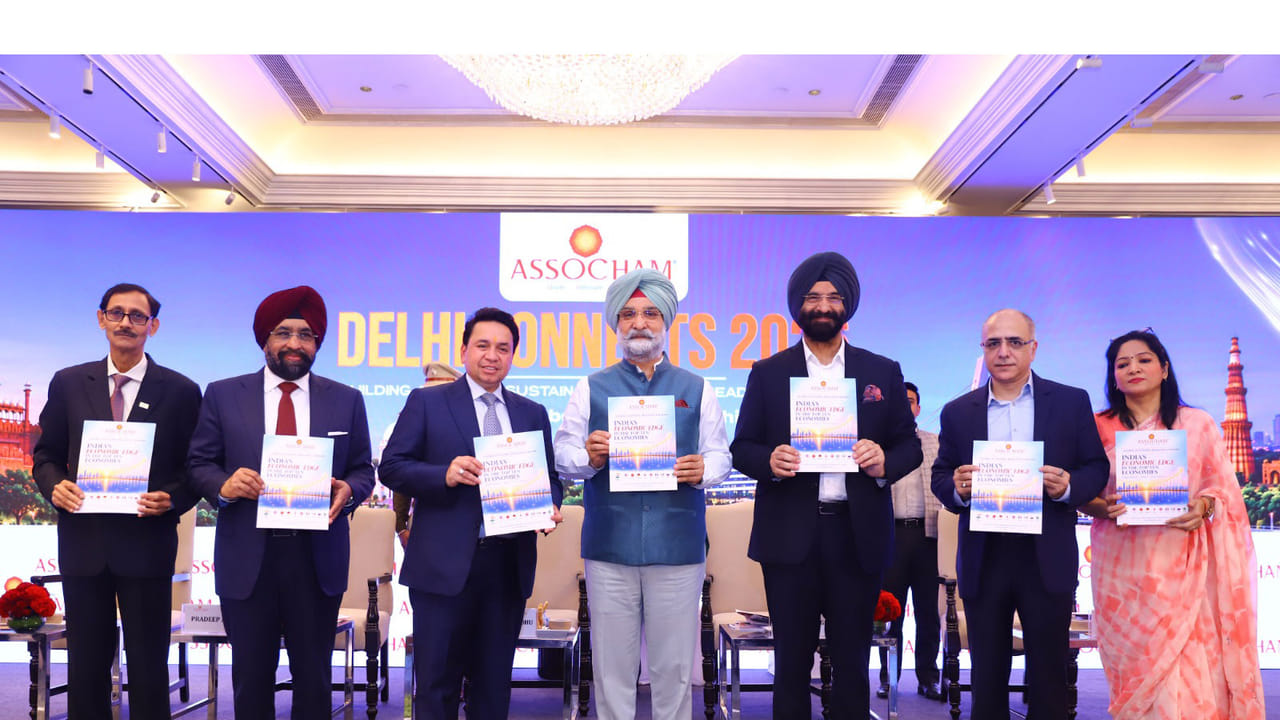
At Delhi Connects 2026, LG Taranjit Singh Sandhu outlined a vision for a globally competitive, inclusive, and sustainable Delhi by 2047, emphasizing integrated infrastructure, economic growth, and efficient urban governance.
Delhi’s Lieutenant Governor Taranjit Singh Sandhu on Thursday attended the Delhi Connects 2026 event as Chief Guest on Thursday. The event is a business and policy conclave organised by Assocham. During the event, the LG emphasised that Delhi by 2047 must be a city that attracts investment, creates opportunities, strengthens its infrastructure and preserves its rich heritage. He noted that the discussions at the event, including the insights in the Assocham-EY report, can contribute to this shared objective, and called on everyone to work together to build a Delhi NCR that is globally competitive, inclusive and worthy of the aspirations of its people.
LG Sandhu also highlighted that Delhi’s journey towards 2047 is an important part of India’s larger development vision, asserting that Delhi, as a National Capital, has a responsibility to emerge as a globally competitive city while remaining inclusive, efficient and liveable for its residents. Recalling PM Modi’s observation that “Urban planning will determine the fate of our cities in Amrit Kaal, and it is only well-planned cities that will determine the fate of India”, he said this is particularly relevant for Delhi NCR, where the decisions taken today will shape the opportunities and quality of life available to future generations.
Pointing to the strength of the city’s economy, the LG said that, according to the Delhi Economic Survey 2025-26, Delhi’s Gross State Domestic Product is estimated at ₹13.27 lakh crore, with projected growth of 9.42 per cent, and that the services sector contributes more than 86% of the city’s economy. These strengths, he said, provide a significant foundation for investment, innovation and employment.
The LG said Delhi’s development cannot be considered in isolation from the wider National Capital Region. Millions of people live, work and commute across administrative boundaries, and transport, housing, water management and economic development therefore require coordinated regional planning. A connected approach, he said, will be essential to building a more efficient and resilient metropolitan region.
Outlining the priorities that deserve sustained attention, the LG began with infrastructure and mobility. Delhi needs an integrated transport system, better last-mile connectivity, improved road infrastructure and intelligent traffic management, he said, and strengthening public transport and reducing congestion will improve productivity as well as the everyday experience of residents. On planned urban development, he said that housing, civic amenities, accessible public spaces and social infrastructure must grow together, and that a future-ready city must be inclusive, with development that improves the quality of life across different sections of society. On technology and governance, he said that digital systems, data-driven planning and emerging technologies, including artificial intelligence, can help make public services more efficient and responsive, and that technology must remain a means to improve governance and serve citizens. On economic competitiveness and employment, the LG said Delhi has considerable potential to strengthen its position as a centre for services, finance, education, healthcare, technology and entrepreneurship. Creating an environment that encourages investment, supports start-ups and enables businesses to grow will be important for generating quality employment and attracting talent, he said.
The LG said industry has an important role in advancing this vision, and that investment, innovation, research, public-private partnerships and skill development will all contribute to Delhi’s transformation. ASSOCHAM and its members, he said, can help connect government institutions with businesses, universities, start-ups and global expertise, and such collaboration can support practical solutions and create new opportunities for employment and enterprise.