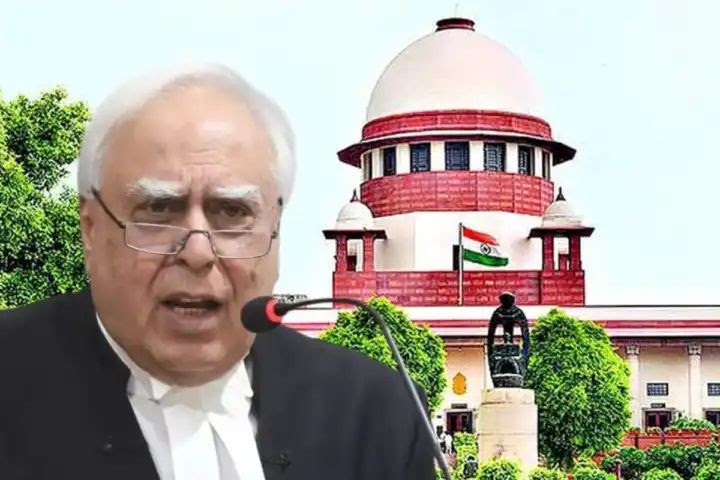
During the hearing of the Enforcement Directorate (ED) petition in the Supreme Court on Tuesday, a heated debate was witnessed when senior lawyer Kapil Sibal, appearing for West Bengal Chief Minister Mamata Banerjee, and the judges clashed on legal points.
During the hearing, the Supreme Court judge warned Sibal in strong words not to keep repeating ‘ED, ED, ED’ and asked him to concentrate on the core issue of the case.
In fact, ED has filed a petition in the Supreme Court alleging that the state government and Chief Minister Mamata Banerjee herself interfered during the investigation and raid being conducted at the I-PAC office in Kolkata. This case is being heard by the bench of Justice PK Mishra and Justice NV Anjariya. In the last hearing, the court has already commented that such interference in the work of any investigating agency cannot be considered a ‘good situation’. Kapil Sibal argued that the petition itself is not maintainable.
What argument did Sibal give?
At the beginning of the hearing in the Supreme Court, Kapil Sibal has raised questions on the validity of the ED petition. He said that this petition has been filed through a deputy director who was not present at the spot at the time of the incident. In such a situation, how can this petition be hearable? Sibal argued that this case is being said to be related to violation of fundamental rights, but the petitioner himself is not a victim. He further argued that how can a person who was not present at the spot raise the issue of fundamental rights of others? On this the court said that fundamental rights are not limited to individuals only. On this the bench took a strict stance and said that fundamental rights are not always limited to any one person.
What questions did the Supreme Court raise?
The Supreme Court said that is not the ‘Rule of Law’ i.e. the rule of law a fundamental right in itself? Kapil Sibal replied that if ‘Rule of Law’ is being alleged to be violated, then it will have to be made clear as to how the violation occurred. During the debate, the court also referred to the Kesavanand Bharti case and said that the basic structure of the Constitution is also related to fundamental rights. The Supreme Court indicated that rights can be interpreted broadly in such cases.
ED vs State Government: Clash over jurisdiction
Sibal also argued that ED is a ‘directorate’ and not an independent constitutional body or department. He further argued that if there is any dispute, then the Central Government should come under Article 131 and not under Article 32. He said that the Central Government cannot directly bring a petition in the Supreme Court on the basis of fundamental rights.
What was the sharp question of the court
On this, the Supreme Court raised strict questions and the Justice said that if the Chief Minister himself interferes in the investigation, then to whom will the ED complain? The same state government which is headed by the Chief Minister? This question challenged Sibal’s argument. Sibal replied that the court is assuming that the Chief Minister has committed a crime, whereas this is only an allegation. The court clarified that this is an allegation, but it is an allegation based on facts.
Don’t preach to us: Supreme Court
Another sharp moment during the arguments came when the court asked Sibal not to tell us that we are getting agitated. We are just asking questions. This comment shows that the atmosphere had become quite heated during the hearing. The most important and talked about moment of the hearing came when the court directly warned Sibal not to keep repeating ED, ED, ED. Come to the point… otherwise you will be in trouble. The court said that Sibal should pay attention to the fundamental rights of those ED officers who have filed separate petitions.
Sibal’s answer to the judge’s question
Sibal replied that if any crime has been committed, there are already remedies available in the law for the same. He said that obstructing the work of a public servant is a criminal offense and action can be taken under BNS. His argument was that every case cannot be brought directly to the Supreme Court on the basis of fundamental rights. The court clarified that there are two different aspects to this entire controversy. A separate allegation has been made of alleged interference in the ongoing investigation and investigation under PMLA. According to the court, this second allegation is an independent matter and should be looked at separately.