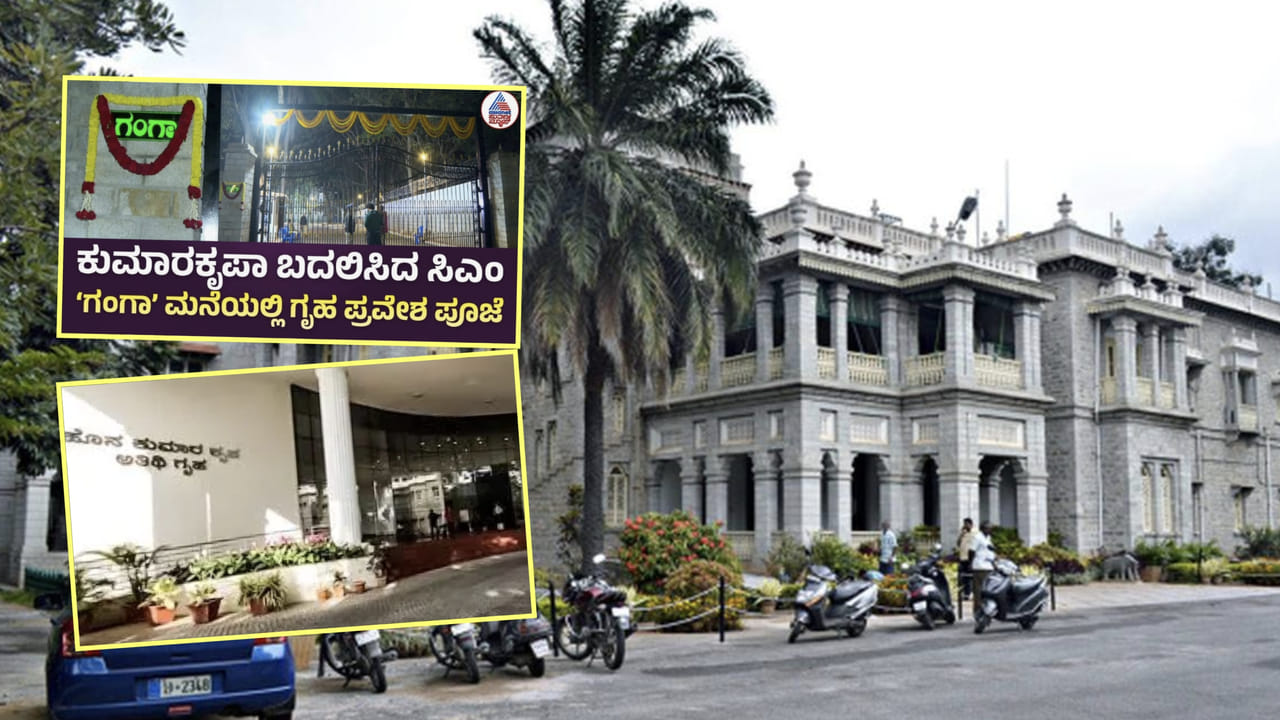
Bengaluru’s historic Kumara Krupa Guest House has been renamed Ganga and designated as Karnataka Chief Minister D.K. Shivakumar’s new official residence. Discover the property’s fascinating history, architecture and legacy.
Bengaluru’s historic Kumara Krupa Guest House, a heritage bungalow that has witnessed several important moments in Karnataka’s political history, is back in the spotlight following its renovation and renaming. The prestigious property, which served as an official residence for visiting dignitaries and prominent personalities for several decades, has now been transformed into the official residence of Karnataka Chief Minister D.K. Shivakumar. The renovated bungalow has been renamed ‘Ganga’, with a new nameplate installed at the entrance.
A housewarming ceremony is scheduled to take place today in accordance with traditional rituals and under tight police security. However, beyond its recent transformation, Kumara Krupa has a fascinating history dating back to the late 19th century. From its origins as the private residence of a Mysore Dewan to its association with prominent national and international personalities, the bungalow holds a special place in Bengaluru’s architectural and political heritage.
What Is Kumara Krupa? A Heritage Landmark In Bengaluru
Located on Kumara Krupa Road in the High Grounds area of Bengaluru, Kumara Krupa is a historic bungalow situated opposite the Bangalore Golf Club and close to Vidhana Soudha. Surrounded by extensive greenery, the property is known for its distinctive Indian architectural features and historical significance.
Unlike many government guest houses, Kumara Krupa was originally built as a private residence. It was constructed for K Seshadri Iyer, who served as the Dewan of the Mysore Princely State from 1883 to 1901. Widely regarded as one of the architects of modern Bengaluru, Seshadri Iyer played an important role in the development of the city.
The bungalow is believed to have been constructed around 1897. Seshadri Iyer hailed from Kumarapuram in Palakkad, Kerala, and worshipped Lord Subrahmanya, also known as Kumaraswamy, as his family deity. The name ‘Kumara Krupa’, which signifies the grace or blessings of Kumaraswamy, is associated with his devotion to the deity.
Who Built Kumara Krupa?
Kumara Krupa was built during K Seshadri Iyer’s tenure as the Dewan of Mysore. Unlike the predominantly British and European architectural styles that influenced several prominent buildings in Bengaluru during the late 19th century, Seshadri Iyer wanted his residence to reflect traditional Indian architecture.
The two-storey stone bungalow was constructed by Erode Subba Rao, who served as the Controller of Palace Estates. Its design incorporated traditional Indian architectural elements, giving the building a distinctive appearance that set it apart from other contemporary structures.
The property remains an important example of the architectural preferences of the Mysore administration during that period.
What Makes Kumara Krupa’s Architecture Special?
One of the most striking aspects of Kumara Krupa is its traditional Indian architectural design. The bungalow features intricate stone carvings, perforated stone screens known as jaalis, distinctive balconies and cast-iron railings.
The jaalis allow natural light and ventilation into the building, while jute and bamboo screens add to its traditional character. These architectural elements give the bungalow a distinctive appearance and reflect the craftsmanship of the period.
The interiors are equally noteworthy. The building houses rosewood furniture, roof tiles believed to be around 200 years old, a century-old kitchen, a dedicated puja room, a spacious dining hall and an underground cellar.
Former Karnataka Chief Secretary T.P. Issar also highlighted the architectural beauty of Kumara Krupa in his book The City Beautiful. Certain architectural elements from the bungalow are also said to have influenced aspects of the design of Vidhana Soudha, another landmark of Bengaluru.
Room Number 1: A Special Suite For VIP Guests
Among the notable spaces inside Kumara Krupa is the master suite on the ground floor, popularly referred to by the staff as ‘Room Number 1’.
The room was traditionally reserved for some of the country’s most prominent dignitaries and distinguished visitors. Over the years, the bungalow hosted several important personalities, adding to its reputation as one of Bengaluru’s most prestigious government guest houses.
Its association with eminent personalities, including Mahatma Gandhi, the Dalai Lama and former Prime Minister Rajiv Gandhi, has further strengthened its historical and political significance.
How Did Kumara Krupa Become A Government Guest House?
Although Kumara Krupa began as Seshadri Iyer’s private residence, it eventually became government property following his death.
Seshadri Iyer retired from his position as Dewan in March 1901 and passed away in September of the same year. His funeral rites were reportedly conducted on the grounds near the bungalow.
In the years that followed, his family members settled in different parts of the country and abroad. During the reign of Nalvadi Krishnaraja Wodeyar, the Mysore government purchased the property from Seshadri Iyer’s sons, reportedly between 1915 and 1918.
Following India’s Independence, the government took full possession of the property and converted it into an official State Guest House. It subsequently became a preferred residence for visiting VIPs, political leaders and other distinguished personalities travelling to Bengaluru.
Kumara Krupa’s Connection With Gandhi, The Dalai Lama And Rajiv Gandhi
Over the decades, Kumara Krupa became associated with several prominent national and international personalities. Its rooms hosted distinguished visitors, including Mahatma Gandhi, the Dalai Lama and former Prime Minister Rajiv Gandhi.
These associations reflect the bungalow’s importance beyond its architectural value. It served as a place of stay for influential personalities who visited Bengaluru for official engagements and other important occasions.
The guest house thus became part of the city’s political and administrative history, witnessing several decades of interactions involving prominent national and international figures.
From Kumara Krupa To Ganga: A New Chapter
After serving as a prestigious government guest house for several decades, Kumara Krupa has now undergone renovation and a change in purpose. The heritage bungalow has been refurbished and renamed ‘Ganga’, becoming the official residence of Chief Minister D.K. Shivakumar.
A new nameplate bearing the name ‘Ganga’ has been installed at the entrance. The housewarming ceremony is scheduled to be conducted according to traditional rituals, with security arrangements in place around the property.
The transformation marks a new chapter in the history of the iconic bungalow. While its purpose and name have changed, Kumara Krupa’s legacy as one of Bengaluru’s historically significant properties remains an important part of the city’s heritage.