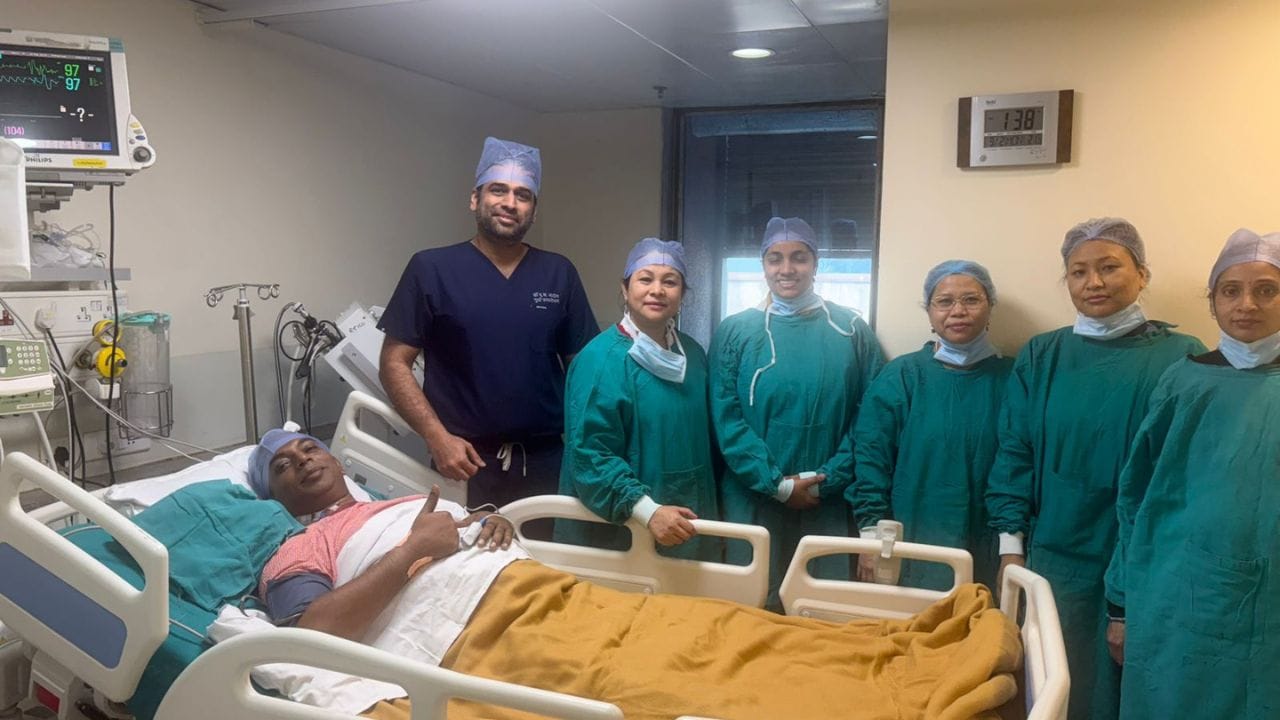
Doctors did the transplant
The patient was not made unconscious and his kidney was transplanted. It may sound strange, but the doctors of Delhi’s Institute of Liver and Biliary Sciences (ILBS) have done this. After the transplant, the patient is completely healthy and is recovering. The hospital claims that this is the first successful operation of its kind in Delhi.
Generally, kidney transplant is done by giving general anesthesia, in which the patient is made completely unconscious. But this patient was not completely unconscious. The patient was given epidural anesthesia. In this, the lower part of the body is numbed, while the patient’s breathing and consciousness remain completely normal. However, before giving this type of anesthesia, the patient is asked. This is given only after his consent. This is because not every patient can undergo surgery like this without becoming completely unconscious. This type of surgery is done only after the patient’s permission and after thorough examination by the doctors.
General anesthesia is not given to some patients
ILBL Hospital Dr. who performed the surgery. Abhiyutthan Singh JadaonIt is said that most of the patients are given general anesthesia, that is, they are transplanted after making them completely unconscious. But in some patients, the risk of general anesthesia is higher due to heart, lung or other serious diseases. Epidural anesthesia is a good option for such high-risk patients. In which surgery is done without complete anesthesia. It also follows the ERAS (Enhanced Recovery After Surgery) protocol in surgery, which speeds up the recovery of the patient.
Discharged from hospital in 3 days
After kidney transplant, usually the patient has to stay in the hospital for a long time, but with this technique the patient is discharged from the hospital within 3 to 5 days. After this surgery, the patient started walking the very next day and also started eating by mouth. Doctors say that Awake Kidney Transplant is a new ray of hope for those elderly patients and people suffering from serious diseases, who were earlier considered unfit for transplant.